
Compressed Air and Pneumatics: How They Work Together
Compressed Air and Pneumatics: How They Work Together
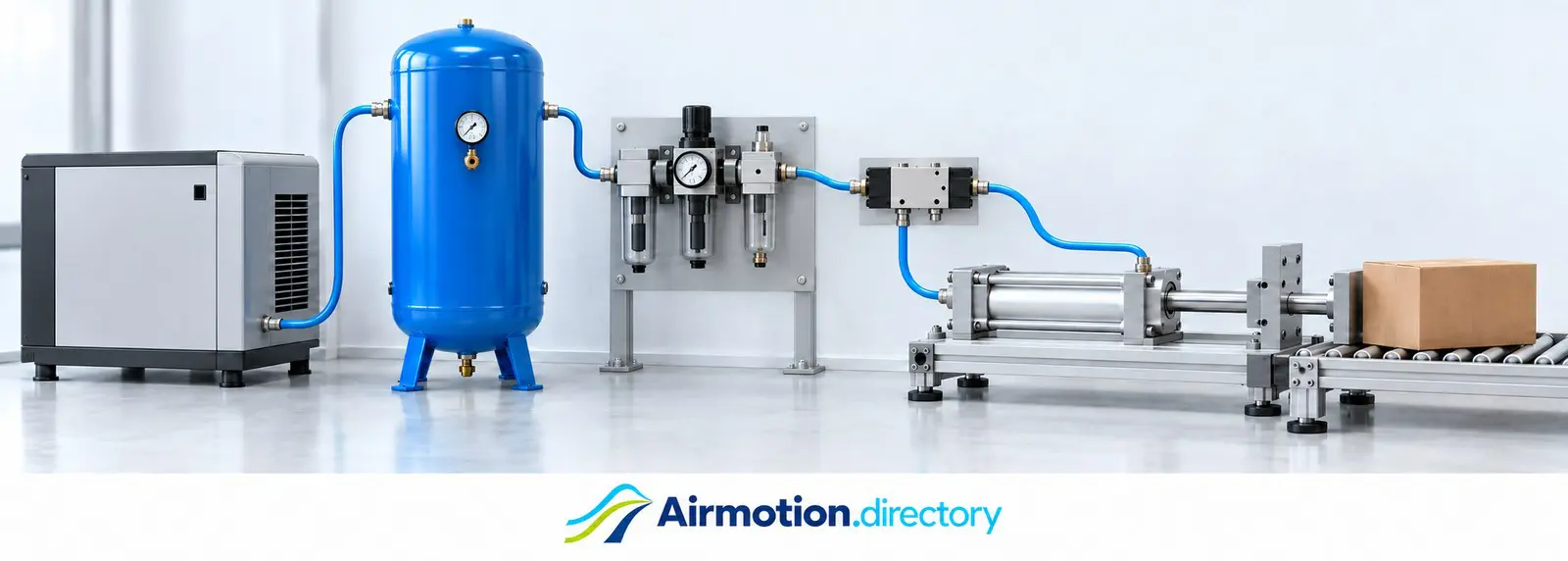
Compressed air stores and carries energy. Pneumatics uses pressurised gas, usually compressed air, to produce controlled force and movement. In an industrial machine, the air supply and the pneumatic equipment perform different jobs within the same system.
Think of compressed air as energy available for work. Valves and actuators determine where that energy goes and what it does. Having compressed air available does not, by itself, tell a carton where to move.
From air supply to useful movement
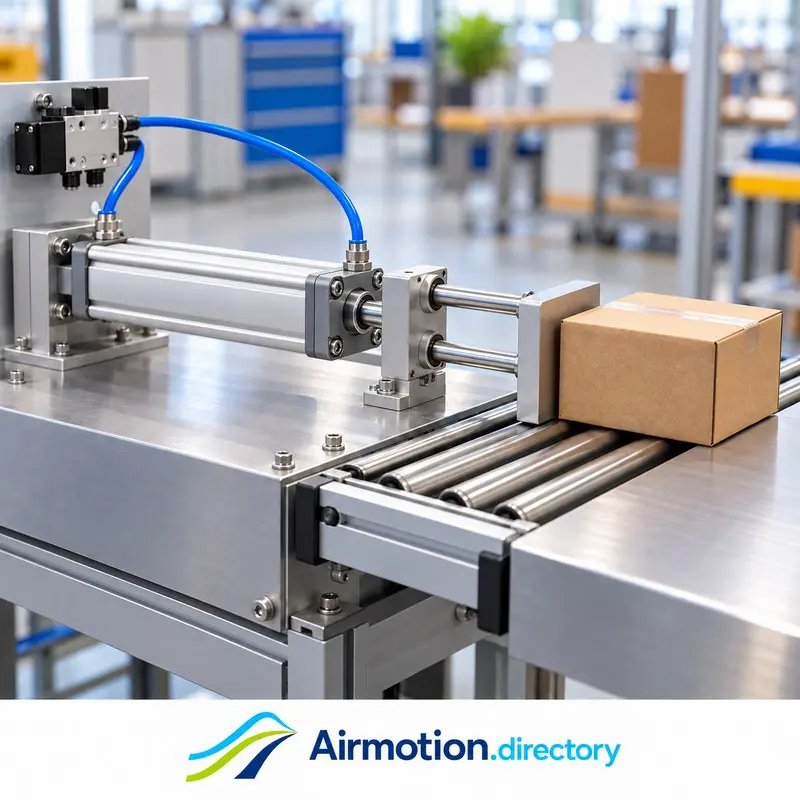
Consider a pneumatic cylinder pushing a carton from a conveyor onto a receiving surface.
Supply the energy. The compressor uses energy to raise the air’s pressure. An air receiver provides storage and helps accommodate changing demand. Air treatment prepares the supply for the application, while piping and hoses carry it to the machine.
Direct the movement. A directional valve sends air to one side of the cylinder’s piston while allowing air on the other side to exhaust. The resulting pressure difference moves the piston and its rod, advancing the pusher.
Return and repeat. When the valve reverses those connections, the cylinder retracts. Flow controls influence its speed, while sensors and machine controls can coordinate the movement with arriving cartons.
The compressor supplies the air. The pneumatic circuit makes the movement happen.
One air supply, different kinds of work
Moving a cylinder is only one use for compressed air.
At another point on a production line, an air knife may remove residual water from bottles before labeling. Here, the airflow acts directly on the surface. Elsewhere, compressed air might power an impact wrench, operate a gripper, create vacuum through an ejector or supply a vortex cooling device.
These applications overlap with the broad field of pneumatics. The useful distinction is what the air is doing: producing controlled mechanical movement, driving a tool or acting directly in a process.
One compressor installation may serve several of these uses, but their pressure, flow and air-quality requirements can differ.
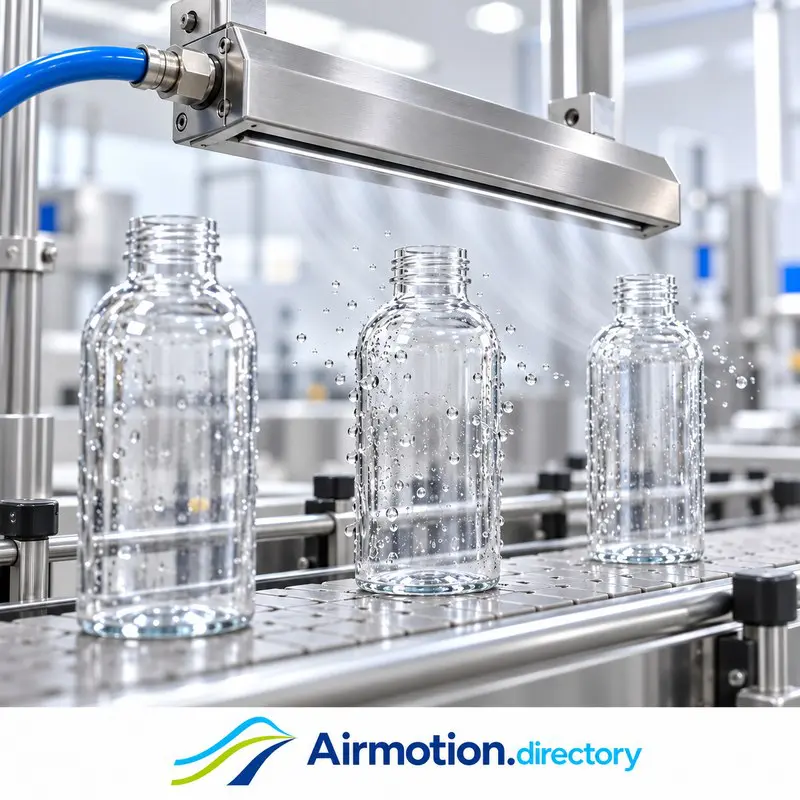
Images are illustrative examples, not installation drawings or specific suppliers’ equipment.
Why the relationship matters when choosing equipment
A cylinder can be correctly selected for its load and still perform poorly if the air reaching it is inadequate.
Pressure at the actuator affects available force. Flow capacity and restrictions affect how quickly air can enter and leave. Moisture, particles and other contaminants can affect equipment operation and service life.
The whole path matters: air treatment, pipework, hoses, fittings, valves and the device doing the work. Pressure measured near the compressor does not necessarily describe conditions at a machine while it is operating.
For a new application or replacement, start with the required task, then consider both the component and the supply it needs.
Explore pneumatic cylinders, directional control valves, compressed-air filters and compressed-air knives for specific product applications.
Does pneumatics always use compressed air?
Compressed air is the usual working medium in industrial pneumatics, but suitable equipment can also operate with other pressurised gases, such as nitrogen. Compatibility depends on the equipment and application.
For the factory applications discussed here, compressed air is the practical starting point. Pneumatics describes the technology that puts that pressurised gas to work.
Explore each side of the relationship
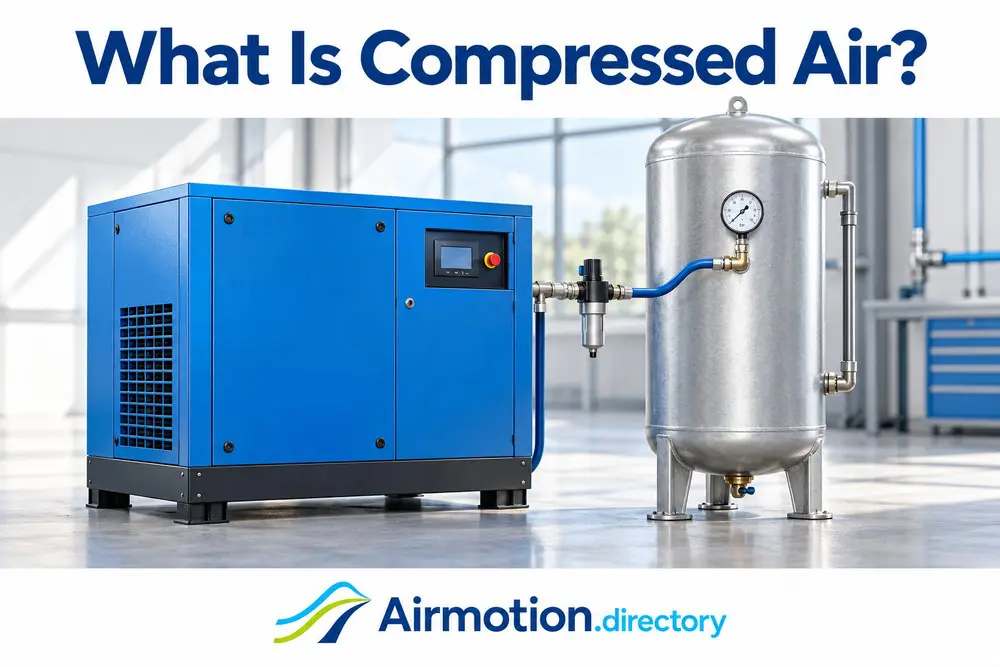
Understand how air is compressed, stored, prepared and delivered, and why pressure, flow and air quality matter.
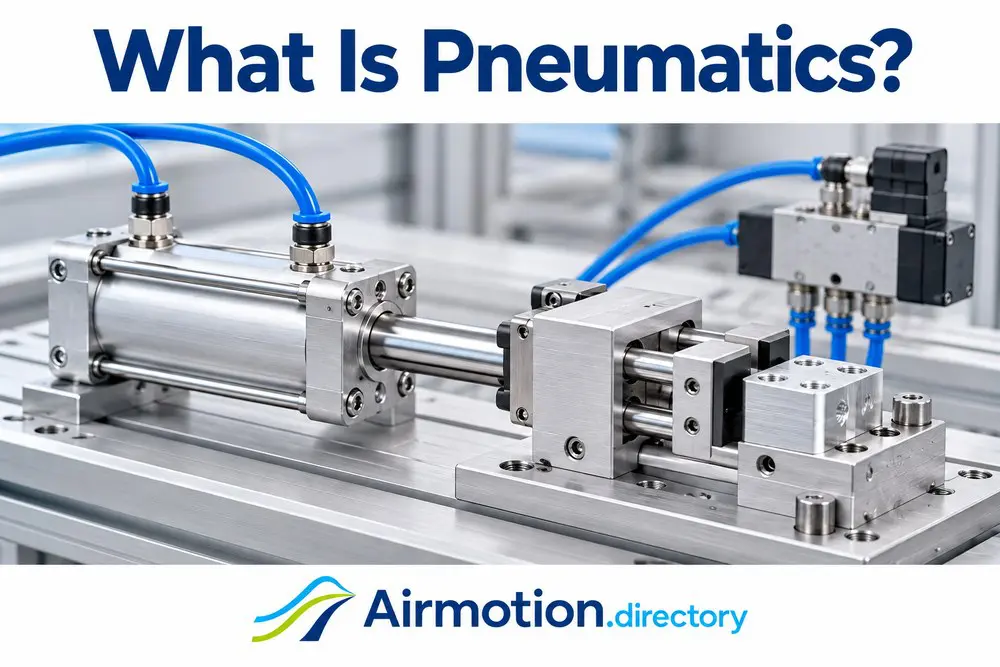
See how valves, cylinders, grippers and other components turn pressurised air into useful movement and control.
Have a product requirement?
Tell Airmotion Directory what the equipment needs to do, where it will be used and your expected timing. Include any existing model numbers or specifications.