
What Is Compressed Air?
What Is Compressed Air?
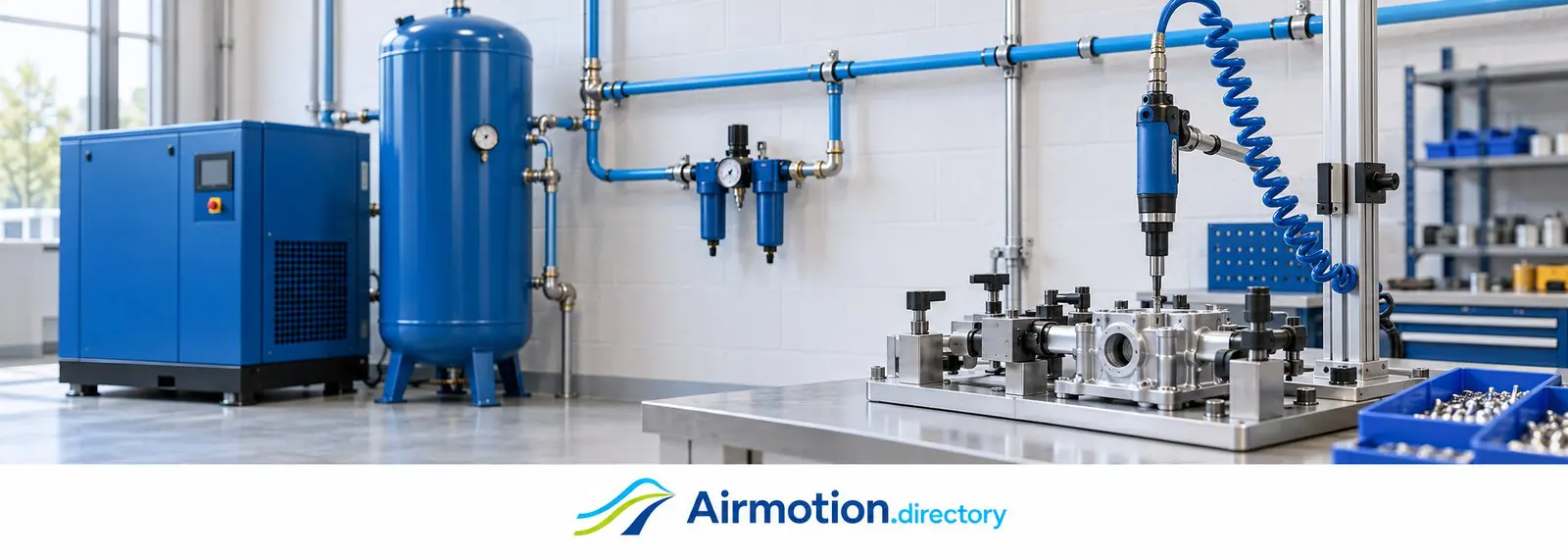
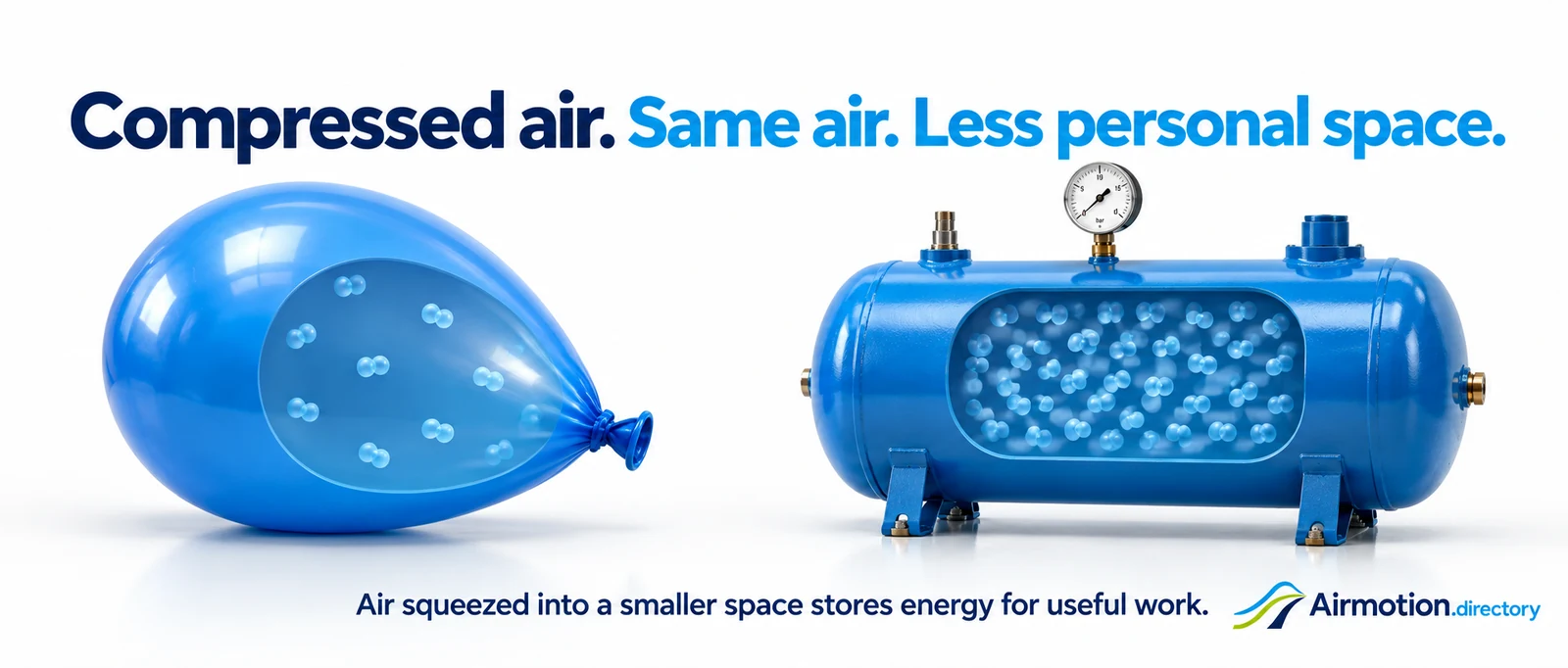
Compressed air is air held at a pressure higher than the surrounding atmosphere. A compressor uses energy to raise that pressure, allowing the air to store and transfer energy for tools, machines and industrial processes.
It is the air around us, put to work. In a factory, compressed air can move a cylinder, operate a tool, remove water from a part or power a vacuum generator. The equipment changes, but the starting questions are the same: how much pressure, how much airflow and what air quality does the job require?
How does a compressed-air system work?
Generate and store
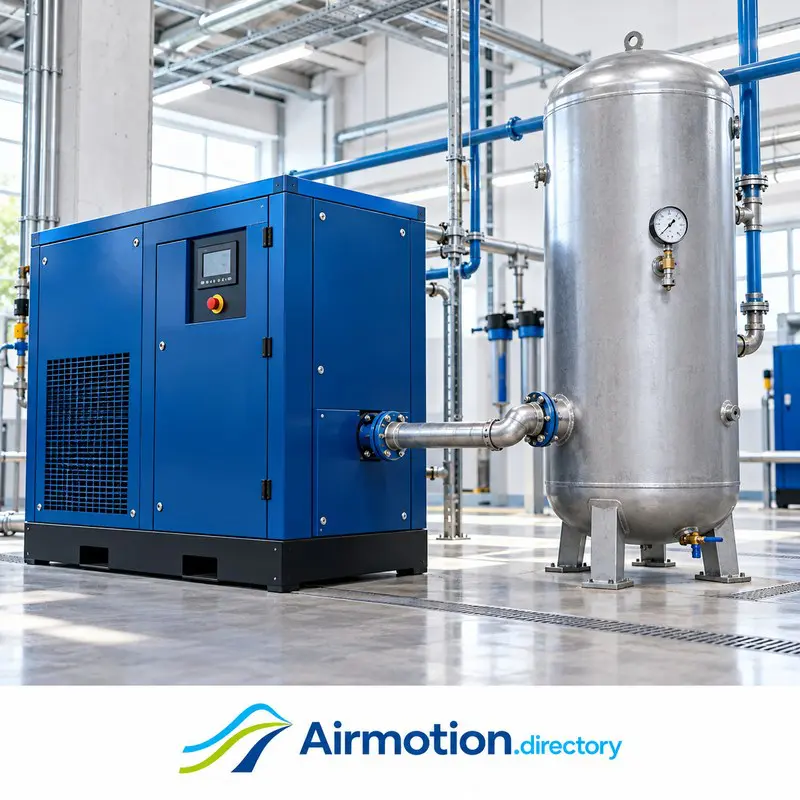
The compressor takes in ambient air and raises its pressure. An air receiver provides a buffer for changing demand. It stores compressed air; it does not replace the compressor’s ability to supply enough air over time.
Prepare and distribute
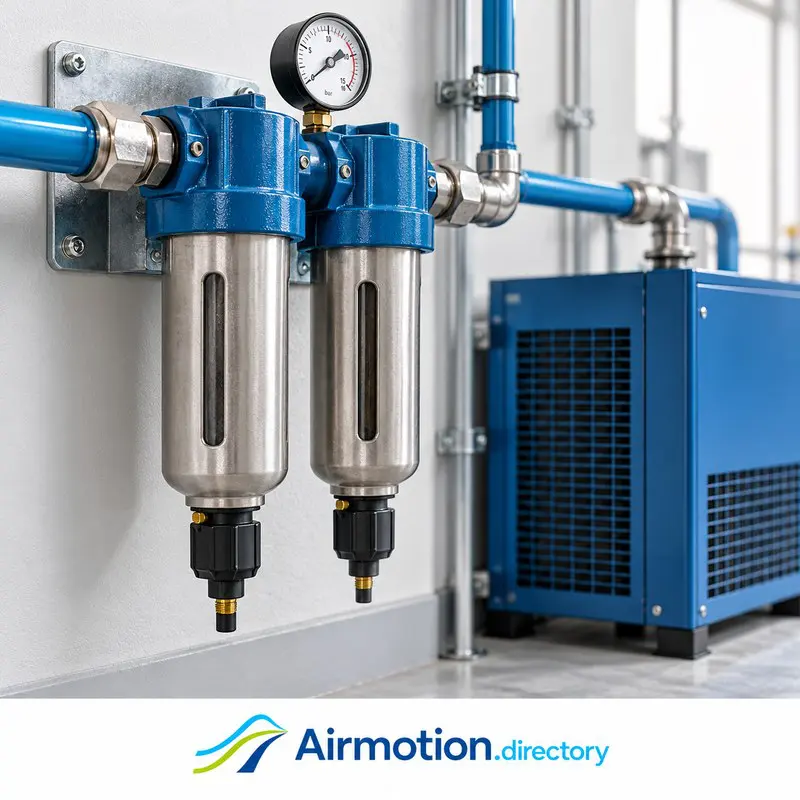
Cooling, moisture separation, drying and filtration prepare the air for its intended use. Pipes, hoses and fittings carry it to the work area. Treatment requirements depend on the process and operating conditions.
Control and use
Regulators set working pressure, while valves control where and when air flows. At the point of use, that air produces motion or supports a process. Many pneumatic devices then exhaust the used air to the atmosphere.
Images are illustrative examples, not installation drawings or specific suppliers’ equipment.
What is the difference between pressure and flow?
Pressure describes how strongly the air can push. It is commonly stated in bar, psi or kPa. For a cylinder, pressure and piston area help determine the available force. A pressure specification should also say whether it is measured relative to atmospheric pressure or as absolute pressure.
Flow describes how much air is delivered over time. It is commonly stated in litres per minute, cubic metres per minute or cubic feet per minute. Compare flow ratings on the same reference basis, such as free-air delivery or stated standard conditions.
A machine can have adequate pressure while idle and still run poorly when it starts consuming air. Restrictions, pressure losses or insufficient available flow can become apparent only during operation. Turning up the pressure is not a substitute for understanding the demand.
What is compressed air used for?
Movement and assembly. Pneumatic cylinders clamp, push, lift and position parts. Air tools perform jobs such as fastening and drilling. Valves coordinate these movements within a machine.
Drying and cleaning. Compressed-air knives and purpose-designed nozzles direct airflow at a surface to remove loose material or residual water. The required result, air consumption and operating environment affect the choice.
Handling and transfer. Vacuum generators use compressed air to create suction for suitable handling tasks. Other systems use airflow to convey material. Different applications require different equipment and air supplies.
Why do air quality and moisture matter?
Ambient air contains water vapour and particles. As compressed air cools, water can condense. Oil can also be present, depending on the intake environment and compression system. The required treatment depends on what the air touches and what the equipment can tolerate.
A filter and a dryer do different jobs. Filters target particular contaminants; dryers reduce water vapour to a specified dew point. An oil-free compressor does not, by itself, establish every aspect of air quality at the point of use. Explore compressed-air filters for the differences between filtration tasks.
Is compressed air free?
The air is available. Compressing it costs money. Electricity, maintenance, air treatment and distribution all contribute to the cost of usable compressed air. Leaks and unnecessary blowing consume air without producing useful work.
Purchase price is only one part of the comparison. Consider operating hours, demand patterns, required pressure and the cost of delivering air to the application. For some tasks, an electric drive, blower or another method may be a better fit.
Read how to calculate the cost of compressed air.
Is compressed air the same as pneumatics?
They are closely related, but describe different things. Compressed air is the working medium. Pneumatics is the technology that uses pressurised gas, usually compressed air, to produce force, motion and control.
A compressor supplies the air. A pneumatic circuit uses valves, tubing and actuators to control what that air does. Understanding the supply and the application together helps explain why a component’s specification alone does not describe the whole system.
Continue exploring
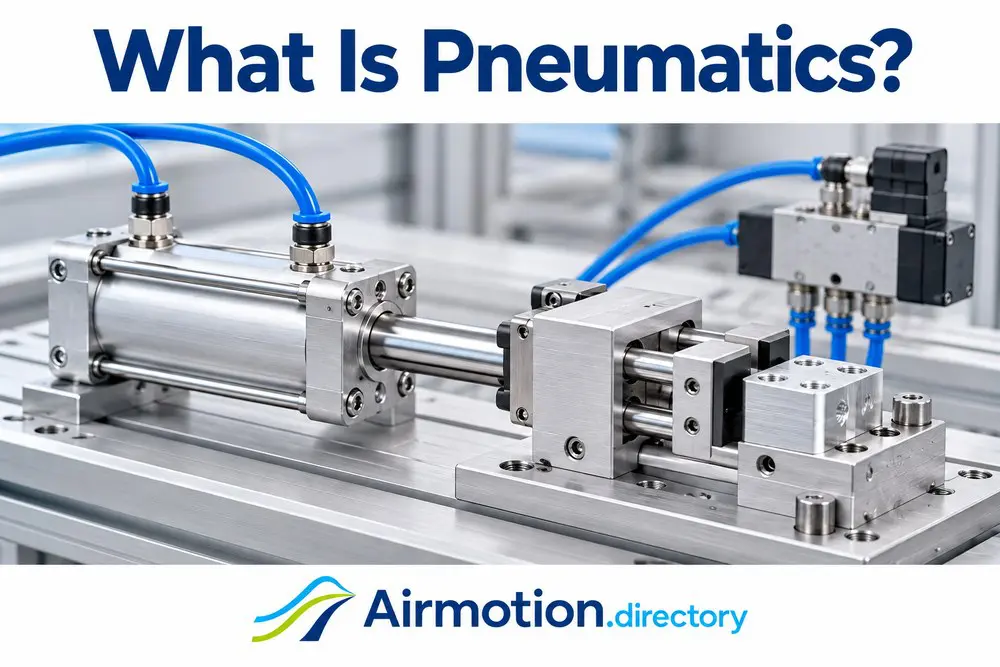
See how valves, cylinders and other components turn pressurised air into useful movement and control.
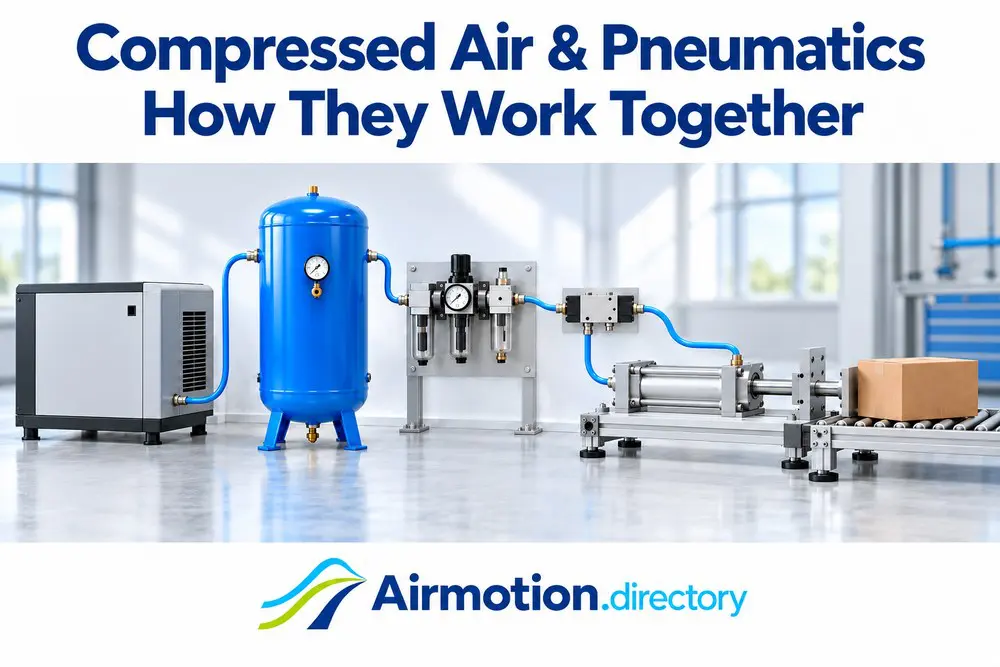
Follow the connection from air supply to controlled movement, and see how one air system serves different kinds of work.
Explore compressed air and pneumatics


Have a compressed-air product inquiry?
Tell Airmotion Directory what the equipment needs to do, where it will be used and your expected timing. If you already have a product name, model or specification, include it with the inquiry.