
Compressed-Air Filters
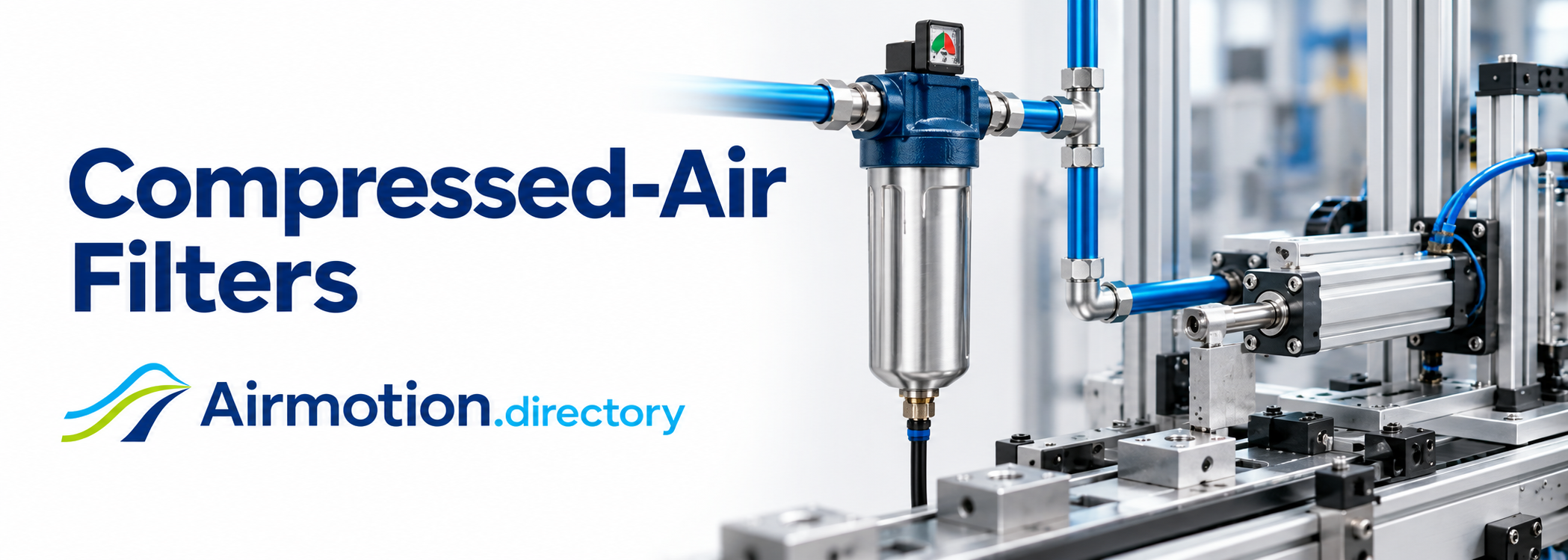
The right pressure is only part of the job.
Compressed air can carry particles, liquid water, and oil contamination into equipment or onto a product. A filter needs to address the contamination that matters at the point of use. Choosing a housing by its connection size alone leaves much of that decision unanswered.
Particulate filters capture solid contamination such as rust, scale, and dust. Coalescing filters collect fine liquid aerosols into larger droplets that can drain from the housing. Activated-carbon elements address oil vapor when that additional treatment is required.
Filtration and drying do different jobs. A coalescing filter does not remove water vapor in the way a dryer does, and removing oil aerosols does not establish that oil vapor has also been removed. The element grade, flow, pressure, temperature, and treatment arrangement all matter.
Three practical applications
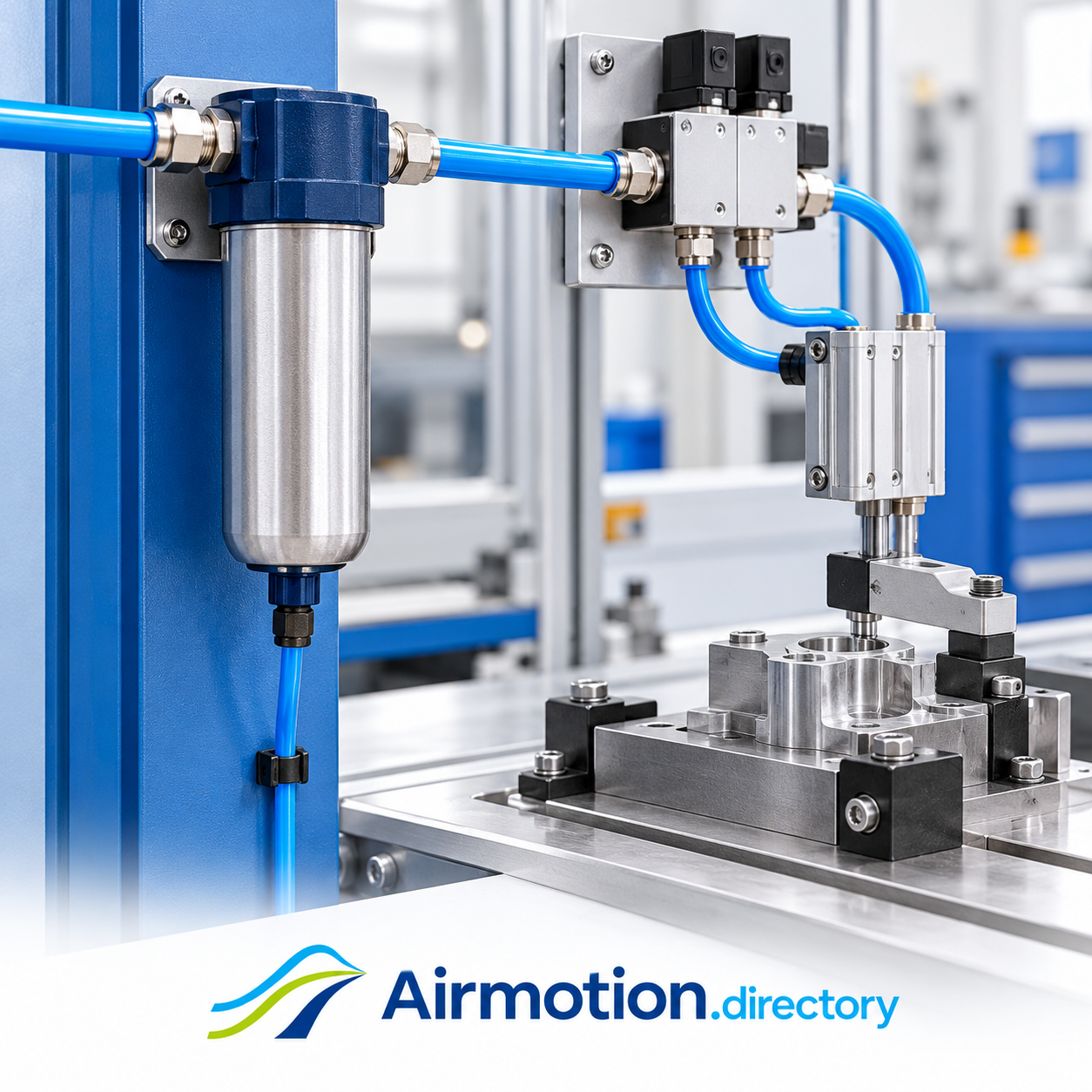
Protect pneumatic equipment
Rust, pipe scale, and other solid contamination can reach valves and actuators through the air supply. An appropriately selected filter at the machine inlet can intercept particles before the air reaches those components. Match the filtration grade and flow capacity to the equipment and the upstream air treatment.
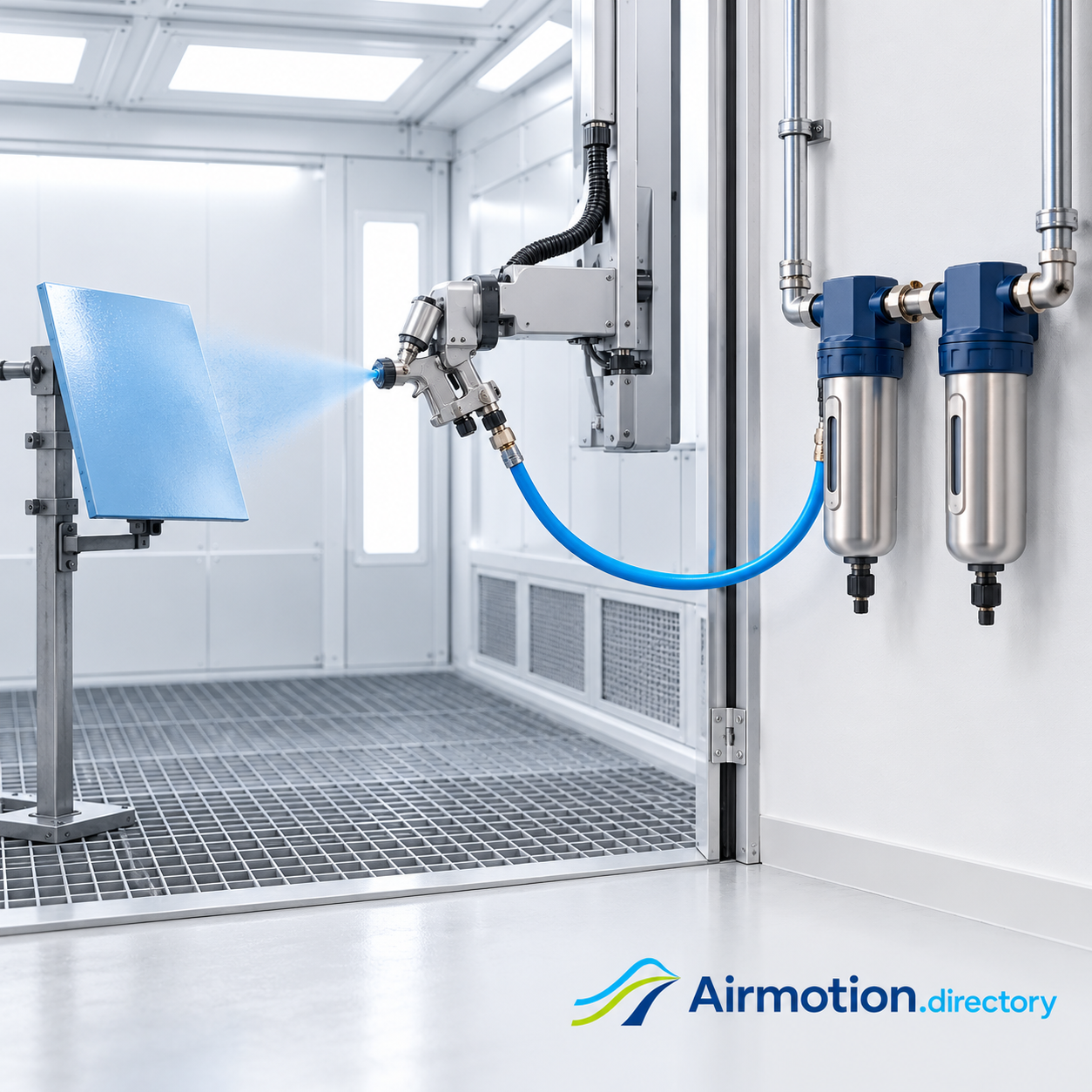
Prepare air for paint spraying
Contamination in spraying air can interfere with the finish. Coalescing filtration can remove liquid oil and water aerosols before the air reaches the spray equipment. Check the process requirements for particles, oil vapor, and moisture as well; one filter is not automatically the complete treatment system.
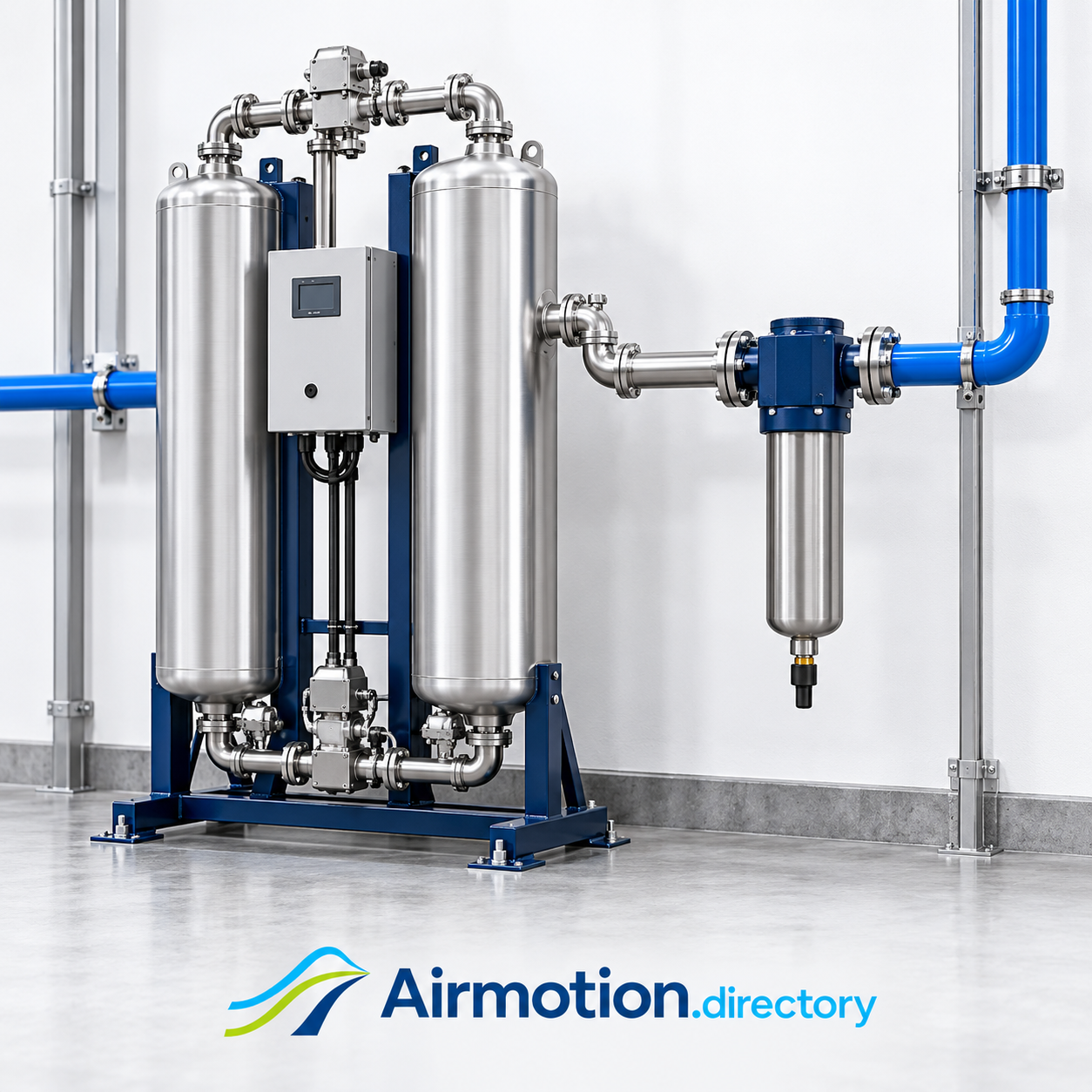
Catch dust after a desiccant dryer
A desiccant dryer can introduce fine desiccant particles into its outlet air. A suitable particulate after-filter captures those fines before the air enters downstream equipment. Select the filter for the dryer type, outlet conditions, required air quality, and the manufacturer’s recommended arrangement.
These are illustrative applications, not reports of specific customer installations.
Three manufacturers to know
Three independent examples of companies offering compressed-air filters. Product ranges and configurations differ; this is not a ranking. Their inclusion does not imply that Airmotion Directory represents or supplies these manufacturers.
Donaldson
United States
Offers compressed-air filter housings and elements for particulate and aerosol filtration. Its range includes M Series coalescing and particulate elements and V Series elements used for after-filtration in adsorption dryers. Compare the specific element and compatible housing.
BEKO TECHNOLOGIES
Germany
Offers the CLEARPOINT 3eco compressed-air filter range, including threaded and flanged housings. Different filtration grades address solid particles and liquid aerosols. Its coalescing elements collect droplets for condensate drainage; select the grade for the required duty.
Walker Filtration
United Kingdom
Offers ALPHA compressed-air filters with different element grades for coalescing, particulate filtration, and activated-carbon vapor removal. The required contaminant removal determines the element choice; these grades do not all perform the same job.
What matters when comparing compressed-air filters?
Identify the contamination. State whether the requirement concerns particles, liquid aerosols, oil vapor, or moisture. Specify the required air quality at the point of use rather than asking for the finest available filter.
Check flow and pressure loss. Compare rated flow at the stated pressure and temperature with the actual duty. Check clean and operating pressure loss, including the effect of an element accumulating contamination.
Look at the whole arrangement. Existing separators, dryers, upstream filters, pipework, and drains affect what reaches the filter and what happens afterward. Follow the selected equipment’s installation and operating requirements.
Include maintenance in the cost. Consider element replacement, drain operation, differential-pressure indication, access for servicing, and replacement-element availability. The housing price is only part of the cost of using the filter.
What brought you here?
Using or buying compressed-air filters?
Exploring one application?
Already considering a purchase, supplier recommendation, or quotation?
Selling compressed-air filters?
Working on a specific customer opportunity?
Explore the Seller’s Second Opinion
Own or lead a pneumatic or compressed-air business and want to examine its online revenue system?
Have a compressed-air filter requirement?
Tell Airmotion Directory where the filter will be used, what contamination needs controlling, and the flow, pressure, and temperature if known. Include the country of use and whether you are exploring options or working toward a purchase.