
Directional Control Valves
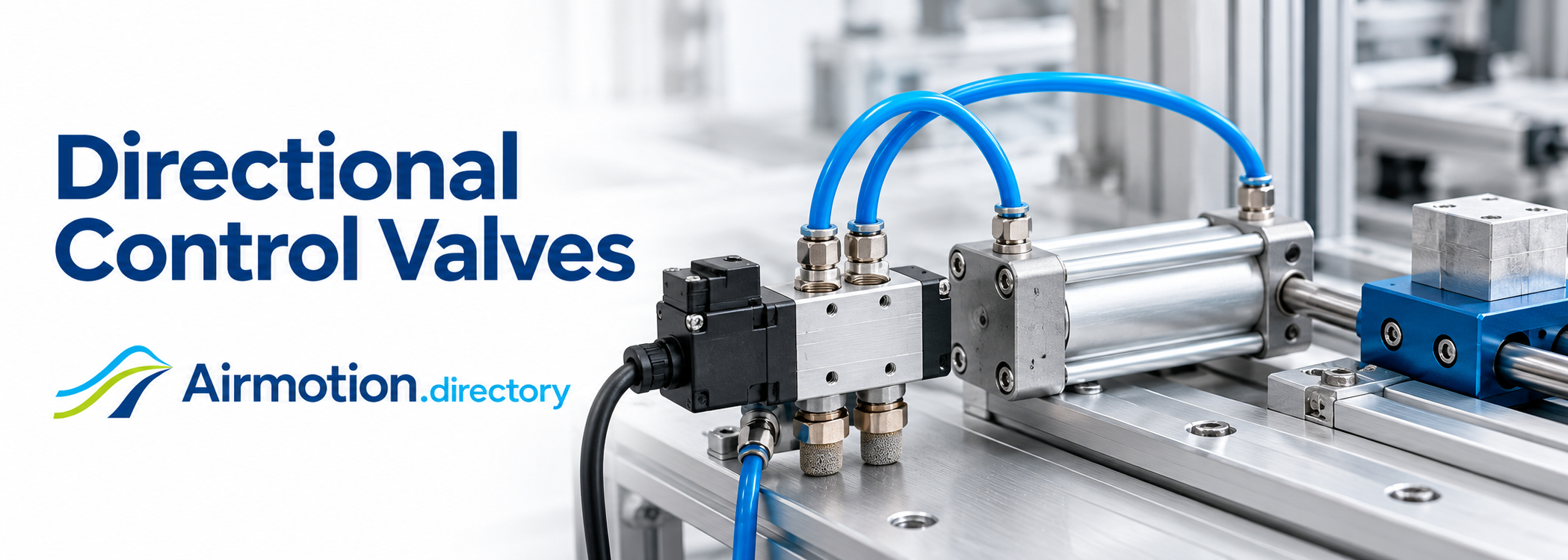
Send air where the next movement needs it
A directional control valve determines which flow paths are connected, supplied or exhausted. For a pneumatic machine, that can mean extending a cylinder, retracting a clamp or releasing a conveyor stop. The right valve has to match both the required movement and what should happen when its command changes.
Valve designations describe ports and switching positions. A 3/2 valve has three ports and two positions, commonly supplying and exhausting a single-acting actuator. A 5/2 valve has five ports and two positions, commonly reversing a double-acting cylinder. A 5/3 valve adds a third position whose center connections must be specified.
This page covers pneumatic directional switching. Pressure regulators, proportional valves and valve manifolds have separate category roles. A directional valve can change a cylinder’s direction without, by itself, setting its speed or guaranteeing a safe stopping condition.
Three practical applications
Diverting cartons
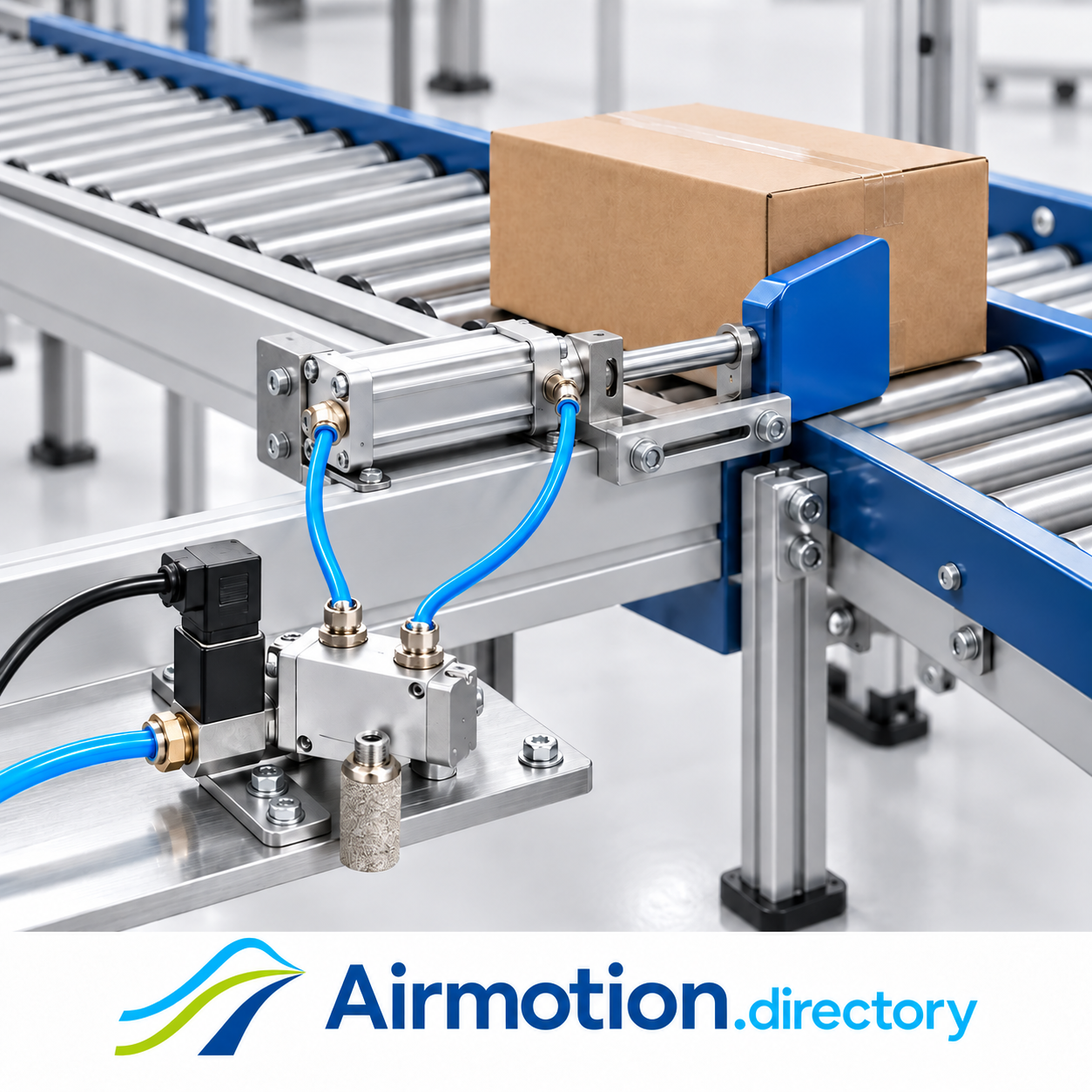
A directional valve switches the supply and exhaust paths to a double-acting cylinder that moves a conveyor paddle. Flow capacity, hose length and exhaust restrictions affect the response. The machine sequence must allow the paddle to return before the next carton arrives.
Clamping and releasing parts
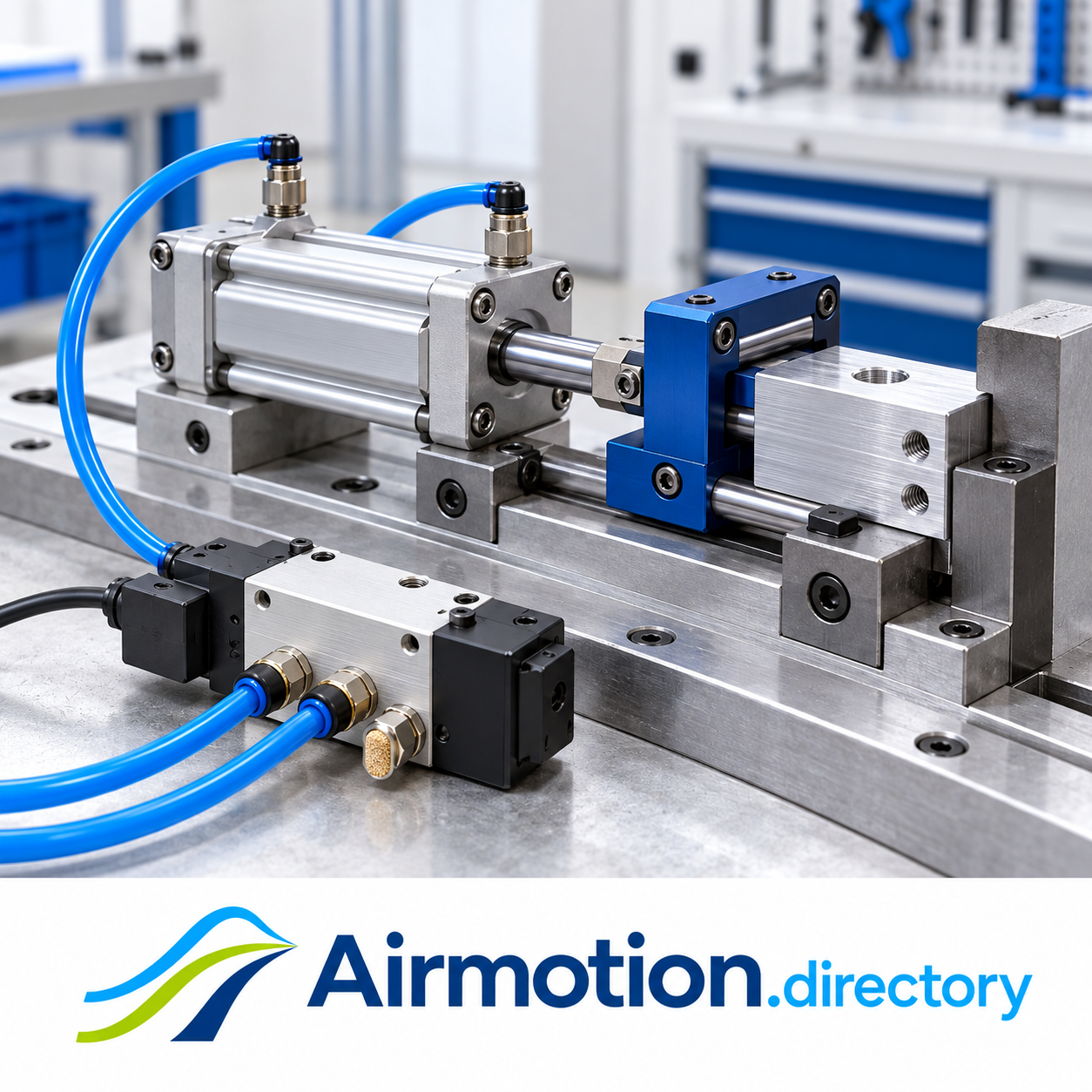
A valve extends and retracts a cylinder on a workholding fixture. The valve’s return arrangement and any center position matter when a command is removed. Clamp retention also depends on the complete circuit, leakage and mechanical arrangement.
Indexing a conveyor stop
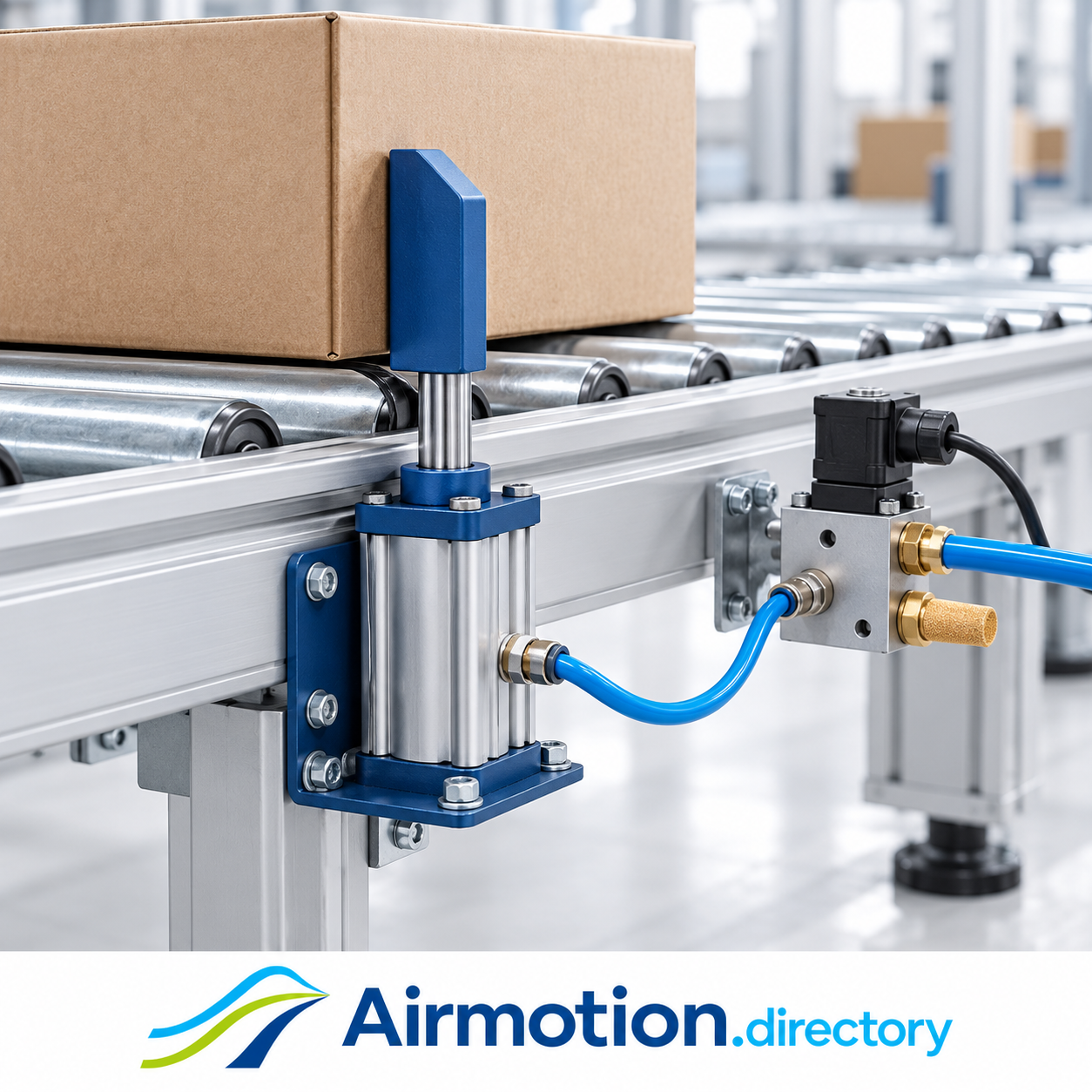
A 3/2 valve can supply air to a single-acting stop cylinder, then exhaust it so its spring returns the mechanism. Normally open or normally closed operation must match the intended sequence. The stop’s load capacity and motion remain separate selection questions.
These are illustrative applications, not reports of specific customer installations.
Three manufacturers to know
These independent manufacturer examples illustrate products within the category. They are not a ranking or a statement that Airmotion Directory represents or supplies these companies.
AVENTICS
Germany · An Emerson brand
AVENTICS Series 581 includes standardized pneumatic directional valves with configurations such as 5/2 spring-return and double-solenoid versions. Actuation, mounting interface and operating requirements depend on the selected model.
Metal Work
Italy
Metal Work’s Series 70 includes solenoid-operated and pneumatically operated directional valves. Its range includes 3/2 and 5/2 functions with different return arrangements, port sizes and mounting options.
UNIVER
Italy
UNIVER’s CL/CM UNIVERSAL threaded spool valves include 3/2, 5/2 and 5/3 functions. The company also offers miniature and base-mounted valve ranges for different installation requirements.
What should you compare?
Function and rest position. Match the port connections and switching positions to the actuator. For a 5/3 valve, identify whether the center condition blocks, exhausts or pressurizes the working ports. These conditions are not interchangeable.
Actuation and return. Compare solenoid, pneumatic, manual or mechanical operation. A monostable valve returns to one defined position when its actuation is removed, subject to its operating requirements. A bistable valve can retain its last selected state. Check the actual circuit symbol and behavior during loss of power or pilot pressure.
Flow and operating pressure. Compare flow ratings at equivalent test conditions and consider pressure loss through fittings, tubing and exhaust silencers. Some pilot-operated valves need a minimum pressure to switch. A matching thread size does not establish equivalent performance.
Installation and control compatibility. Confirm voltage, electrical connection, duty rating, environmental suitability and mounting interface. A closed-center spool does not guarantee leak-free load holding. Assess stopping and retention through the complete machine design.
What brought you here?
Buying or exploring an application?
Exploring one application? Explore Application IQ.
Already considering a purchase, supplier recommendation, or quotation? Explore the Buyer’s Second Opinion.
Selling or leading a business?
Working on a specific customer opportunity? Explore the Seller’s Second Opinion.
Own or lead a pneumatic or compressed-air business and want to examine its online revenue system? Explore Full Flow and Working Pressure.
Have a directional-valve requirement?
Send the valve function or circuit symbol, actuation and return type, port size, operating pressure, voltage where relevant, quantity and delivery location. Include the existing model number or mounting details for a replacement. Product inquiries are separate from the advisory services above.