
What Is Pneumatics?
What Is Pneumatics?
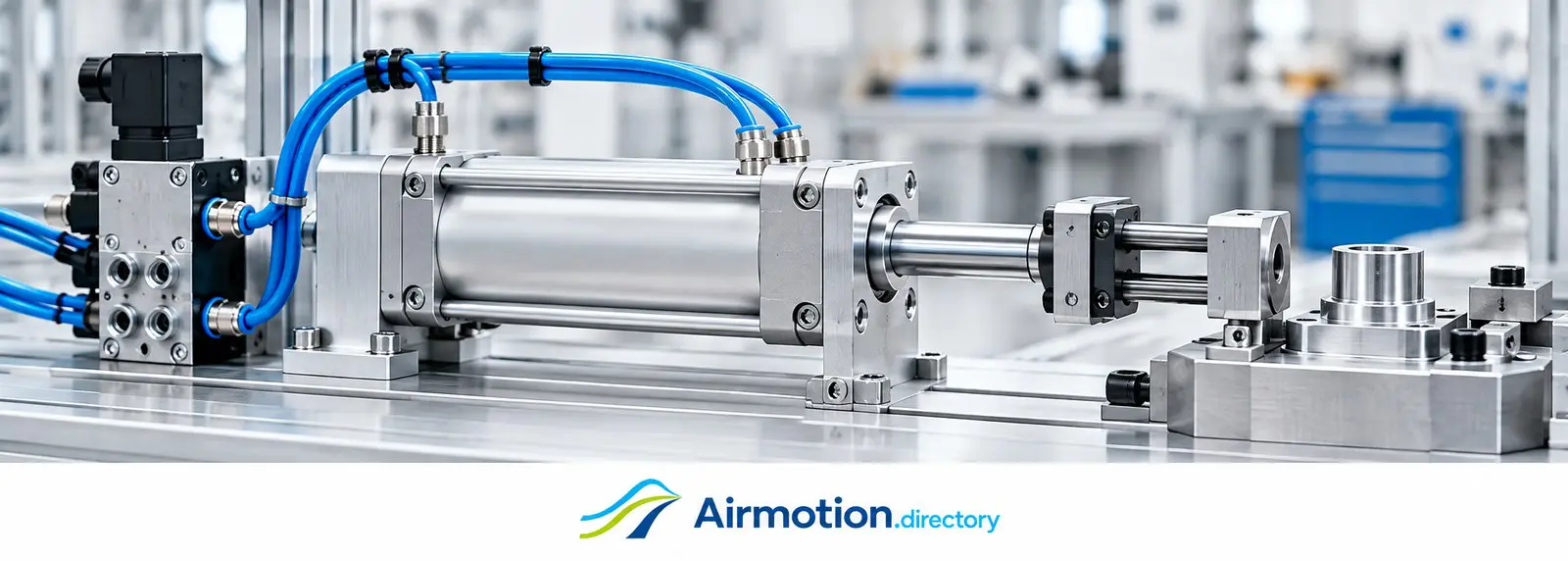
Pneumatics is the technology that uses pressurised gas, usually compressed air, to produce force, movement and control. A pneumatic system directs air through valves to devices such as cylinders, grippers and air motors, turning the stored energy into useful work.
In a machine, that work might be holding a component, stopping a carton or moving a part between assembly steps. The useful question is what the movement must accomplish: the load, travel, speed, control and operating conditions all affect the choice of equipment.
How does a pneumatic system work?
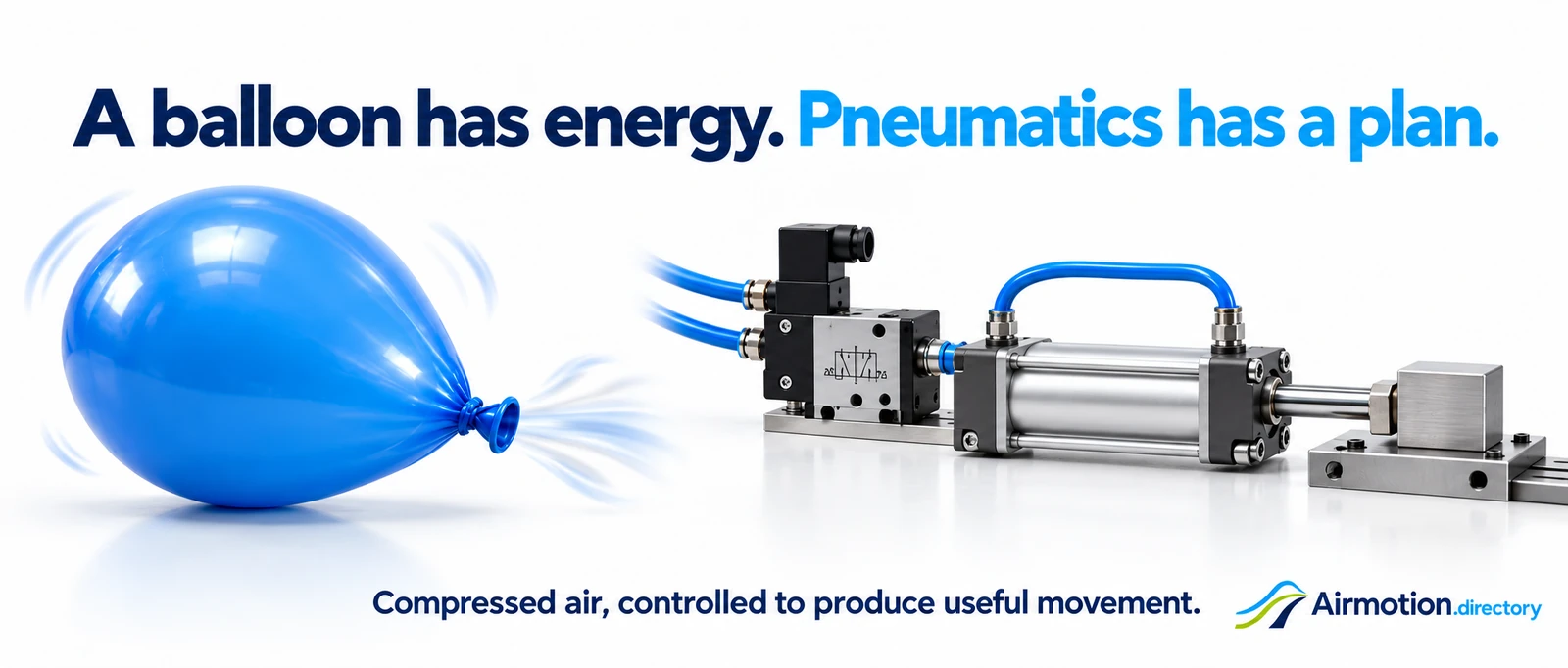
Consider a double-acting cylinder moving a part. A valve sends compressed air to one side of its piston while allowing air on the other side to exhaust. The pressure difference creates force and moves the piston and rod. Switching the valve reverses the air paths so the cylinder can move back.
The compressor supplies the air, but the pneumatic circuit controls its use. Regulators establish working pressure. Flow controls influence movement speed. Sensors can report position to a machine controller, which decides when the next action should happen.
A single-acting cylinder uses air pressure to drive movement in one direction, with a spring or external force providing the return. A double-acting cylinder uses compressed air for movement in both directions. The right arrangement depends on the task.
Three everyday industrial uses of pneumatics
Hold a part for assembly
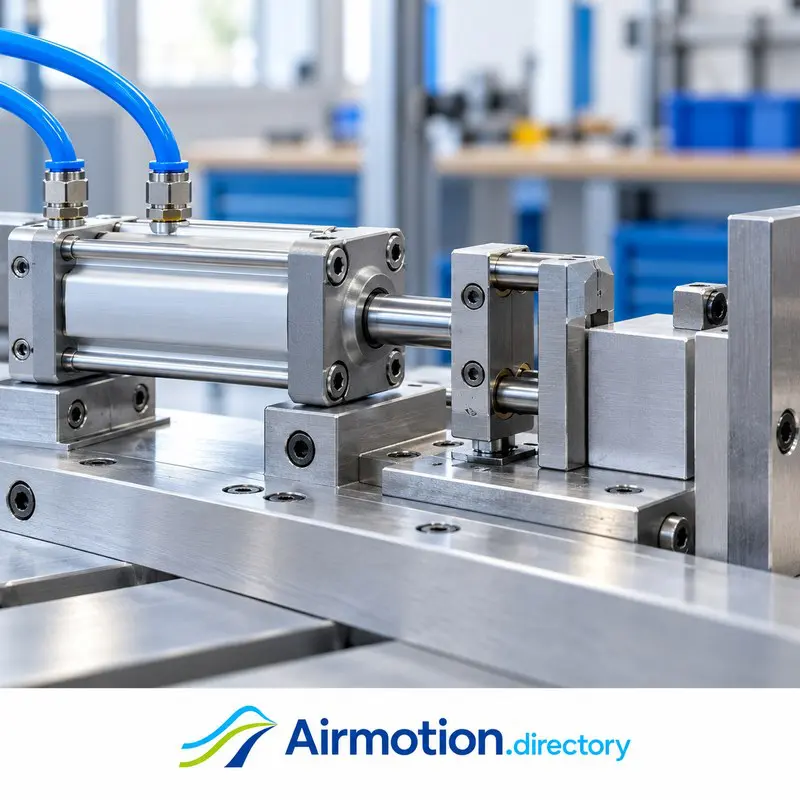
A pneumatic clamp holds a component against a locating surface while another operation takes place. The fixture positions the part; the actuator supplies the clamping action. Required holding force and the risk of marking the part influence selection.
Stop and position a carton
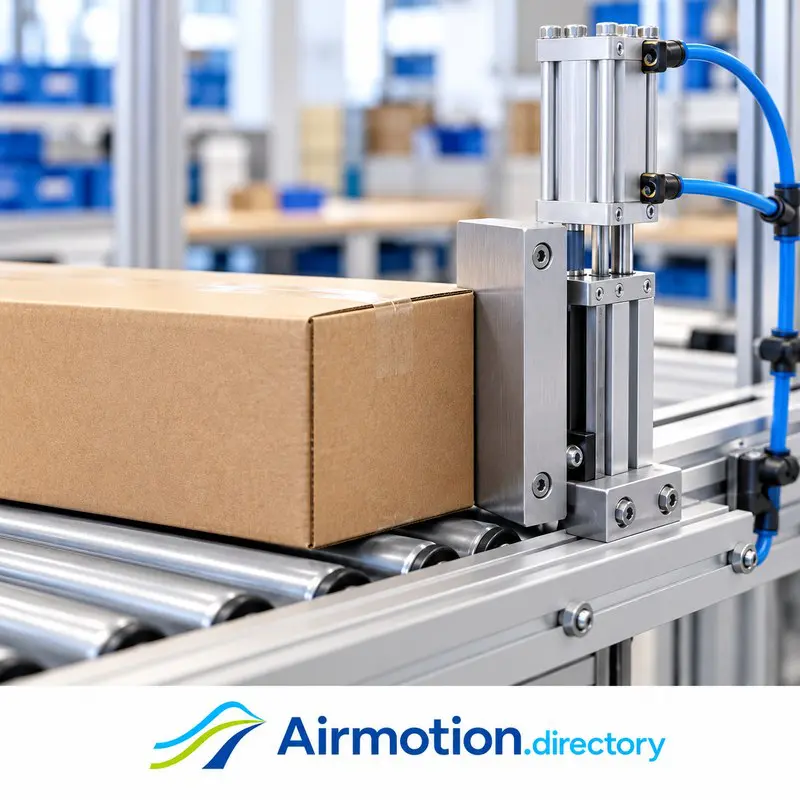
A pneumatically operated stop holds a carton at a workstation, then releases it for the next step. The stop mechanism and its guides must suit the moving load. A cylinder provides the movement, while the surrounding mechanism handles the application forces.
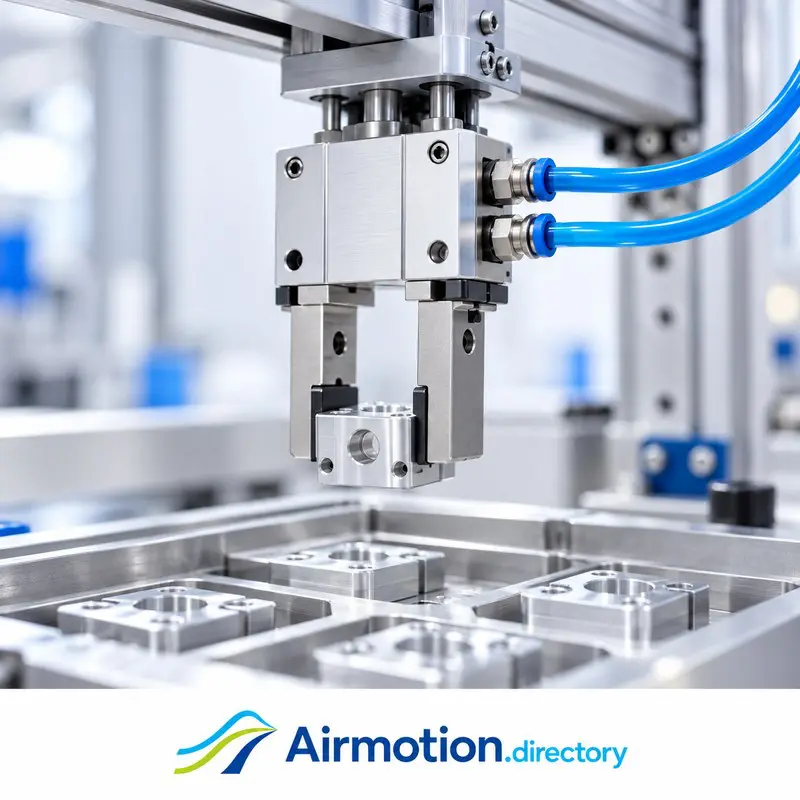
Grip a component
A pneumatic gripper opens and closes its jaws around a part during handling. Jaw shape, grip force, component weight and the motion of the handling system matter. Gripping the part and moving the gripper are separate tasks within the machine.
Images show illustrative applications, not installation drawings or specific suppliers’ equipment.
What are the main pneumatic components?
Air supply and preparation. A compressor, suitable storage and air treatment provide the working air. Filters, dryers and pressure regulators address different requirements. The supply must deliver the needed pressure, flow and quality at the machine.
Valves. Directional control valves route air to and from an actuator. Other valves regulate pressure or restrict flow. A valve’s function, flow capacity and method of actuation are different selection questions.
Actuators. Cylinders create linear movement; rotary actuators create turning movement; pneumatic grippers move jaws. Compact cylinders are one option where installation space is limited.
Connections and feedback. Tubing and hoses carry air, fittings connect the components, and sensors provide information such as position or pressure. These supporting parts can affect the behaviour of the whole circuit.
What determines pneumatic force and speed?
Force depends on pressure and effective piston area. Friction, back pressure and the load reduce the force available for useful work. A larger cylinder can provide more force at the same pressure, but also needs more air to fill its chambers.
Speed depends on airflow and the mechanical task. Valve capacity, tube dimensions, flow controls and load all play a part. A cylinder’s size and rated pressure alone do not establish its operating speed.
Air is compressible. Changes in load or pressure can influence movement. Simple pneumatic circuits are often used between defined end positions. More demanding positioning or motion profiles may require additional control or a different actuation technology.
Pneumatics, hydraulics or electric motion?
Pneumatics uses compressed gas. It is widely used for repeated movements such as clamping, stopping and handling. The cost and availability of a suitable air supply are part of the decision.
Hydraulics uses pressurised liquid, commonly oil. It is often considered where high forces are needed. Pumps, fluid management and the operating environment belong in the comparison.
Electric actuation uses electric motors and mechanical transmission. It is often useful for programmable positions, changing motion profiles and coordinated movement. The motor, drive, controls and mechanical arrangement must suit the task.
There is no universal winner. Compare the complete application: force, speed, precision, cycle frequency, space, environment, maintenance and operating cost. A machine can use more than one technology.
Explore hydraulics, pneumatics and electrical systems.
Does pneumatics need electricity?
The actuator’s working energy comes from compressed air, but many industrial pneumatic systems also use electricity. A motor may drive the compressor, solenoids may switch valves, and sensors and controllers may manage the sequence. Other valves can be operated mechanically, manually or by an air signal.
How is pneumatics different from compressed air?
Compressed air is the working medium; pneumatics describes how pressurised gas is used to do work and control movement. Understanding the supply helps explain the behaviour of the machine using it.
Read What Is Compressed Air? for an introduction to compression, storage, pressure, flow, air quality and operating cost.
Continue exploring
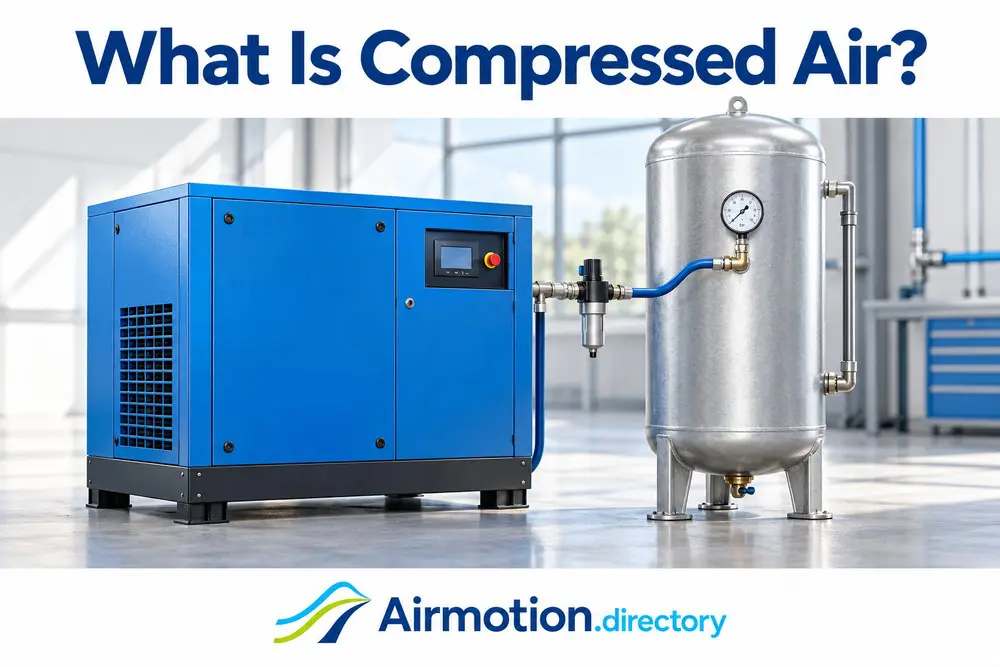
Understand how air is compressed, stored, prepared and delivered, and why pressure, flow and air quality matter.

Follow the connection from air supply to controlled movement, and see how one air system serves different kinds of work.
Explore compressed air and pneumatics


Have a pneumatic product inquiry?
Tell Airmotion Directory what needs to move or be held, where the equipment will be used and your expected timing. Include a model, specification or application description if you have one.