
Pneumatic Fittings
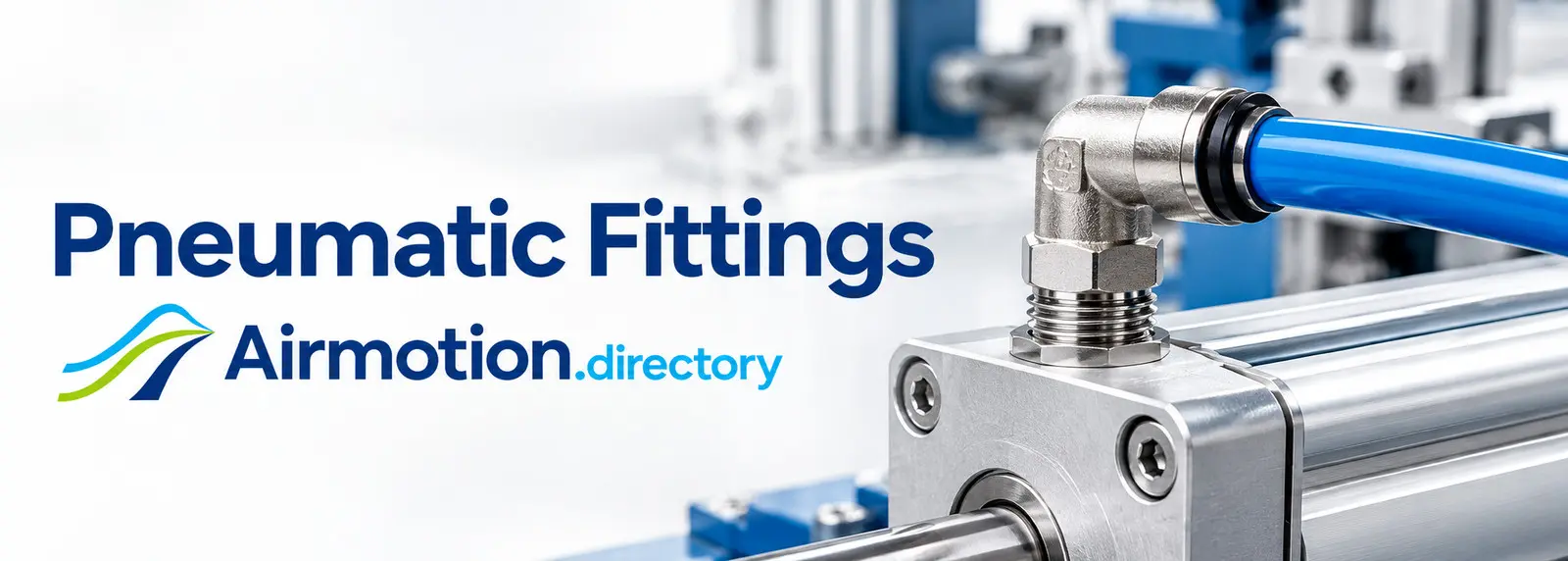
Make the connection fit the application
A fitting connects the air line to the component, changes its direction or divides its path. Choosing one means matching the tube, port and operating conditions. A connection can look right while using the wrong tube diameter, thread standard or sealing method.
Push-in fittings grip the outside of compatible tubing and seal around it. Other designs use compression, a union nut or a hose barb. Straight adaptors, elbows, tees and bulkhead connectors solve different routing and mounting problems. The connection method and the fitting’s shape are separate selection decisions.
This page focuses on machine-level pneumatic connections. Quick couplings, tubing, plant distribution piping and flow-control valves have separate category roles. A plain elbow changes the air line’s direction; it does not provide the adjustment of a flow-control fitting.
Three practical applications
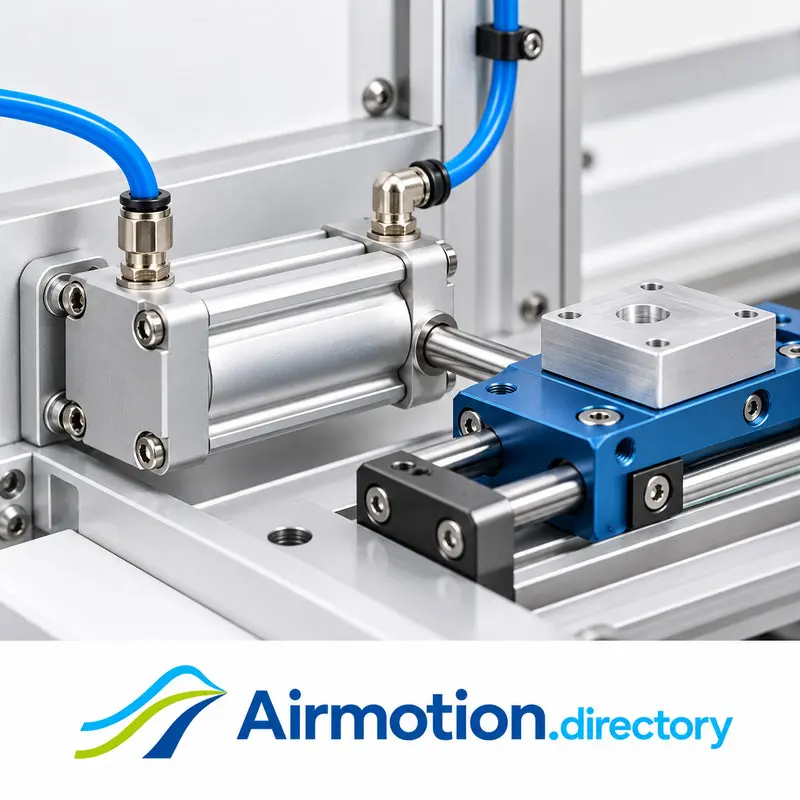
Routing a cylinder connection
A straight adaptor or elbow connects a cylinder port to the air tube. The choice affects clearance and the bend needed in the tube. Leave room for installation and tube release, and avoid using the fitting to support a strained or tightly bent air line.
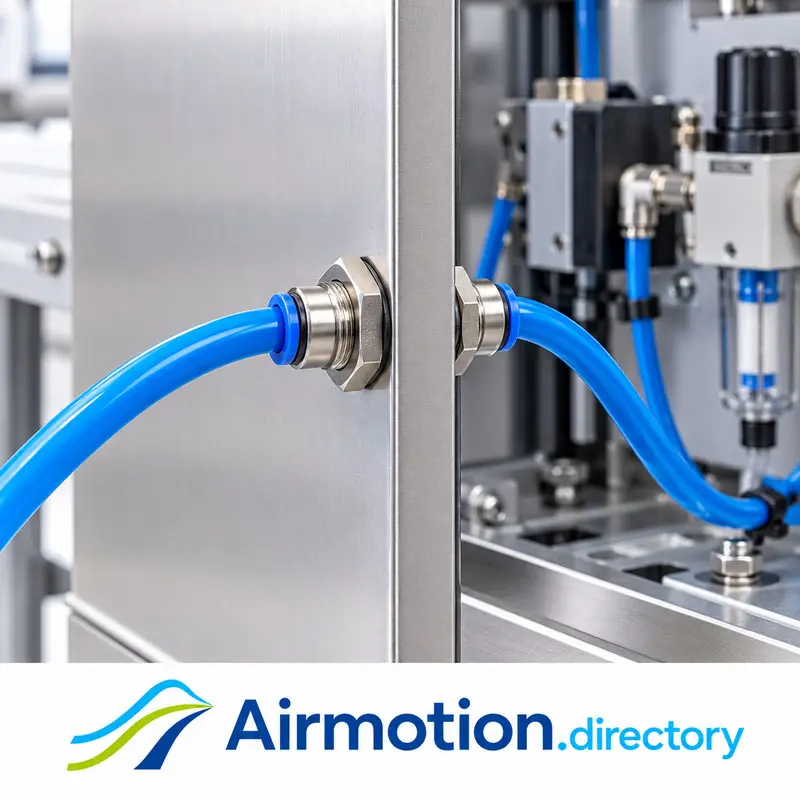
Passing through a panel
A bulkhead connector creates a fixed connection through a machine panel. Check panel thickness, mounting-hole size and access to the retaining nut. Support the tubing on both sides so movement and maintenance do not pull against the connection.
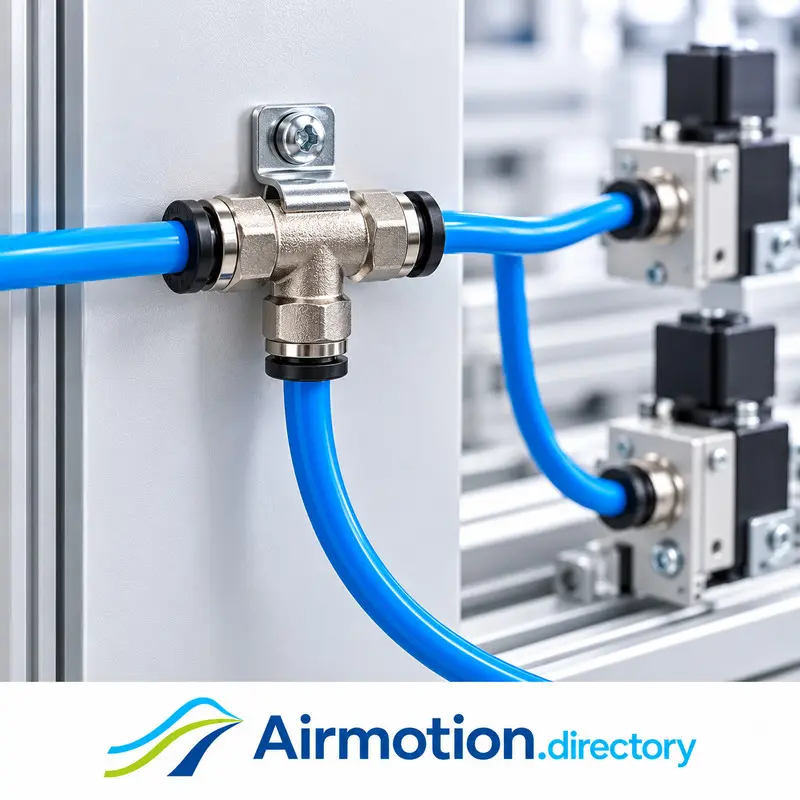
Branching an air supply
A tee or Y connector divides one air line into two paths. Match all connection sizes and consider the combined flow demand. A branch fitting does not regulate each outlet’s pressure or guarantee equal flow to the connected equipment.
These are illustrative applications, not reports of specific customer installations.
Three manufacturers to know
These independent manufacturer examples illustrate products within the category. They are not a ranking or a statement that Airmotion Directory represents or supplies these companies.
PISCO
Japan
PISCO’s Tube Fitting Standard series provides push-in connections for pneumatic piping. The range includes different connection shapes and tube sizes for machine air lines. Select the exact model against the specified tubing, port and operating requirements.
Aignep
Italy
Aignep’s 50000 Red Series includes push-in straight adaptors, elbows, tees, Y connectors and bulkhead fittings. Metric and inch tube options and different thread configurations are available within the range. The model code determines the actual combination.
Eisele
Germany
Eisele’s BASICLINE includes push-in connectors for compressed air. Series 15 uses a release ring and nickel-plated brass construction, while Series 14 uses a release sleeve. Compare the selected series, sealing arrangement and tube compatibility rather than treating the ranges as interchangeable.
What should you compare?
Tube fit. Match the tube’s outside diameter, material and hardness to the fitting specification. Metric and inch dimensions can be close without being equivalent. Follow the manufacturer’s cutting, insertion and inspection instructions for the chosen connection.
Thread and seal. Identify the actual port thread, including pitch and whether it is parallel or tapered. Check whether sealing occurs at the thread, an O-ring or a sealing washer. Use the specified seal and installation method; a similar nominal size does not establish compatibility.
Operating conditions. Confirm working pressure, temperature, air quality and exposure to oils, cleaning products or corrosion. Vacuum, food-contact and other special uses require evidence for the exact product. Body material alone does not establish suitability.
Flow, space and movement. Compare the internal passage, installation clearance and access for releasing the tube. Avoid unnecessary restrictions and unsupported tube loads. An elbow that can be positioned during assembly is not automatically rated for continuous rotation.
What brought you here?
Buying or exploring an application?
Exploring one application? Explore Application IQ.
Already considering a purchase, supplier recommendation, or quotation? Explore the Buyer’s Second Opinion.
Selling or leading a business?
Working on a specific customer opportunity? Explore the Seller’s Second Opinion.
Own or lead a pneumatic or compressed-air business and want to examine its online revenue system? Explore Full Flow and Working Pressure.
Have a pneumatic fitting requirement?
Send the existing part number or required connection shape, tube outside diameter and material, port thread, operating pressure and temperature, quantity and delivery location. For a replacement, include clear photographs and any markings on the existing fitting. Product inquiries are separate from the advisory services above.