
Flow-Control and Check Valves

Control the speed. Check the direction.
A flow-control valve adjusts airflow. A check valve allows air to pass in one direction and opposes reverse flow. A one-way flow control combines an adjustable restriction with a check-valve bypass, so it can meter air in one direction while allowing freer flow in the other.
What is the difference?
Needle valve: an adjustable restriction used to meter flow. One-way flow control: an adjustable restriction in one direction with a check bypass in the other. Check valve: a non-return function without adjustable speed control. Similar-looking bodies can contain different functions, so identify the circuit requirement before choosing the connection size.
These components do not replace a pressure regulator. A regulator controls pressure; a restriction changes airflow and creates a pressure drop while air is moving. Cylinder speed also depends on load, supply conditions and the rest of the circuit.
Three practical applications
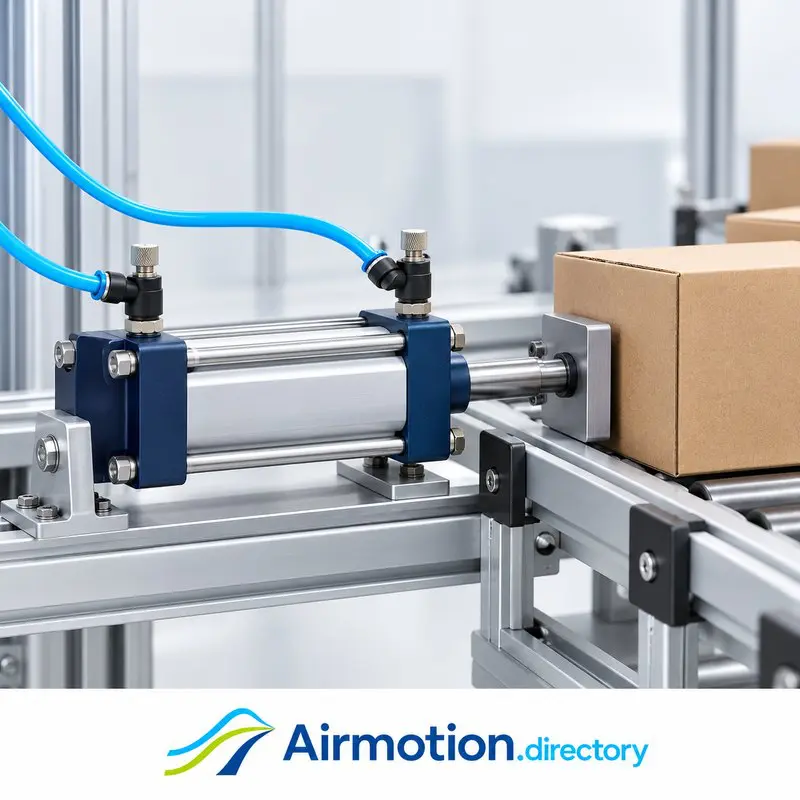
Adjusting cylinder speed
A carton-transfer cylinder needs an appropriate extension speed and a different return speed. One-way flow controls can adjust the two strokes. A meter-out arrangement restricts air leaving the cylinder while allowing freer supply flow. Check the valve orientation and selected cylinder’s instructions before installation.
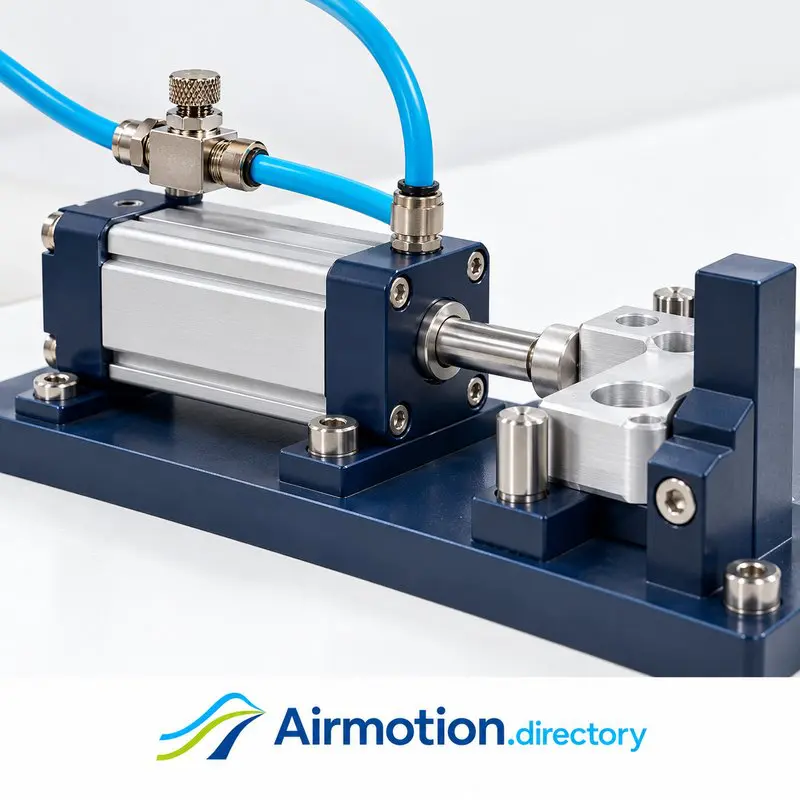
Positioning a small component
A small-bore cylinder moves a light component into a fixture. The useful adjustment range matters more than simply matching the thread. A valve that meters small flows can help set travel speed, while accessible adjustment and a suitable locking arrangement make the setting easier to manage.
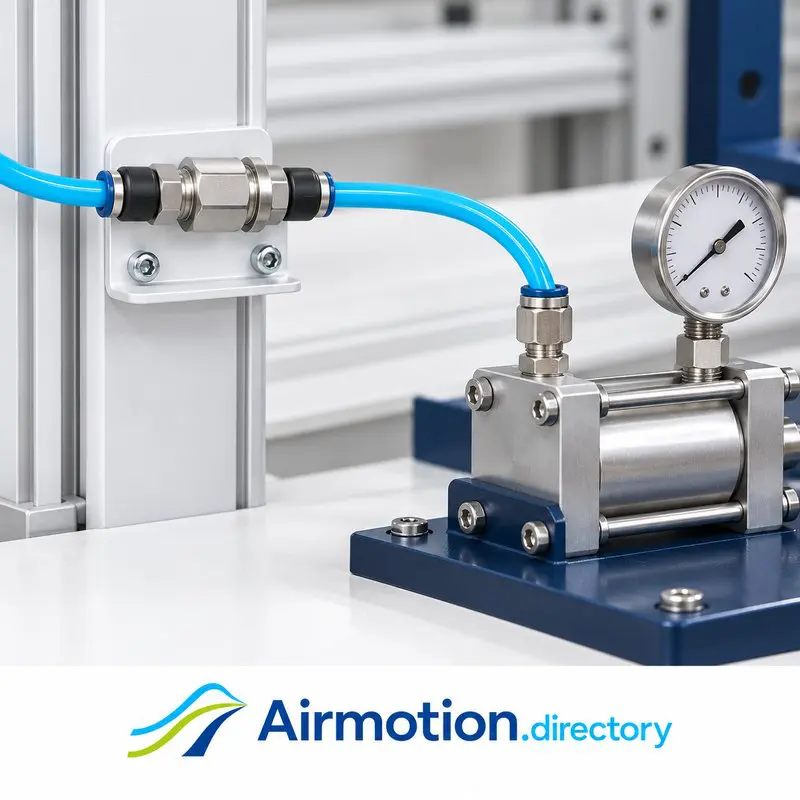
Preventing reverse airflow
A pneumatic branch needs to oppose airflow back toward its supply. A correctly oriented check valve provides the non-return function. Compare its opening pressure, forward pressure drop and permitted reverse leakage. A check valve alone does not establish safe isolation or guarantee that downstream pressure will remain indefinitely.
Application images are illustrative examples, not photographs of the featured brands’ products or customer installations.
Three brands to know
These independent examples show different approaches within the category. Inclusion does not imply that Airmotion Directory represents or supplies the featured brands.
Clippard
Clippard’s MFC and JFC flow controls combine a tapered adjustment needle with a check-valve function. The ranges include meter-in and meter-out versions and different mounting and adjustment options. Match the exact configuration to the intended direction of controlled flow.
Beswick Engineering
Beswick’s MIL-FC combines an adjustable orifice with a check valve and uses a twist sleeve for adjustment. It is intended for applications including small-bore air cylinders. The separate CKV range provides a duckbill check-valve function, with limits that vary by configuration.
ARO
ARO’s 104104 inline range includes distinct needle-valve, flow-control and check-valve models. This makes the required function an explicit buying choice rather than something to infer from appearance. Compare the selected model’s connections and operating limits with the actual circuit.
What to compare before choosing
Function and direction. Specify what air must do in each direction. Meter-in restricts entering air; meter-out restricts exhaust. Check the supplier’s flow markings and instructions rather than assuming all arrows mean the same thing.
Flow and adjustment. Establish the cylinder bore, stroke, load and required cycle time, along with available pressure. Compare usable flow range and pressure drop under stated conditions. An ordinary needle-type restriction does not guarantee constant cylinder speed when load or pressure changes.
Connections and installation. Confirm tube outside diameter, thread form, mounting space and adjustment access. Include the fittings and tubing in the comparison. A fitting that screws in is not proof that the complete arrangement is suitable.
Check-valve behavior. Compare cracking pressure, which is the pressure difference needed to begin opening, along with forward-flow capacity and reverse-leakage specifications. Verify seals, temperature and medium compatibility for the selected model.
For the wider circuit, see standard pneumatic cylinders and directional control valves. Flow controls adjust movement; directional valves route the supply and exhaust.
What brought you here?
Exploring an application or purchase?
For one defined application question, explore Application IQ. For an actual purchase, quotation or supplier choice, see The Buyer’s Second Opinion.
Working on a customer opportunity?
For one active customer opportunity and its commercial approach, see The Seller’s Second Opinion.
Have a flow-control or check-valve requirement?
Share the required function, flow direction, operating pressure, tube and thread sizes, quantity and destination country. For cylinder-speed control, include the cylinder model, bore, stroke, load and required cycle time. For a replacement, include the full valve model number and clear photographs. Product inquiries are separate from the advisory services above.
Contact Airmotion Directory about flow-control and check valves