
PSI vs CFM: What’s the Difference?
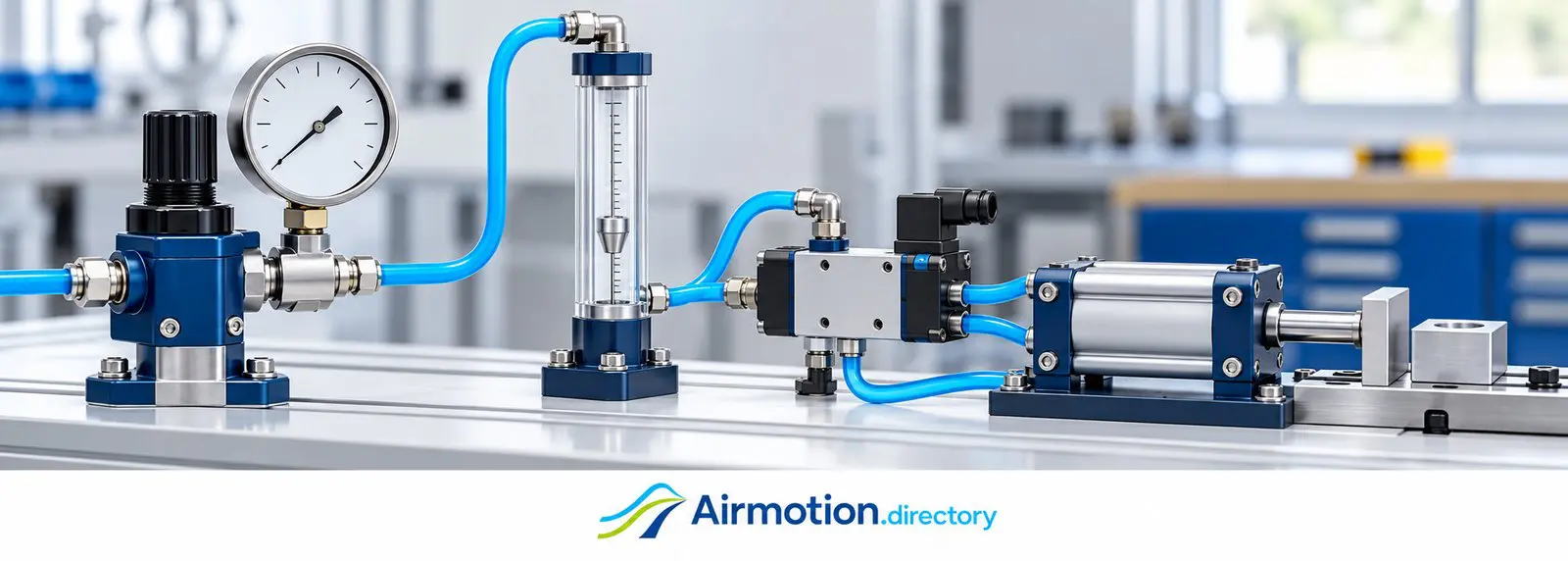
PSI measures pressure. CFM measures the volume of air flowing per minute at stated conditions. Pneumatic equipment needs enough airflow at its required operating pressure. A high pressure rating alone does not establish whether an air supply can run the equipment.
| Measurement | Meaning | What to check |
|---|---|---|
| PSI | Pounds per square inch: pressure | Pressure available at the equipment while it operates |
| CFM | Cubic feet per minute: volumetric flow | Required and delivered flow, compared at consistent reference conditions |
What does PSI tell you?
PSI describes pressure at a particular point in the system. A regulator adjusts downstream pressure, but the pressure reaching a machine also depends on losses through the supply system.
Check whether a specification uses psig or psia. Gauge pressure, psig, is measured relative to local atmospheric pressure. Absolute pressure, psia, includes atmospheric pressure. They use different reference points and should not be substituted for each other in calculations.
What does CFM tell you?
CFM is a volumetric flow rate. Air volume changes with pressure and temperature, so the stated conditions matter. Specifications may use SCFM, inlet flow or free-air delivery. Confirm what each figure represents and the reference conditions used before comparing numbers.
CFM describes a rate of flow. It does not mean the same thing as a receiver tank’s volume. For the wider explanation, see What is compressed air?
Why does equipment need both?
The required pressure and air consumption describe different parts of the same requirement. Pressure must be available at the machine during operation, and the supply must deliver the required flow.
Illustrative example: A continuous load requires 20 SCFM at an inlet pressure of 90 psig. If its supply can deliver only 15 SCFM at that pressure, the shortfall is 5 SCFM. Both SCFM figures must use the same reference conditions for that subtraction to be meaningful. These are example values, not a product specification.
A compressor’s maximum pressure rating does not answer whether it can deliver those 20 SCFM at 90 psig. Check its delivered-air specification at the relevant pressure, then account for losses between the compressor and the equipment.
Why can the gauge look fine until the machine starts?
An idle reading does not show how the supply behaves under load. When equipment starts, airflow increases and pressure losses can become significant.
Compare pressure near the equipment with upstream readings while the equipment operates. A restrictive fitting, an undersized line or a filter needing attention can contribute to the problem. Insufficient total supply is another possibility. The symptom alone does not identify the cause.
Related guides: pressure regulators and FRLs, pneumatic tubing and hoses, and quick couplings.
Can you convert PSI directly into CFM?
No. Pressure and volumetric flow are different quantities. There is no general conversion factor that turns a PSI reading into a CFM value.
A component’s flow data may relate flow to inlet pressure, outlet pressure and specified test conditions. Use data for that component and those conditions instead of treating a pressure reading as a flow measurement.
Will turning up the pressure solve the problem?
First establish the equipment’s specified pressure and flow requirements, then measure what reaches it during operation. Raising system pressure can increase energy use and air consumption without addressing a restriction or an incorrectly sized supply.
Use the equipment and component ratings when deciding settings. A larger compressor or higher pressure setting should follow a diagnosis of the requirement and the losses.
What should buyers and sellers confirm?
Confirm the required inlet pressure during operation, peak and average airflow with stated reference conditions, cycle rate, simultaneous loads and necessary air quality. Compare these requirements with compressor delivery at the relevant pressure and losses through the distribution and treatment system.
For intermittent equipment, distinguish flow while operating from average consumption over the full cycle. A useful specification connects air demand to how the machine will actually run.
Explore the next question
Browse the Product Directory for equipment guides, or return to Motion. Air. Clarity. for more practical compressed-air explanations.