
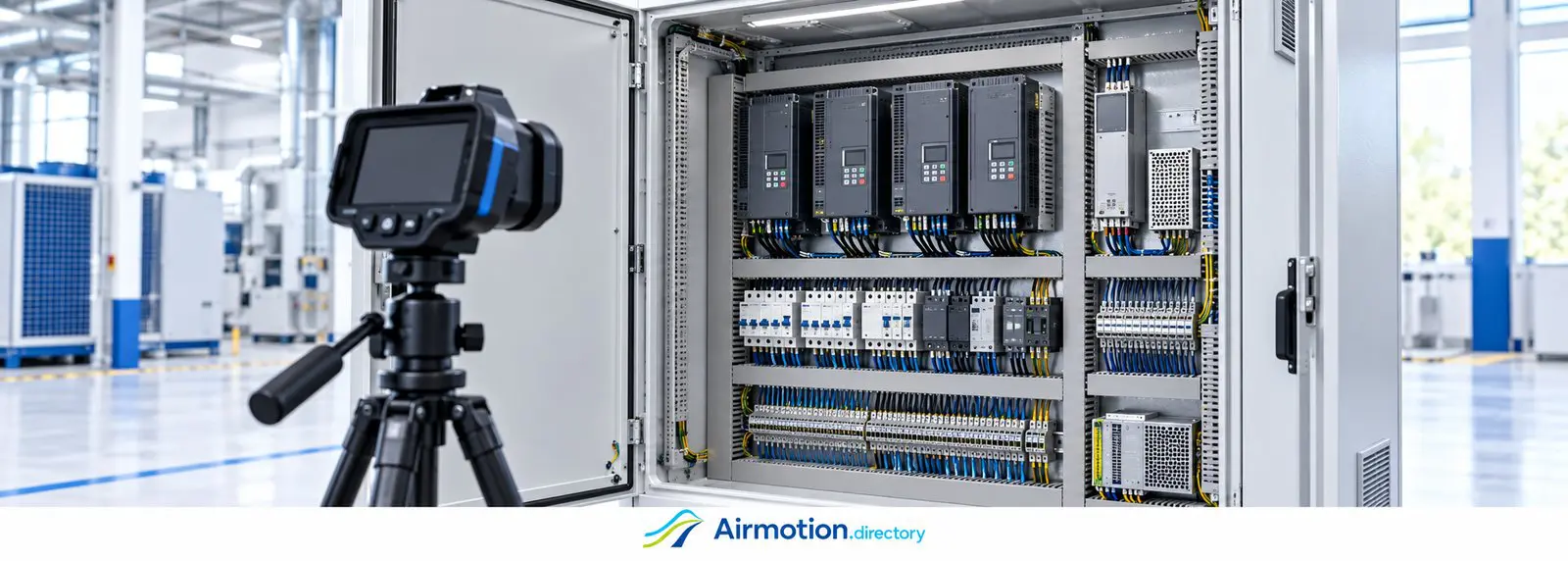
Electrical control cabinets often overheat even when ambient temperature appears normal.
You walk into the facility. The room feels manageable — 26–30°C (78–86°F). But temperature monitoring shows that the enclosure is far hotter inside. Drives and PLCs are running warm. Fans are running constantly.
This is not unusual.
It’s a balance between internal heat load, heat removal, and ambient temperature.
Why Cabinet Temperatures Rise Unexpectedly
Electrical enclosures trap heat by design. Even moderate internal loads can push temperatures beyond component ratings.
Common causes include:
1. Internal Heat Load From Drives and Power Supplies
Variable frequency drives (VFDs), transformers, and power supplies generate continuous heat. When several components operate simultaneously, internal temperature can rise 10–20°C above ambient.
2. Poor Internal Airflow
Fans circulate air, but they often recirculate hot air inside the enclosure rather than removing heat. Without directed cooling, hotspots form around high-load components.
3. Outdoor Solar Gain
For exterior panels, direct sun exposure can raise enclosure surface temperature significantly. Even if ambient air is moderate, solar radiation adds continuous thermal load.
4. Humid or Tropical Conditions
Fan/filter units bring ambient moisture into the enclosure. Condensation can form if internal surfaces fall below the air’s dew point, particularly during temperature changes or shutdowns.
5. Undersized Cooling or No Cooling at All
Many enclosures rely on passive ventilation that was adequate at installation — but not after additional equipment was added later.
Why Traditional Fan Cooling Often Fails
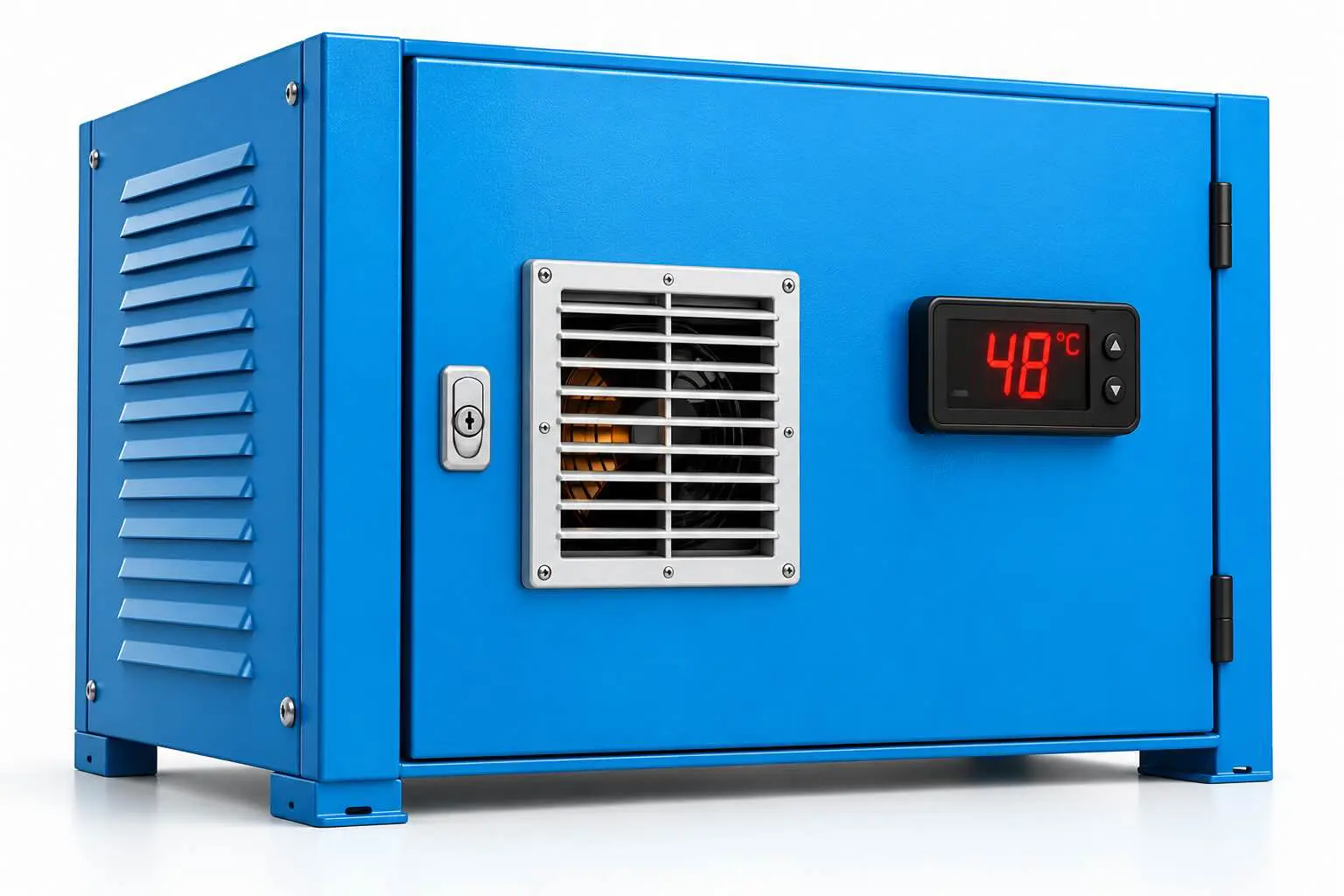
Fan and filter systems depend on ambient air being cooler than the target internal temperature.
If ambient air is too warm, or airflow is insufficient for the heat load, fan cooling may not maintain the required temperature. It may also introduce contaminants or moisture.
This is where cooling method selection becomes critical.
When Vortex Cooling Makes Sense
A vortex tube cooling system uses compressed air to generate cold air without refrigerants or moving parts.
It can be effective when:
- Heat load is localized
- Ambient air is warm or humid
- Contamination risk must be minimized
- Simplicity and reliability are priorities
However, vortex cooling is not always the right solution. Compressed air consumption must be evaluated. Noise levels must be considered. Operating cost impact must be calculated.
Cooling should not create a larger energy problem.
What Should Be Evaluated Before Selecting a Cooling Method
Before choosing any enclosure cooling solution, evaluate:
- Total internal heat load (watts)
- Ambient temperature range
- Humidity conditions
- Available compressed air supply
- Noise considerations (dBA impact)
- Duty cycle (continuous vs intermittent operation)
Without this analysis, cooling systems are often oversized, undersized, or misapplied.
If Your Cabinet Temperature Is Unstable
If your enclosure runs hot, shuts down intermittently, or operates near component limits, the issue is rarely “just ventilation.”
Submit your system details through the product inquiry form at the bottom of the product directory.
Include the cooling load, ambient conditions, available compressed air, and noise requirements so the inquiry can be directed to a suitable manufacturer. Final equipment selection should be confirmed with the manufacturer for your application.
Reliable systems start with proper evaluation — not guesswork.
Keep exploring
Explore enclosure cooling
Review compressed-air-powered enclosure cooling and practical applications.
Check the operating cost
Consider the energy cost of the compressed air a cooling system consumes.