
Compact Cylinders
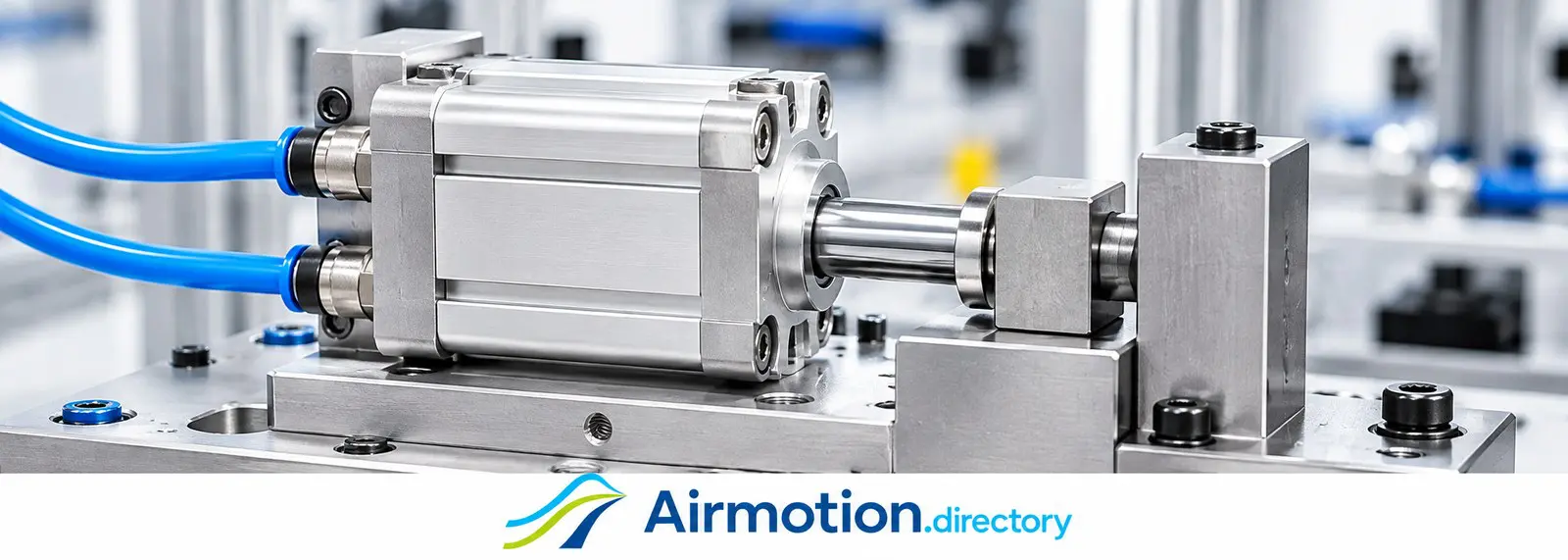
Useful motion when installation space is limited
A short stroke can do an important job: holding a part, releasing it from a nest or raising a stop. A compact pneumatic cylinder provides linear motion in a shorter body, helping it fit where a conventional cylinder’s overall length would be difficult to accommodate.
Compressed air acts on a piston to move the rod. Double-acting designs use air for motion in both directions; single-acting versions typically use a spring for one direction. Compact describes the package, not a promise that every model provides the same force, mounting arrangement or load capacity.
This page focuses on compact rod-type pneumatic cylinders. Guided cylinders, rodless actuators and rotary actuators serve different motion requirements and have their own selection considerations.
Three practical applications
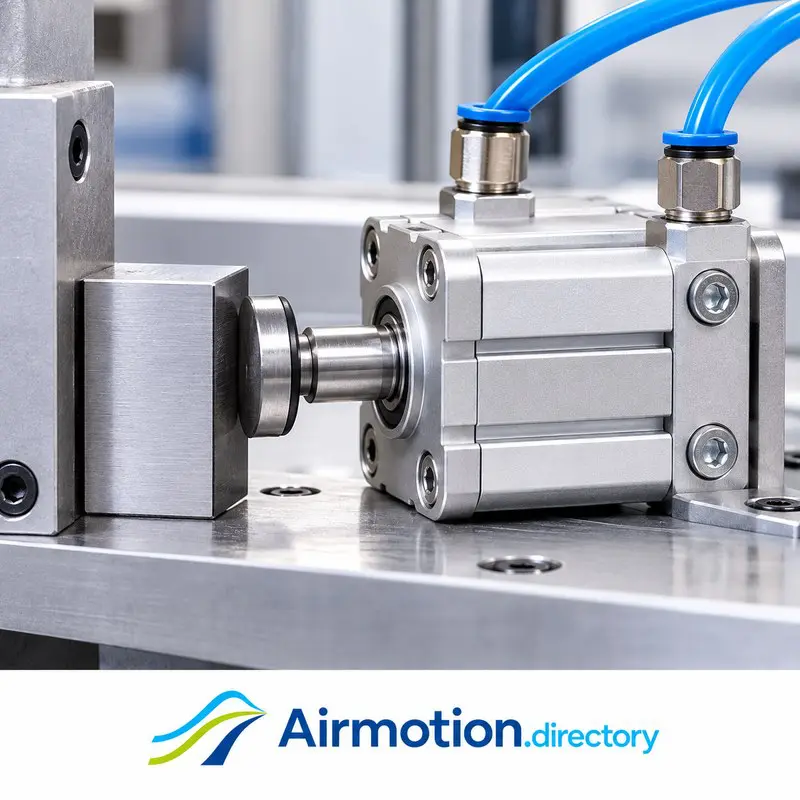
Clamping a part in a fixture
A compact cylinder presses a supported workpiece against a locator during an assembly operation. The short movement keeps the mechanism small. Required holding force, contact geometry and the response to loss of air still need to be established for the application.
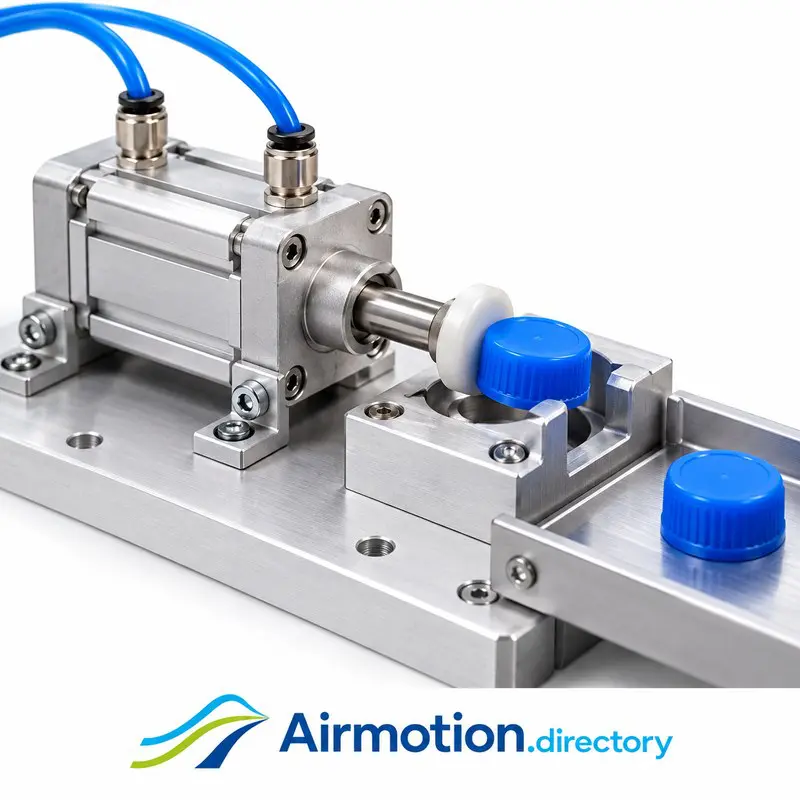
Ejecting a finished part
A short push releases a part from a nest after an operation. The cylinder fits behind the fixture, with the ejector arranged along its rod axis. Stroke, return clearance and contact with the part matter more than simply choosing the smallest body.
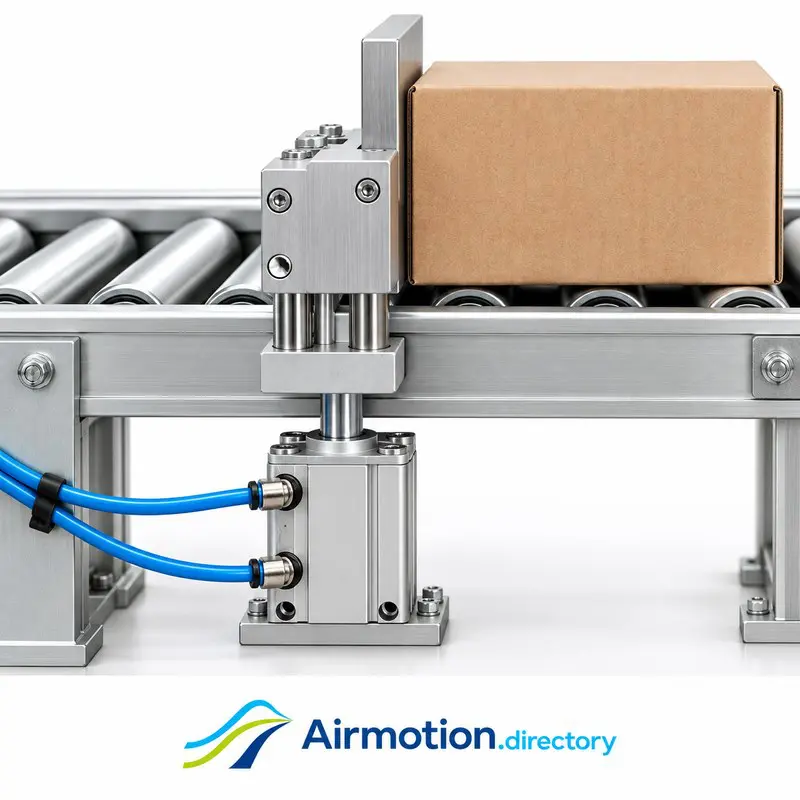
Operating a guided conveyor stop
A cylinder raises and lowers a stop blade while a separate guide supports the blade against conveyor loads. The cylinder provides the movement; the guide and stop structure handle the application’s lateral forces and impact. Compact packaging helps where space below the conveyor is limited.
These are illustrative applications, not reports of specific customer installations.
Three supplier and manufacturer examples
These companies offer relevant compact-cylinder options. Their roles are identified below. Inclusion is an independent editorial feature and does not imply that Airmotion Directory represents or supplies them.
Paquin
United States | Supplier
Paquin Engineered Products lists Fabco-Air’s Pancake II cylinders among its partner products. Fabco-Air manufactures this compact-cylinder family for short-stroke applications with limited installation space. Paquin is featured here as the supplier; the cylinder manufacturer is Fabco-Air.
Koganei
Japan | Manufacturer
Koganei’s CDA/HCDA series offers compact block-style cylinders for machine and fixture applications. The wider range includes different operating and mounting arrangements. Compare the selected model’s dimensions and options against the actual fixture rather than assuming one compact cylinder replaces another.
AirTAC
Taiwan | Manufacturer
AirTAC’s ACQ compact-cylinder series uses a space-saving body with magnetic-switch mounting slots and optional installation accessories. It provides another approach to compact pneumatic motion, with the exact bore, stroke, mounting and sensing configuration determined by the model selected.
What to compare before choosing
Installed size, stroke and access. Check the cylinder body, extended rod, mounting hardware, fittings and sensor clearance together. A short body is only useful if the complete assembly fits and remains accessible.
Force and operating conditions. Match bore and available pressure to the required motion and load, allowing for friction and the application’s operating conditions. Confirm single- or double-acting operation and how the mechanism behaves if air is lost.
Guidance and end-of-stroke loads. A standard piston rod should not be treated as a general-purpose guide. Check permitted side loads, rotation, speed and impact against the manufacturer’s data; provide separate guidance or stopping arrangements where needed.
Mounting, sensing and replacement. Compare mounting-hole positions, rod connections, port threads, magnetic sensing and the exact dimensional drawing. Similar bore and stroke do not establish interchangeability between brands or families.
What brought you here?
Exploring an application or purchase?
For an early application question, explore Application IQ. For an actual purchase, quotation or supplier choice, see The Buyer’s Second Opinion.
Working on sales or the wider business?
For one active customer opportunity, see The Seller’s Second Opinion. Owners examining their online revenue system can explore Full Flow and Working Pressure.
Have a compact-cylinder requirement?
Share the application, required stroke, available installation space, load or force requirement, operating pressure, quantity and timeframe. For a replacement, include the manufacturer, complete part number and any available dimensional drawing. Product inquiries are separate from the advisory services above.