
Quick Couplings

Quick connections. The right match still matters.
A quick coupling lets a compressed-air hose, tool or fixture be connected and disconnected without undoing a threaded joint each time. It is useful wherever equipment changes regularly or a hose needs to be removed between tasks.
The connection normally pairs a socket with a matching plug. Locking and shut-off arrangements vary: some sockets close the supply when disconnected, while venting designs release downstream pressure before the plug separates. Those differences matter as much as the connection size.
This guide covers quick couplings for compressed-air tools and equipment. Hydraulic couplings, breathing-air connections and permanent tube fittings have different requirements and are outside this page’s scope.
Three practical applications
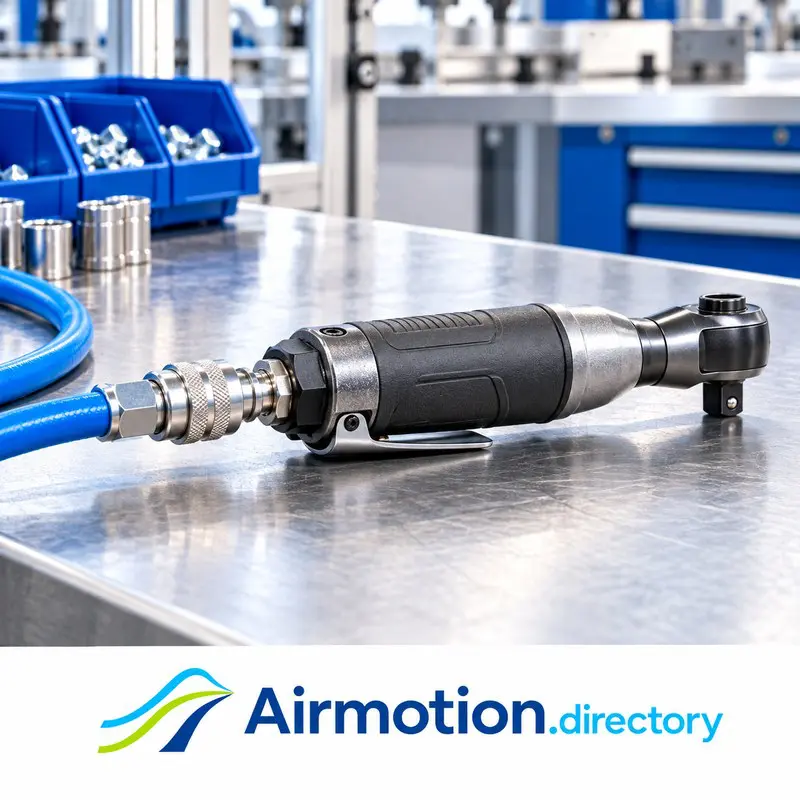
Changing bench tools
An assembly station may alternate between pneumatic tools during a shift. A compatible coupling and plug make the hose connection reusable, while the required airflow and the tool manufacturer’s connection guidance determine the suitable arrangement.
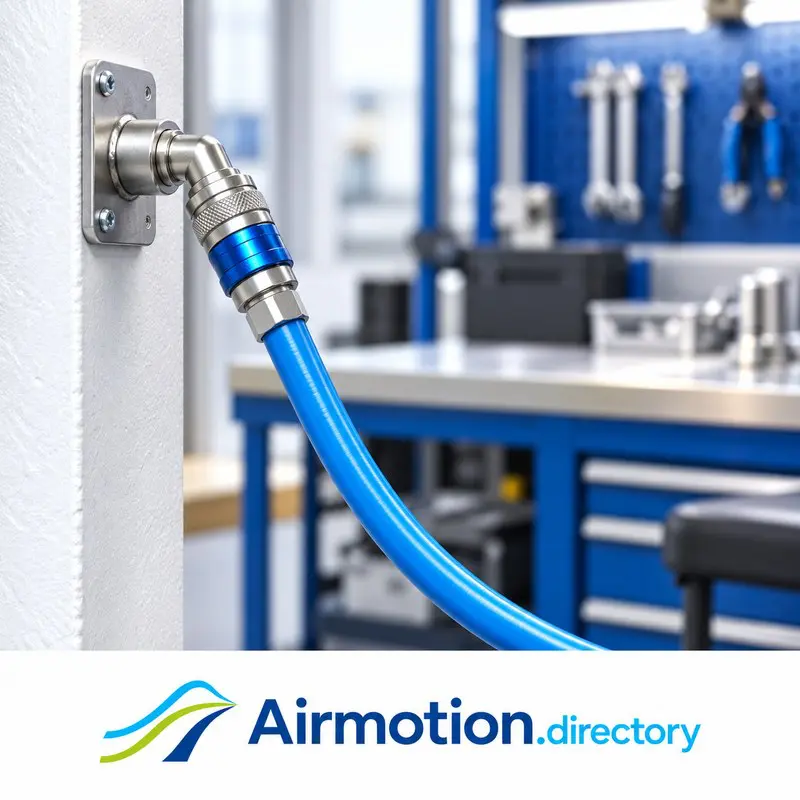
Connecting a workstation hose
A detachable hose connects a work area to its air supply. Coupling access, hose routing and the release mechanism all affect everyday handling. A venting design can release trapped downstream pressure before separation.
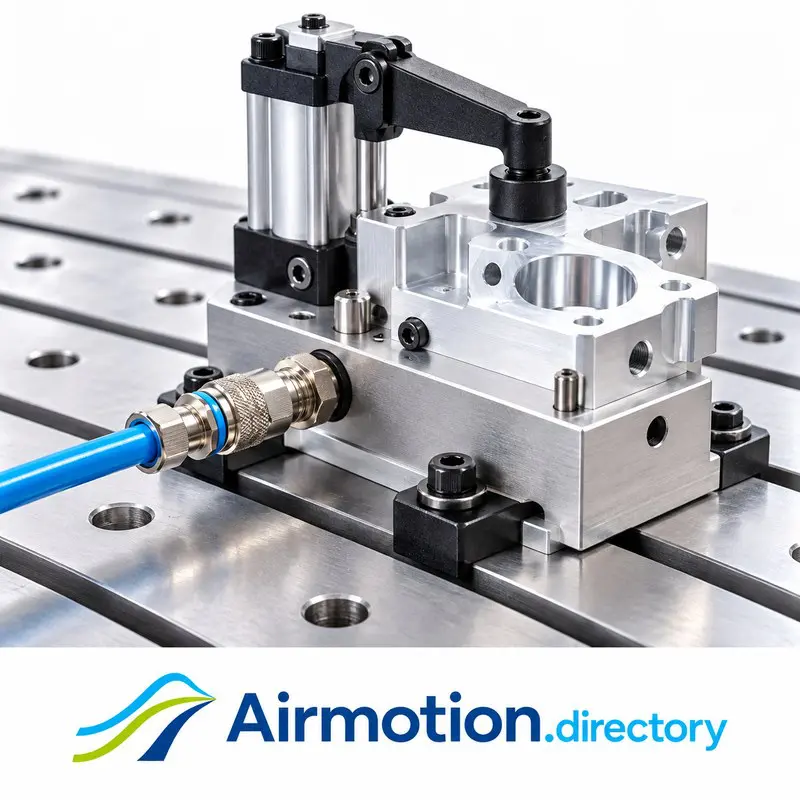
Removing a pneumatic fixture
A fixture that changes between jobs can use a detachable air connection at its base. The coupling must suit the circuit and operating conditions. Disconnecting it does not by itself establish that the fixture is isolated or free of stored energy.
These are illustrative applications, not reports of specific customer installations.
Three manufacturers to know
These manufacturers offer relevant compressed-air coupling ranges. They are independent examples for comparison; inclusion does not imply that Airmotion Directory represents or supplies them.
CEJN
Sweden
CEJN’s eSafe range includes compressed-air couplings designed to vent downstream pressure before disconnection. The range provides different connection profiles and sizes, so selection starts with the exact plug interface and operating requirement.
Prevost
France
Prevost’s prevoS1 range uses a push-button release system for compressed-air connections. Its high-flow 11EB models are offered in several plug profiles, illustrating why similar-looking couplings should not be assumed interchangeable.
Nitto Kohki
Japan
Nitto Kohki’s Hi Cupla range includes couplings for factory air lines and pneumatic tools, with different sizes and end connections. Match the selected model’s fluid, material and valve arrangement to the application rather than treating the whole range as one specification.
What to compare before choosing
Plug profile and end connection. The plug profile determines whether the two coupling halves match. Thread size, thread standard and hose connection are separate checks. A matching thread alone does not establish coupling compatibility.
Airflow and pressure loss. Compare flow data at stated test conditions and the demand of the connected equipment. A physically convenient coupling can still restrict the air available to a tool.
Disconnection behaviour. Check whether the selected design shuts off the supply, vents the downstream line or permits another flow arrangement. Follow the manufacturer’s connection and isolation instructions; a quick coupling is not a substitute for the machine’s isolation procedure.
Materials and working conditions. Confirm pressure, temperature, seal compatibility, hose attachment and exposure to wear or contamination. Keep matching plugs and replacement parts identifiable across the work area.
What brought you here?
Exploring an application or purchase?
For an early application question, explore Application IQ. For an actual purchase, quotation or supplier choice, see The Buyer’s Second Opinion.
Working on sales or the wider business?
For one active customer opportunity, see The Seller’s Second Opinion. Owners examining their online revenue system can explore Full Flow and Working Pressure.
Have a quick-coupling requirement?
Share the application, existing coupling or plug identification, hose or thread connection, operating conditions, quantity and timeframe. A clear photo or part number is useful when matching an existing connection. Product inquiries are separate from the advisory services above.