
Pneumatic Tubing and Hoses
Give compressed air a clear path to the job
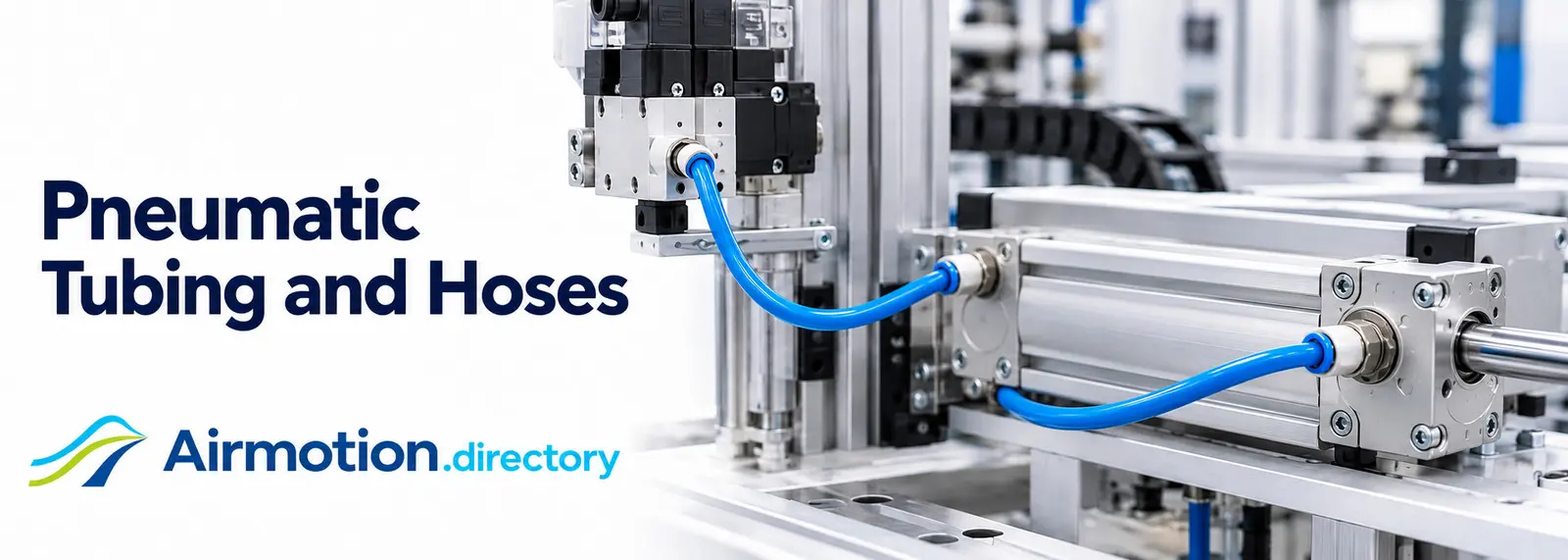
A pneumatic cylinder or tool can only use the air that reaches it. Tubing and hoses connect valves, actuators and point-of-use equipment. Their internal diameter, length and routing affect pressure loss and response, while the material and construction determine whether they suit the movement and surroundings.
Pneumatic tubing is commonly specified by its outside diameter for connection to compatible fittings. Hose may use reinforced construction and be specified by its inside diameter and end connections. Product terminology varies, so compare the actual dimensions, material and ratings rather than relying on the name alone.
This category covers flexible compressed-air connections on machines and at workstations. Fittings, quick couplings and rigid plant distribution piping have separate roles. A tube that fits a connector is not automatically suitable for the pressure, temperature or duty of the application.
Three practical applications
Connecting a cylinder
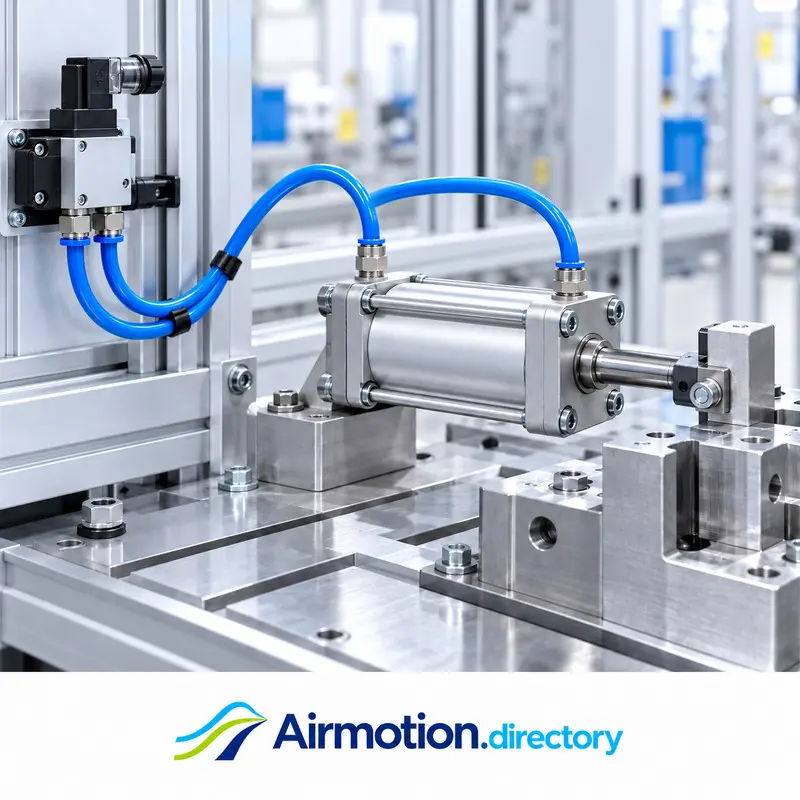
Two air lines connect a directional valve to a double-acting cylinder. Select the tube bore for the required flow and route each line without tight bends, rubbing or strain at the fittings. Color coding can make the connections easier to identify during assembly and replacement.
Following a moving axis
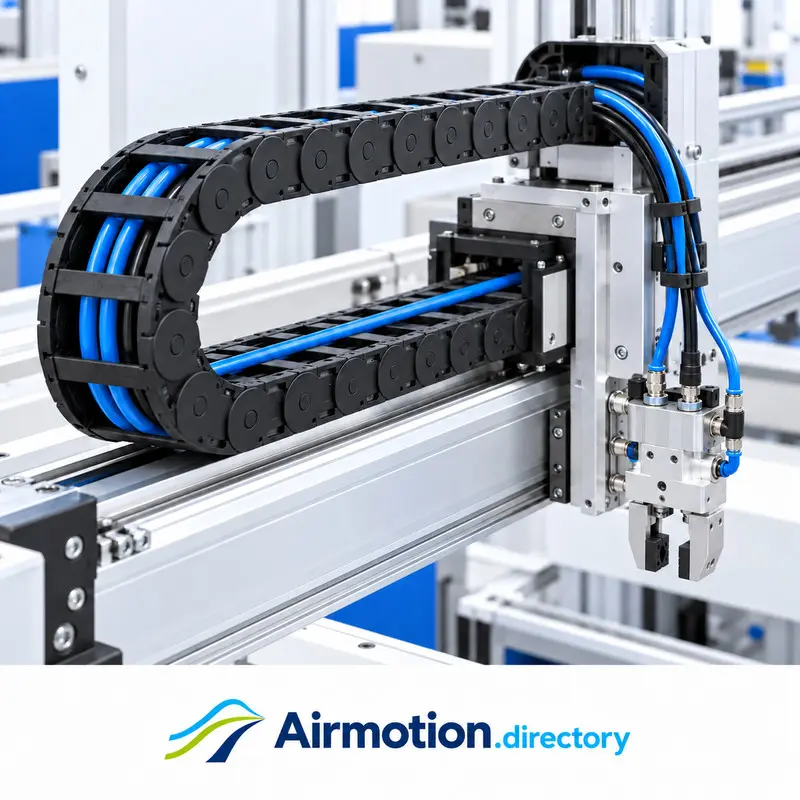
A cable carrier supports air lines traveling with a gripper or machine carriage. Select tubing approved for the required repeated movement and respect its dynamic bend radius. A flexible material description alone does not establish suitability for continuous flexing.
Reaching a bench tool
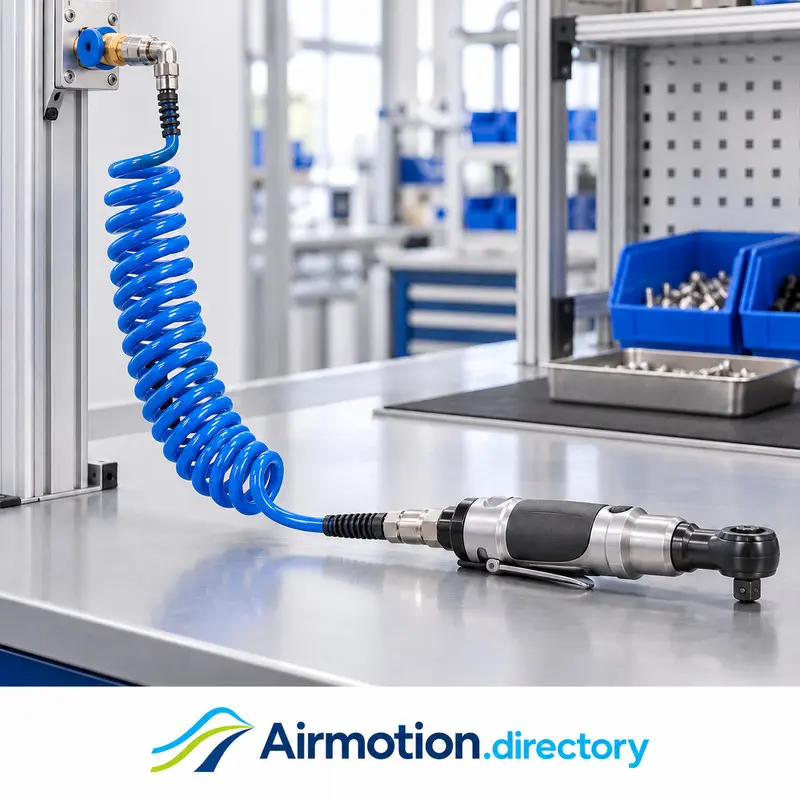
A retractile hose extends as a pneumatic tool moves around a workstation and draws back when released. Compare usable working length, retraction force, internal bore and end connections. The line must deliver the tool’s required flow while leaving practical room to work.
These are illustrative applications, not reports of specific customer installations.
Three manufacturers to know
These independent manufacturer examples illustrate products within the category. They are not a ranking or a statement that Airmotion Directory represents or supplies these companies.
NITTA
Japan
NITTA offers polyurethane and nylon tubing for pneumatic connections. Its U2 polyurethane range serves general pneumatic piping, alongside U1 and U5 variants with different pressure and flexibility characteristics. The range also includes coiled and multi-line tubing.
Freelin-Wade
United States
Freelin-Wade manufactures Fre-Thane polyurethane tubing in different sizes and hardness grades. Its range includes straight tubing, retractile coils and bonded multi-line products, as well as reinforced polyurethane hose. Selection depends on the particular product and operating conditions.
ZEC
Italy
ZEC manufactures thermoplastic tubing and hoses for pneumatic and other fluid applications. Its PU SH98 polyurethane tubing is offered in metric and imperial sizes for industrial automation. The manufacturer identifies energy-chain installation among its applications; confirm the requirements for the chosen size and duty.
What should you compare?
Dimensions and connections. Confirm outside diameter, inside diameter and wall thickness, including whether the dimensions are metric or inch. Match the specified tube material and hardness to the fitting. Similar-looking sizes are not interchangeable.
Pressure, temperature and environment. Check the working-pressure rating at the actual operating temperature, rather than using burst pressure as a working limit. Consider moisture, oils, cleaning chemicals, abrasion and outdoor exposure. Suitability for food contact, breathing air or other special service requires product-specific evidence.
Movement and routing. Distinguish a stationary connection, occasional movement and continuous flexing. Compare bend-radius requirements, torsion limits, support and strain relief. Keep the line clear of pinch points and surfaces that can wear through it.
Flow and usable length. Compare internal bore, total line length and restrictions at couplings or fittings. A compact coil can contain considerably more tubing than its working reach suggests. Include the complete connection when checking whether sufficient air reaches the tool or actuator.
What brought you here?
Buying or exploring an application?
Exploring one application? Explore Application IQ.
Already considering a purchase, supplier recommendation, or quotation? Explore the Buyer’s Second Opinion.
Selling or leading a business?
Working on a specific customer opportunity? Explore the Seller’s Second Opinion.
Own or lead a pneumatic or compressed-air business and want to examine its online revenue system? Explore Full Flow and Working Pressure.
Have a pneumatic tubing or hose requirement?
Send the existing product code or required material, outside and inside diameters, operating pressure and temperature, total length, movement requirements, quantity and delivery location. For an assembled hose, include the end connections and required working reach. Product inquiries are separate from the advisory services above.