
Vacuum Generators

Create vacuum where the work happens
A vacuum generator can put suction close to the part being handled. The useful question is whether it can establish and maintain the required vacuum through the real cycle, with the actual workpiece and available compressed-air supply.
Pneumatic vacuum generators, also called ejectors, pass compressed air through a nozzle to create a low-pressure region that draws air from a vacuum connection. Single-stage and multistage designs serve different combinations of vacuum level, suction flow and air consumption. This page covers compressed-air ejectors rather than electrically driven vacuum pumps.
The generator creates the vacuum. Suction cups, grippers, tubing and fixtures connect it to the workpiece. A good generator cannot compensate for an unsuitable cup or a leaking seal.
Three practical applications
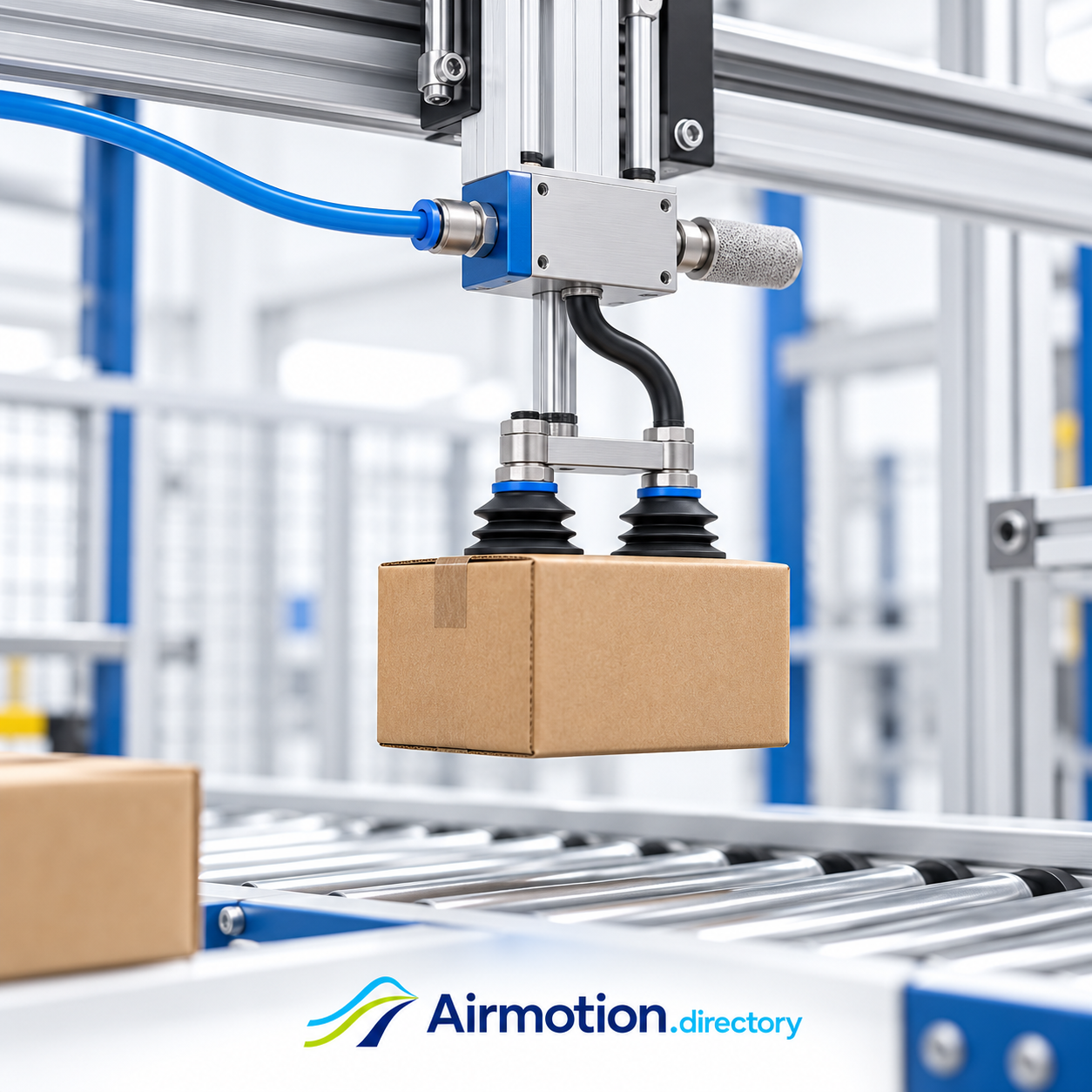
Carton handling
An ejector supplies vacuum to cups on a packaging machine or handling gantry. Cardboard porosity, seams and changing surfaces can admit air, so suction flow under leakage matters as much as the maximum vacuum shown in a catalog.
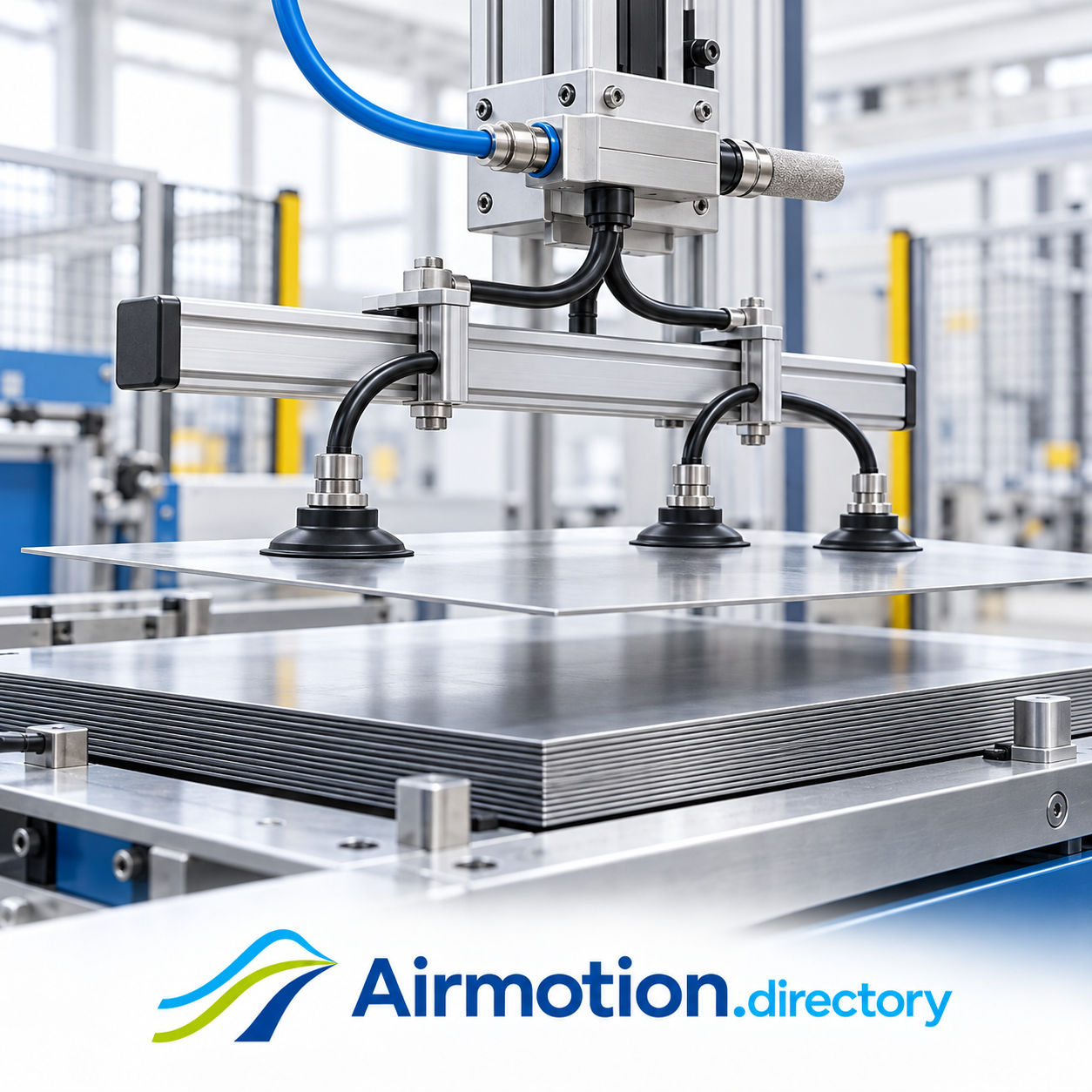
Sheet-metal handling
Suction cups lift a smooth sheet for transfer to the next operation. Generator response, tubing volume and cup arrangement affect how quickly the system reaches its holding condition. Sheet weight, acceleration and surface oil also affect the handling decision.
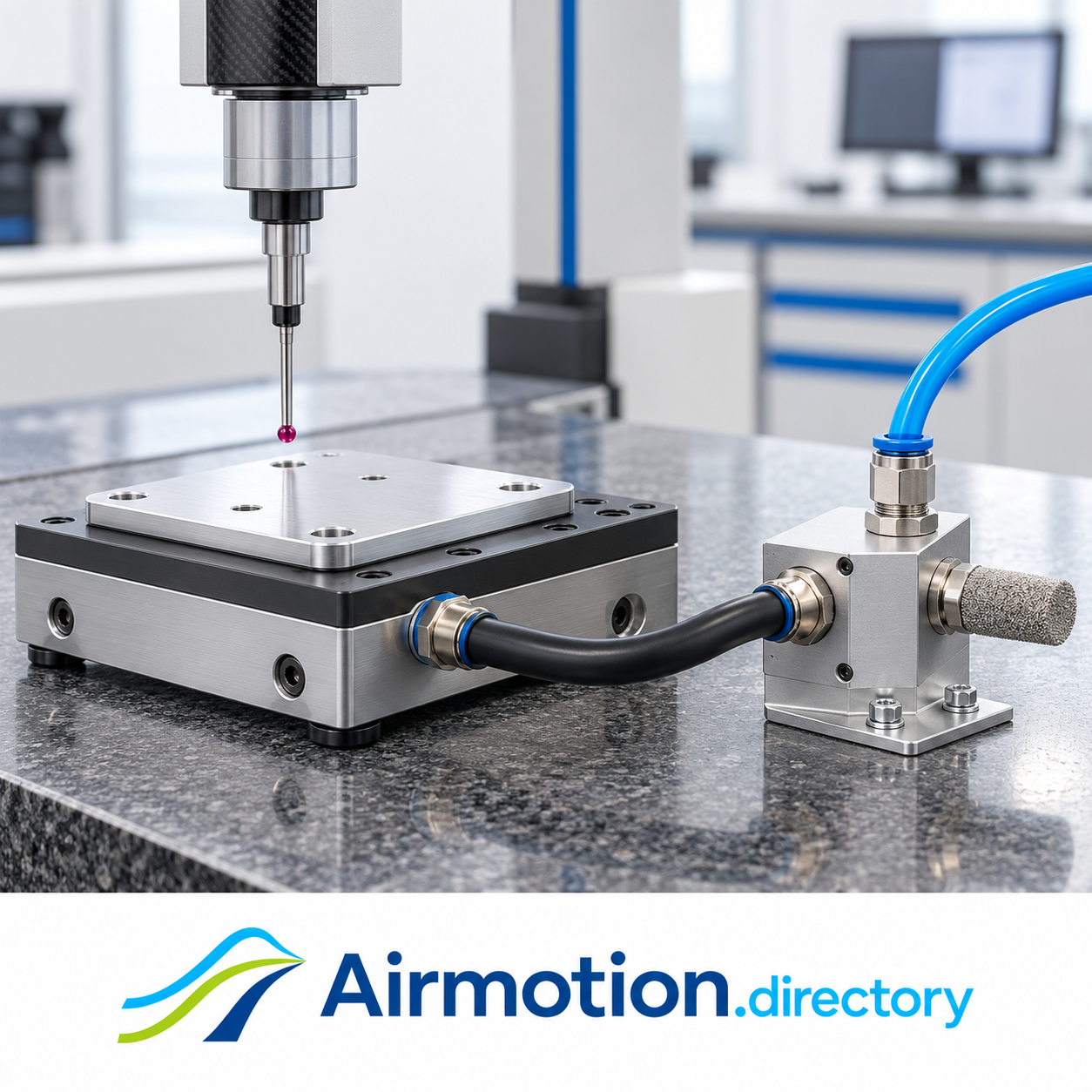
Inspection fixtures
A supported workpiece is held against a vacuum fixture during inspection. The fixture seal and leakage determine the vacuum demand. Monitoring the holding condition can help distinguish a correctly seated part from one that has not sealed.
These are illustrative applications, not reports of specific customer installations.
Three manufacturers to know
These independent manufacturer examples show different approaches within the category. They are not a ranking or a statement that Airmotion Directory represents or supplies these companies.
Piab
Sweden
Piab’s piINLINE ejectors use COAX cartridge technology in compact units that can be positioned near suction cups. The range provides options for local vacuum generation where mounting space and connection layout matter.
Schmalz
Germany
Schmalz offers SCPSc and SCPSi compact ejectors for automated handling, including robot and linear-axis applications. Vacuum monitoring, control interfaces and air-saving functions depend on the selected model.
Vuototecnica
Italy
Vuototecnica’s PVP range includes single-stage Venturi generators and multistage designs. Its product range covers applications such as suction-cup handling of sheet steel, glass and plastic panels.
What should you compare?
Vacuum level and suction flow. A sealed, nonporous part presents a different demand from a porous carton. Compare the performance curve at the intended operating vacuum and supply pressure, rather than choosing on maximum vacuum alone.
Evacuation time and cycle. Cup volume, hose length, fittings and leakage affect how quickly vacuum builds. Include the time needed to establish a confirmed grip and release the part. Locating an ejector close to the cups can reduce the volume to evacuate.
Compressed-air use and controls. Compare consumption over the working cycle. An air-saving control can stop generation after a suitable vacuum level is reached on a sufficiently sealed system; leakage may require frequent restarting. Check the conditions behind any savings claim.
The complete holding system. Review vacuum sensing, filters, exhaust noise, release functions and the response to a loss of air or power. The generator specification alone does not establish whether a suspended load will remain held.
What brought you here?
Buying or exploring an application?
Exploring one application? Explore Application IQ.
Already considering a purchase, supplier recommendation, or quotation? Explore the Buyer’s Second Opinion.
Selling or leading a business?
Working on a specific customer opportunity? Explore the Seller’s Second Opinion.
Own or lead a pneumatic or compressed-air business and want to examine its online revenue system? Explore Full Flow and Working Pressure.
Have a vacuum-generator requirement?
Send the workpiece material and weight, handling or fixture task, cycle time, available air pressure, quantity and delivery location. Include an existing model number or specification if you have one. Product inquiries are separate from the advisory services above.