
Tool and spot coolers
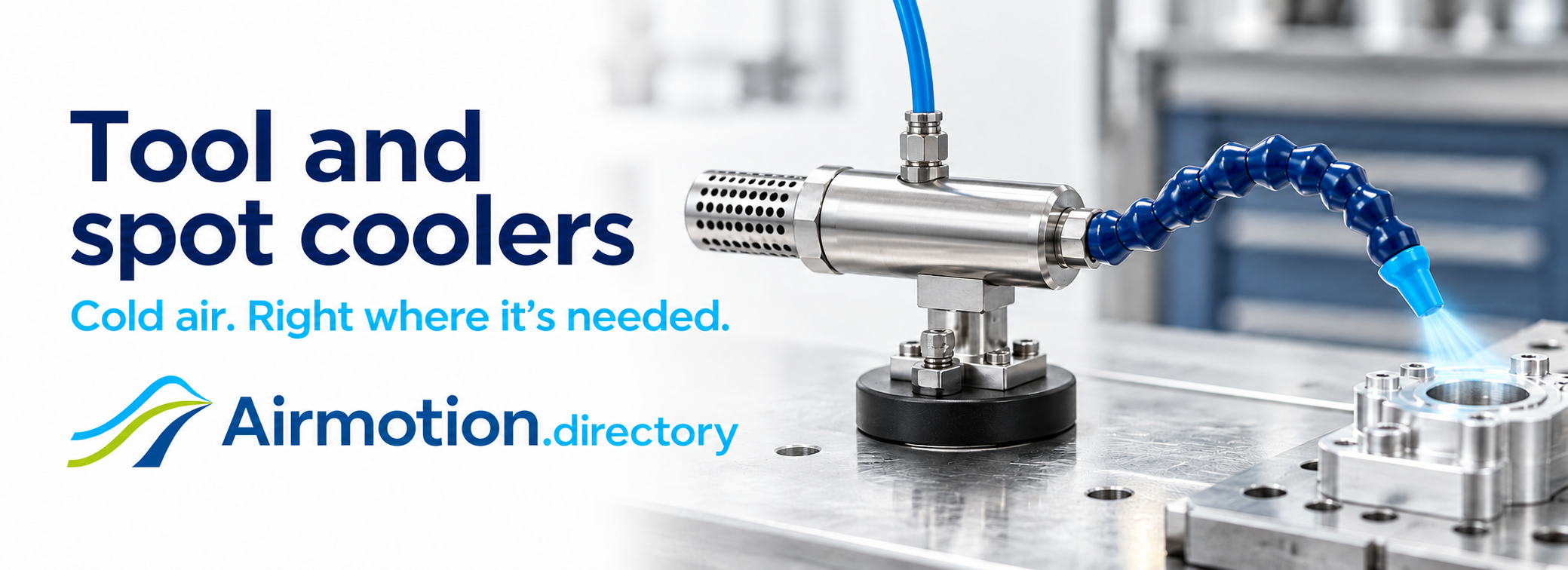
Cold at the outlet. Useful at the target?
A tool cooler puts a cold airflow where a process needs it. Its value depends on reaching the target with enough cooling, while accounting for the compressed air used to produce it.
A vortex-based tool cooler packages the tube with practical features such as a silencer, mounting base and flexible delivery hose. It produces separate hot and cold streams using compressed air. The cold stream reaches the application through the hose; the hot exhaust leaves elsewhere. Dry cold-air cooling is different from oil-mist lubrication and from liquid-coolant delivery.
Three practical applications
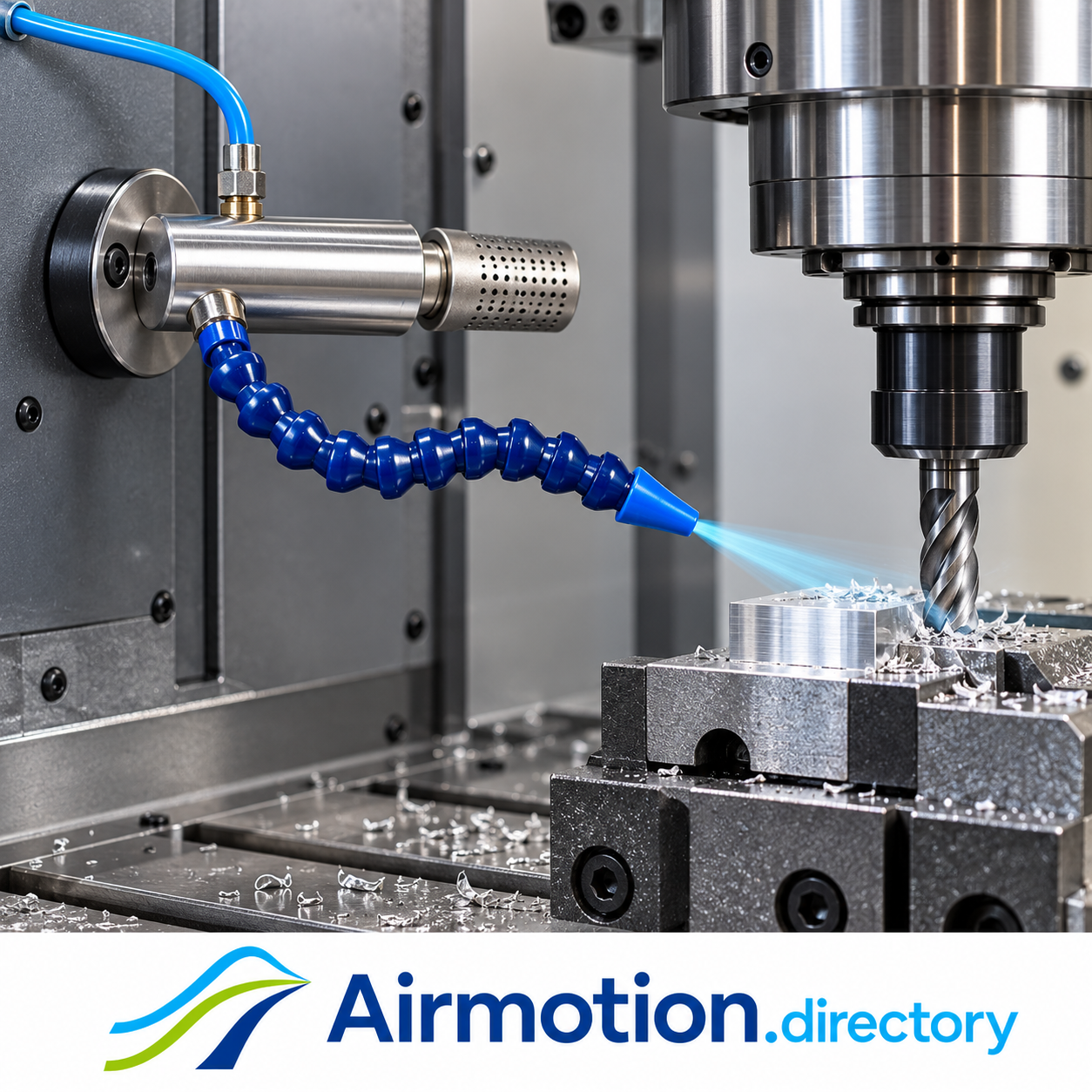
Localized cooling during dry machining
A machining operation needs a directed cold airflow near the cutting area. Tool, material and process suitability must be established before changing an existing cooling or lubrication method.
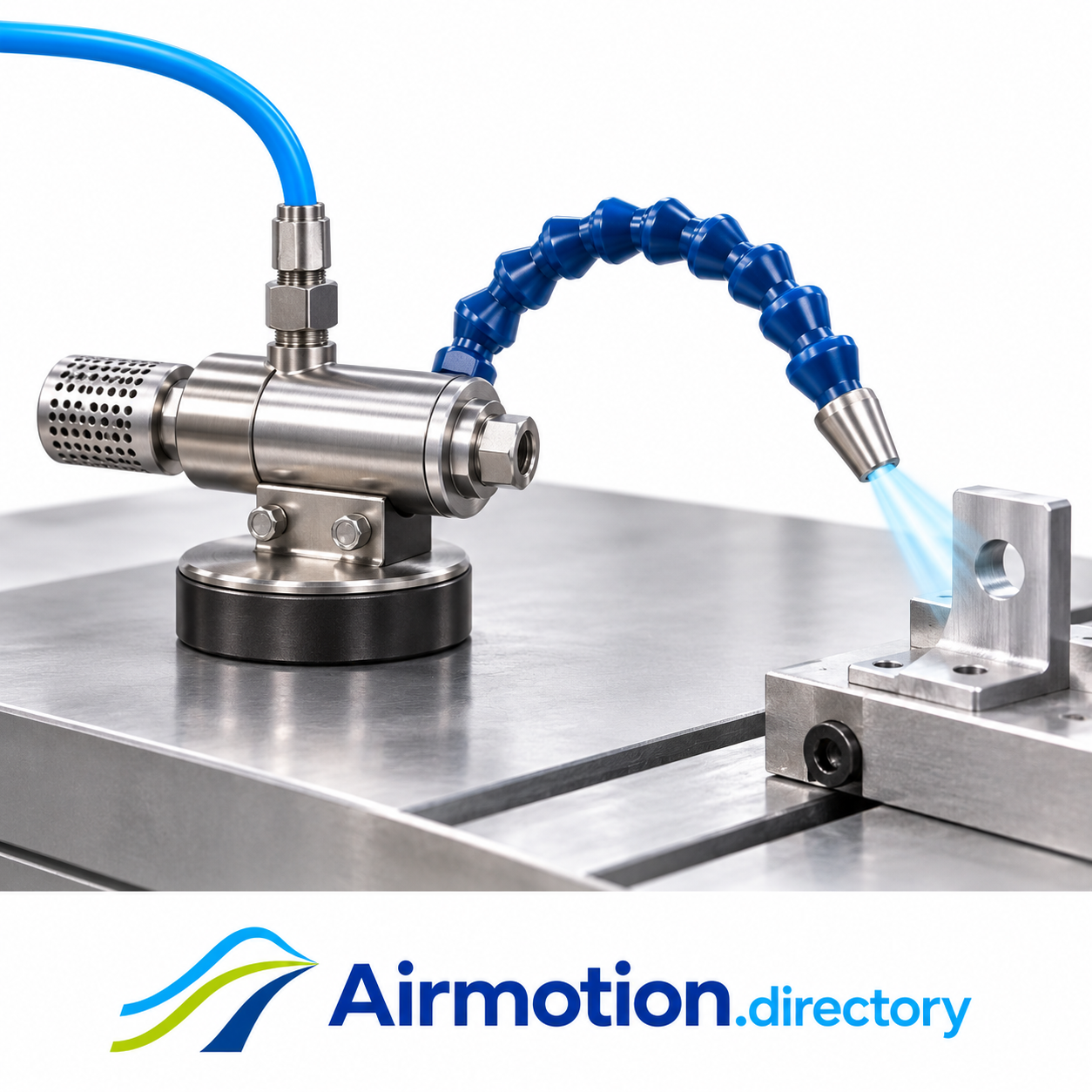
Cooling a hot small part
A small component or assembly needs localized cooling before the next step. A movable cooler can direct air at that area when the heat load and cycle suit the available cooling capacity.
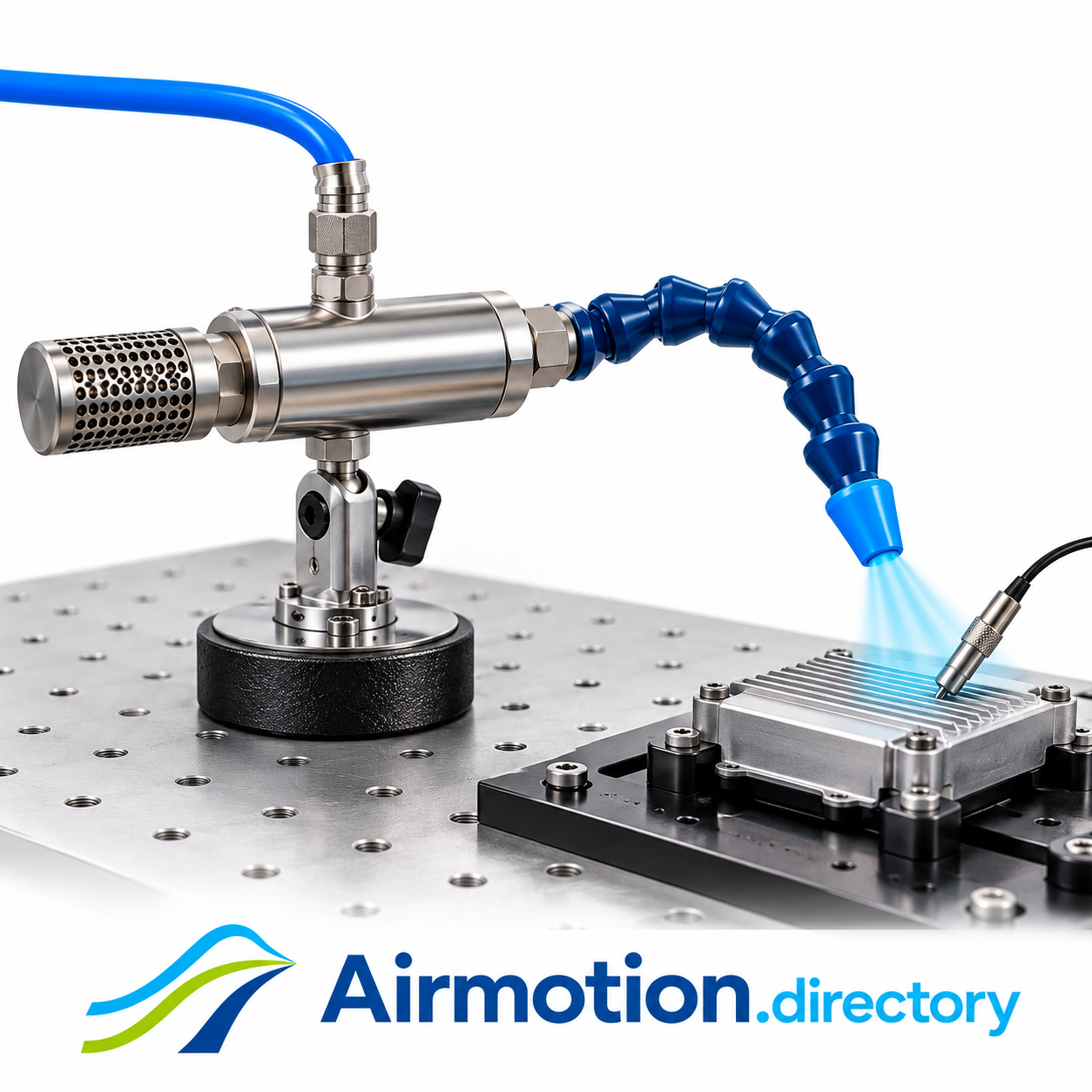
Cooling a component during testing
A repair or test process needs controlled local cooling. A flexible delivery hose helps position the stream while temperature is checked at the component.
These are illustrative applications, not reports of specific customer installations.
Three suppliers to know
Three examples of companies offering compressed-air spot-cooling products. Product ranges and configurations differ; this is not a ranking.
Nihon Seiki
Japan
Jet Cooler products generate cold air using compressed air and vortex separation. The range includes adjustable cold-air output, with mounting and delivery accessories available for applicable models.
Bewise
Taiwan
Bewise lists STC vortex-tube cooling guns in vertical and separated configurations. Its range also includes oil-mist variants, which need to be distinguished from dry cold-air cooling.
Nanostone / VAIR
Singapore
Nanostone offers VAIR cold air guns with flexible delivery tubing and magnetic mounting. Its catalog includes fixed and adjustable styles, with standard and stainless-steel configurations.
What matters when comparing tool coolers?
Define the cooling task. Specify the operation, tool or part, material, heat load where known, cycle time and acceptable temperature. Establish process suitability before changing an existing cooling or lubrication method.
Compare delivered cooling. Check cold airflow and cooling capacity at the available inlet pressure, along with air quality, hose reach, mounting and exhaust position. A quoted outlet temperature alone does not establish performance at the target.
Include the operating cost and process needs. Assess compressed-air use over the duty cycle and check whether lubrication is still required. A temperature drop does not by itself demonstrate improved tool life, surface finish or production rate.
What brought you here?
Using or buying tool coolers?
Exploring one cooling application?
Already considering a purchase, supplier recommendation, or quotation?
Selling tool coolers?
Working on a specific customer opportunity?
Explore the Seller’s Second Opinion
Own or lead a pneumatic or compressed-air business and want to examine its online revenue system?
Have a tool-cooling requirement?
Send the operation, tool or component, material, cooling objective, duty cycle, air supply and destination country. Include any existing recommendation.