
Ionized Air Cleaning and Static Elimination
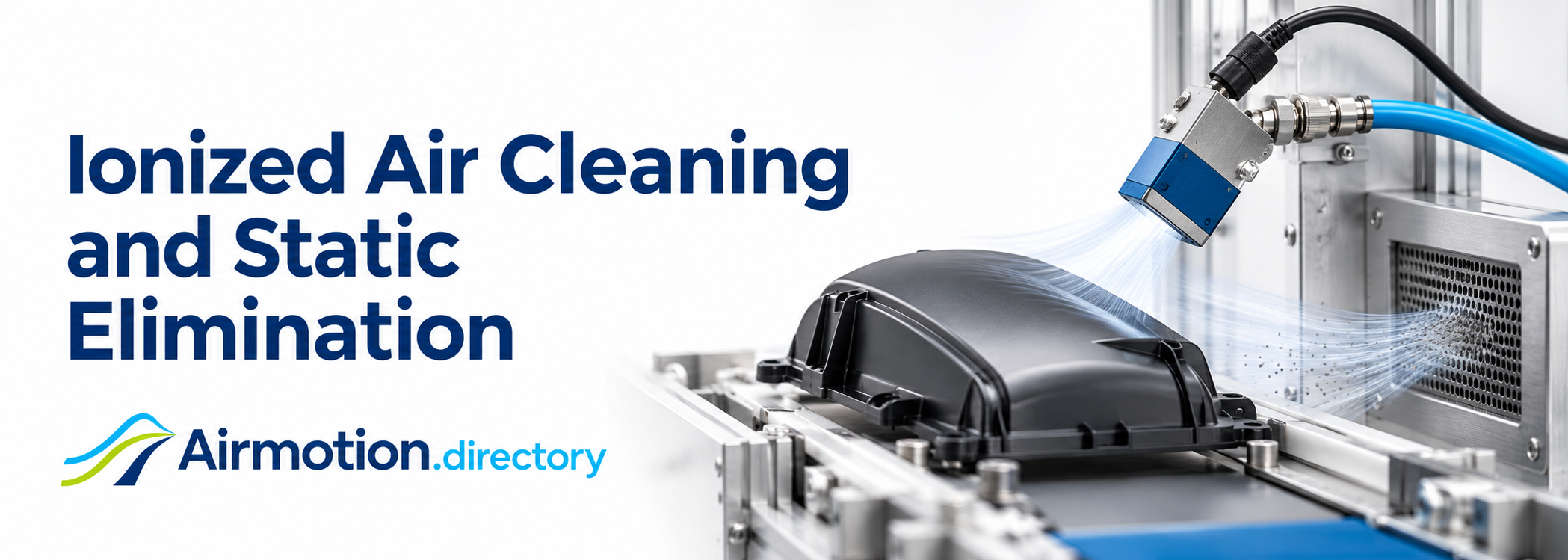
Dust held by static needs more than blow-off.
Dust can stay attached to a surface because of static charge. More blowing force may move the dust without dealing with the charge that attracted it. Ionized compressed air combines static neutralization with the airflow needed to carry loose contamination away.
An ionizer produces positive and negative ions. Compressed air carries those ions toward the material and helps dislodge particles as the surface charge is neutralized. Handheld guns suit individual parts; fixed nozzles and ionized air knives suit repeated tasks or wider surfaces.
This category covers compressed-air-assisted cleaning and static elimination. Fan-driven ionizers and passive static eliminators have different air-supply arrangements. A plain compressed-air nozzle or knife does not provide ionization by itself.
Three practical applications
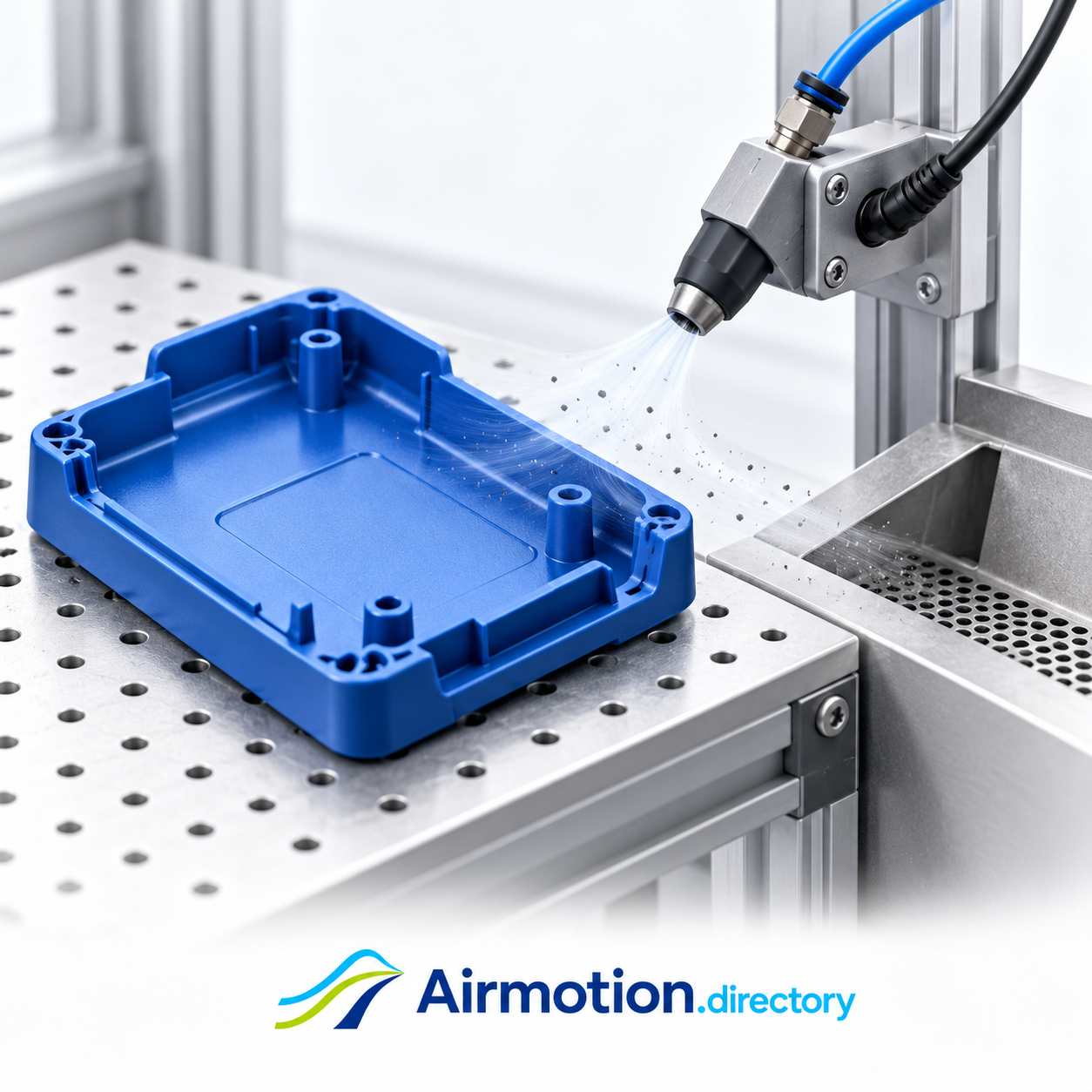
Clean molded parts before finishing
Plastic covers and other molded parts can hold dust that interferes with printing, coating, or assembly. A directed ionized air stream can neutralize surface charge and remove loose particles from accessible faces and recesses. Part shape, access, and the route for collecting removed dust determine the arrangement.
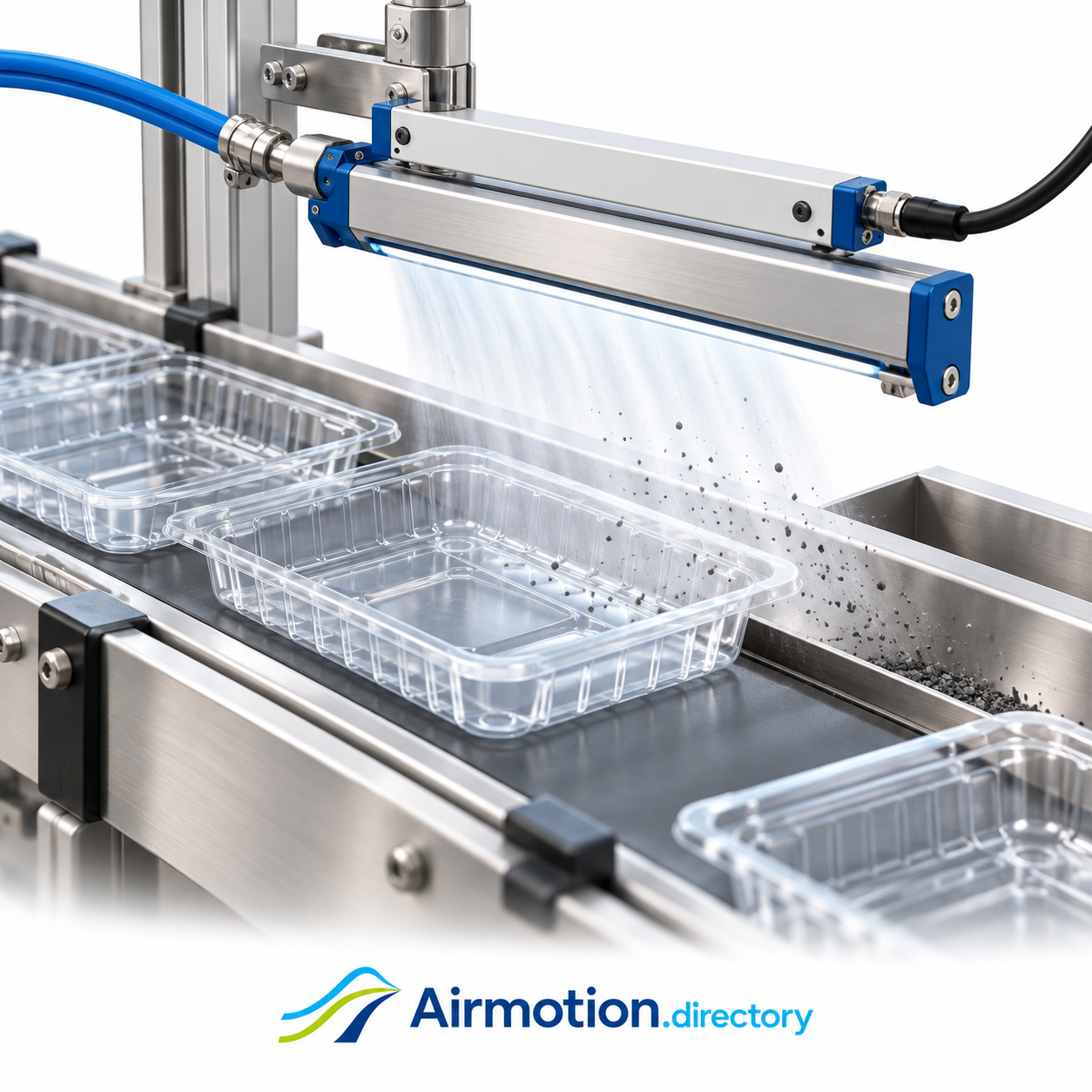
Prepare packaging surfaces
Plastic trays and packaging components can attract dust during handling. A fixed ionizing nozzle or compressed-air ionized knife can clean an exposed surface before printing or assembly. Match coverage and exposure time to the line speed, and keep removed particles away from the next operation.
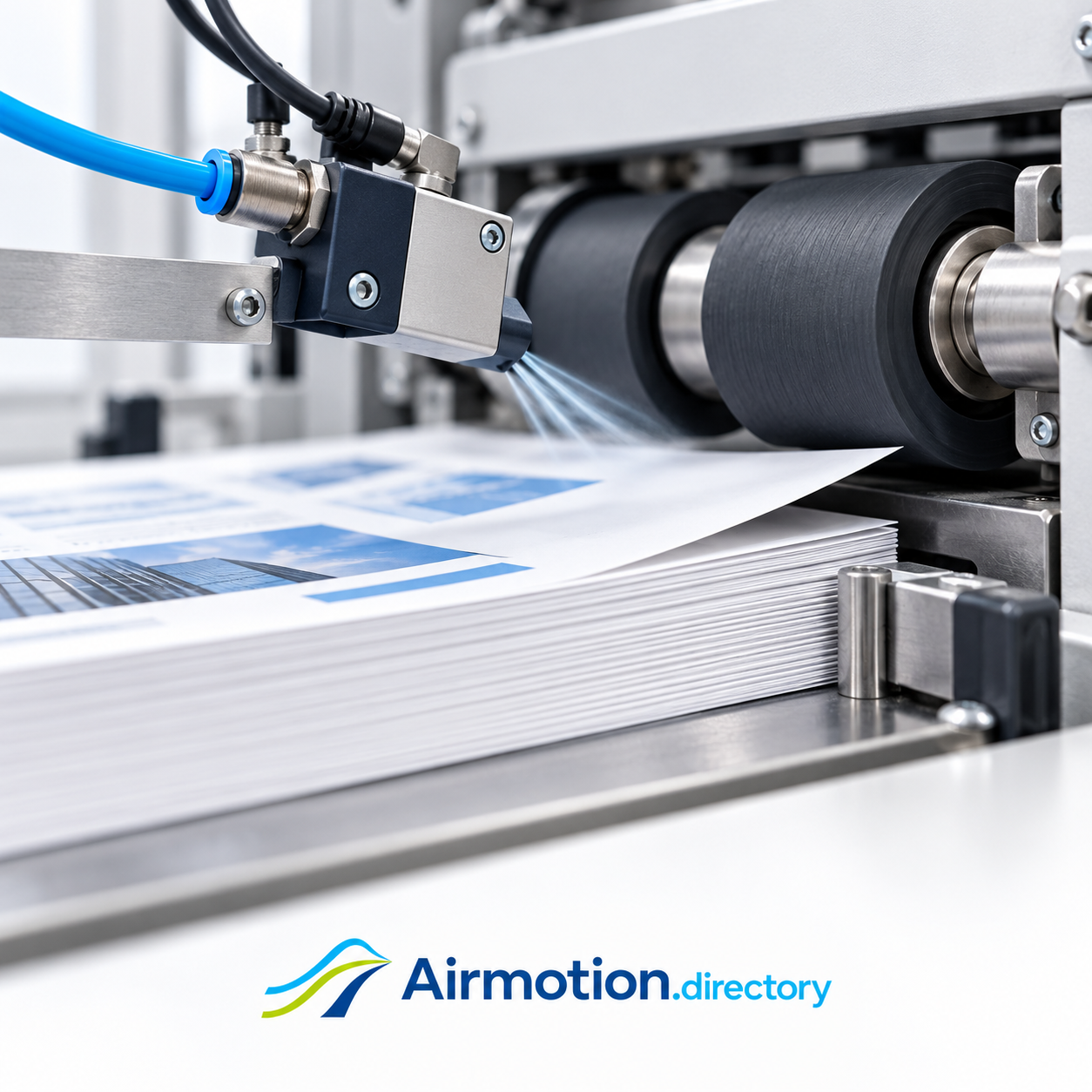
Help sheets separate at a feeder
Static attraction can make sheets cling together and contribute to double feeding. Ionizing air nozzles directed at the feed edge can combine charge neutralization with air assistance for separation. Sheet material, stack presentation, and the feeder geometry matter; air pressure alone is not the whole answer.
These are illustrative applications, not reports of specific customer installations.
Three manufacturers to know
Three independent examples of manufacturers offering compressed-air-assisted ionizing equipment. Product ranges and configurations differ; this is not a ranking. Their inclusion does not imply that Airmotion Directory represents or supplies these manufacturers.
HAUG
Germany
The RI LG ionizing air gun combines ionization with compressed-air blow-off for removing surface charge and dust. It uses a separate power pack and provides adjustable airflow for treating individual parts and smaller surfaces.
Fraser Anti-Static
United Kingdom
The 4125 Ionised Air Gun provides handheld static neutralization and dust removal. The 5000 and 5100 Ionised Air Knives combine compressed-air flow with ionization for broader cleaning tasks, including packaging and molded parts.
Simco-Ion
United States
The Top Gun combines targeted blow-off with static neutralization using compressed air. The HE Static Control Nozzle offers a fixed ionizing air stream, with sheet-feeder separation among its stated applications.
What matters when comparing ionized air equipment?
Define the result. Removing visible dust, reducing residual charge, and separating sheets are different requirements. Describe the material, contamination, cycle time, and required result before comparing equipment. Static reduction needs an appropriate measurement, not just a visibly cleaner surface.
Match the delivery. Compare a handheld gun, fixed nozzle, and full-width knife against the working distance, coverage, line speed, and mounting space. Check the required power supply and controls as well as the air connection.
Compare the air and operating requirements. Use the selected model’s specified air quality, pressure, and consumption. Include filtration, duty cycle, noise, emitter cleaning, and access for maintenance in the comparison.
Plan where the dust goes. Blowing particles from one surface can contaminate another. Collection or extraction may be needed. Check the selected equipment’s environmental restrictions and any required approvals for the actual process.
What brought you here?
Using or buying ionized air equipment?
Exploring one application?
Already considering a purchase, supplier recommendation, or quotation?
Selling ionized air equipment?
Working on a specific customer opportunity?
Explore the Seller’s Second Opinion
Own or lead a pneumatic or compressed-air business and want to examine its online revenue system?
Have an ionized air requirement?
Tell Airmotion Directory about the material, static or cleaning problem, production speed, available compressed air, and where the equipment will be used. Include whether you are exploring options or working toward a purchase.