
Compressed-air conveyors
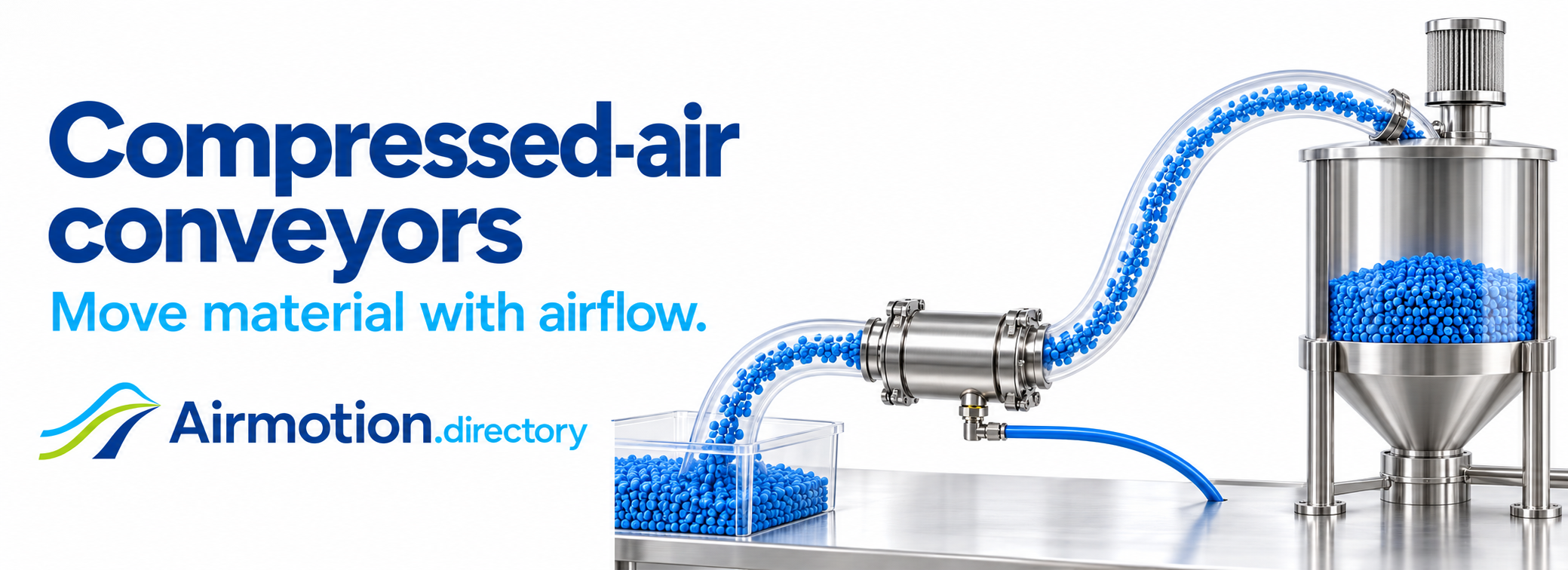
The material matters. So does the route.
Moving material through a hose involves more than matching the hose diameter. Particle size, weight, distance, bends and the receiving arrangement determine whether an inline air conveyor is a useful option.
An inline compressed-air conveyor creates suction at its inlet and an air-driven discharge through an open passage. Suitable material travels through the device and attached tubing. These compact devices differ from mechanical belt conveyors and from complete batch vacuum-conveying systems with receivers and filters.
Three practical applications
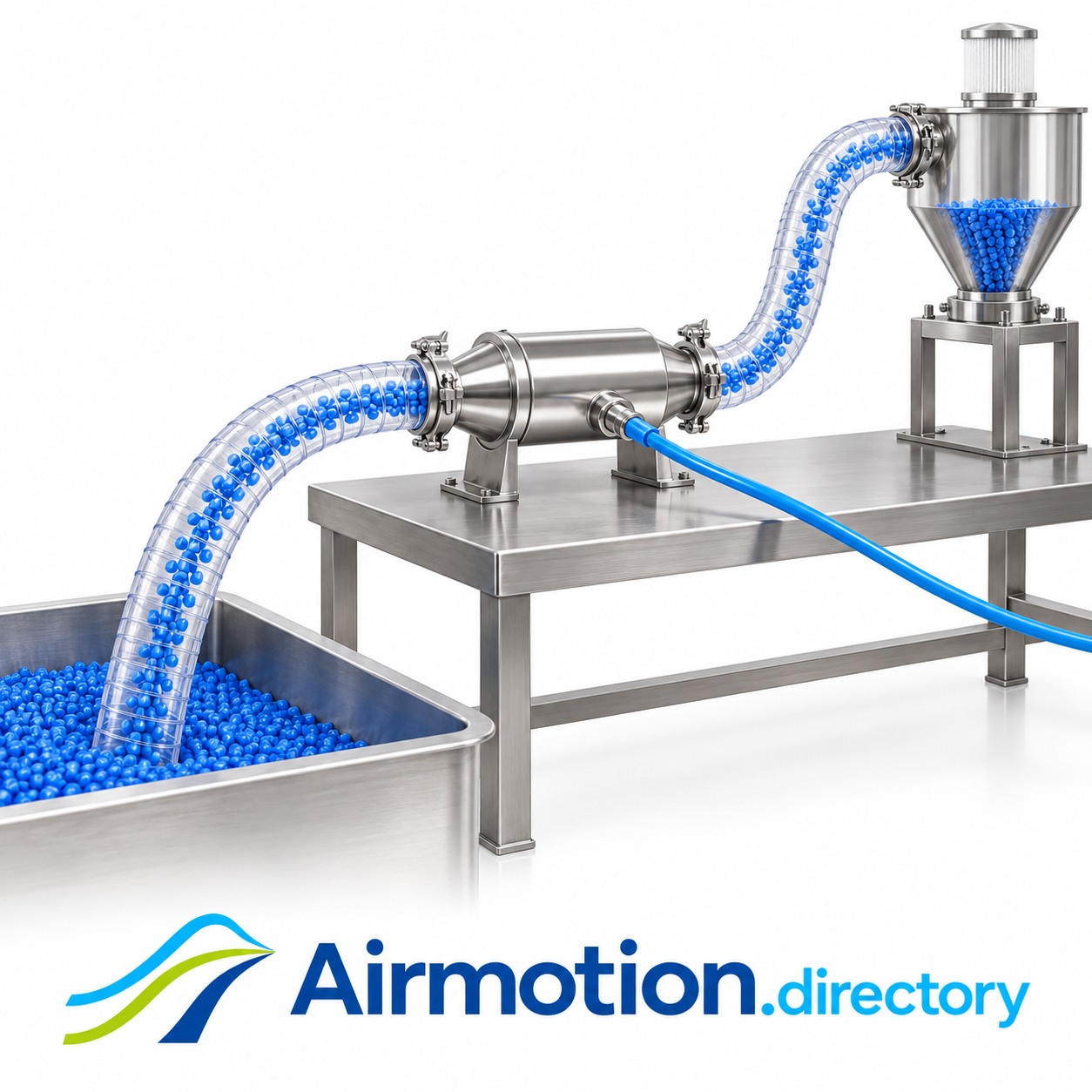
Transferring plastic pellets
A small process needs pellets moved from a container to a receiving point. Confirm throughput, lift, distance and the condition of the pellets before choosing the conveyor and hose.
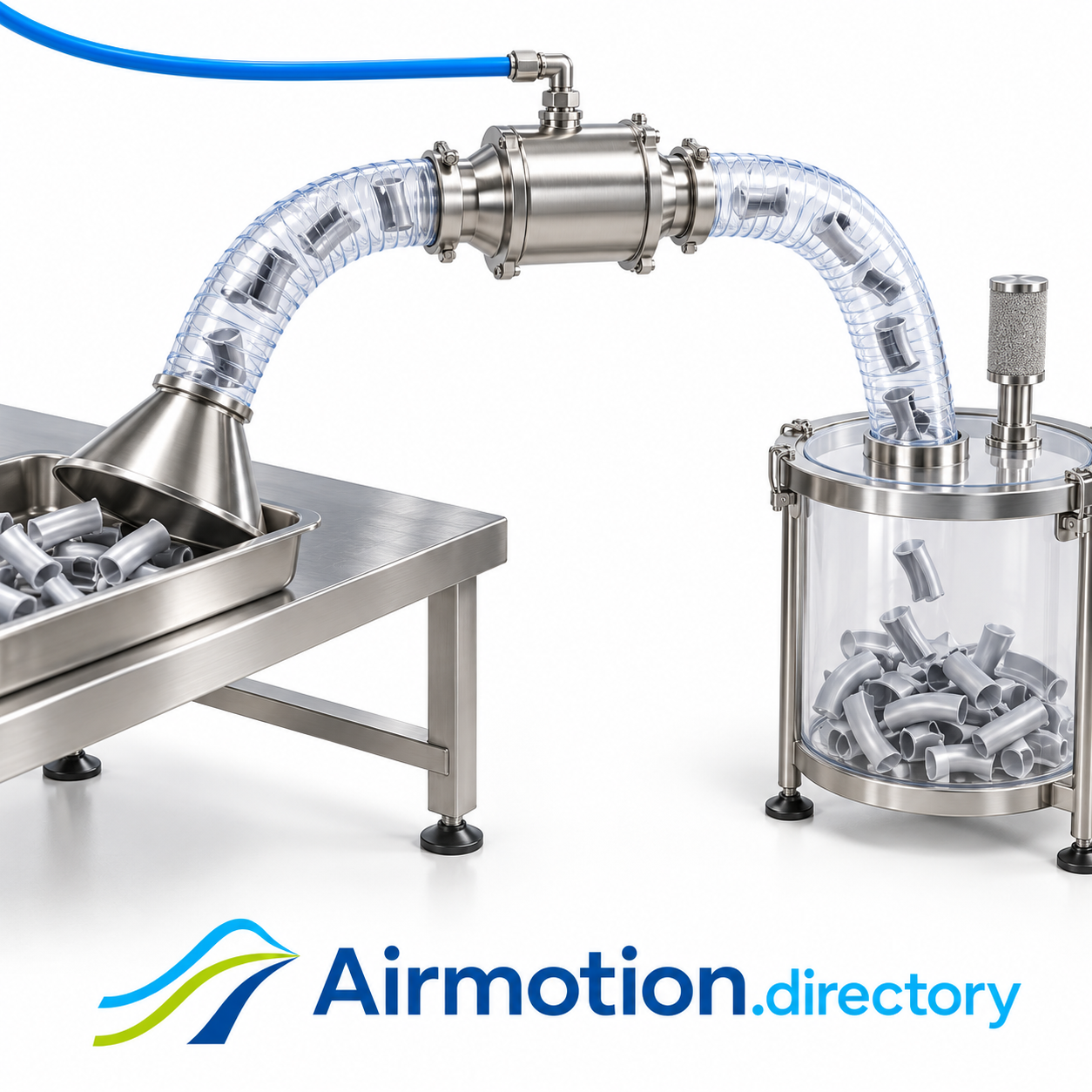
Collecting trim and small scrap
A production station produces loose, manageable offcuts. An inline conveyor can carry suitable scrap to a collection point, provided its size and shape will pass through the complete route.
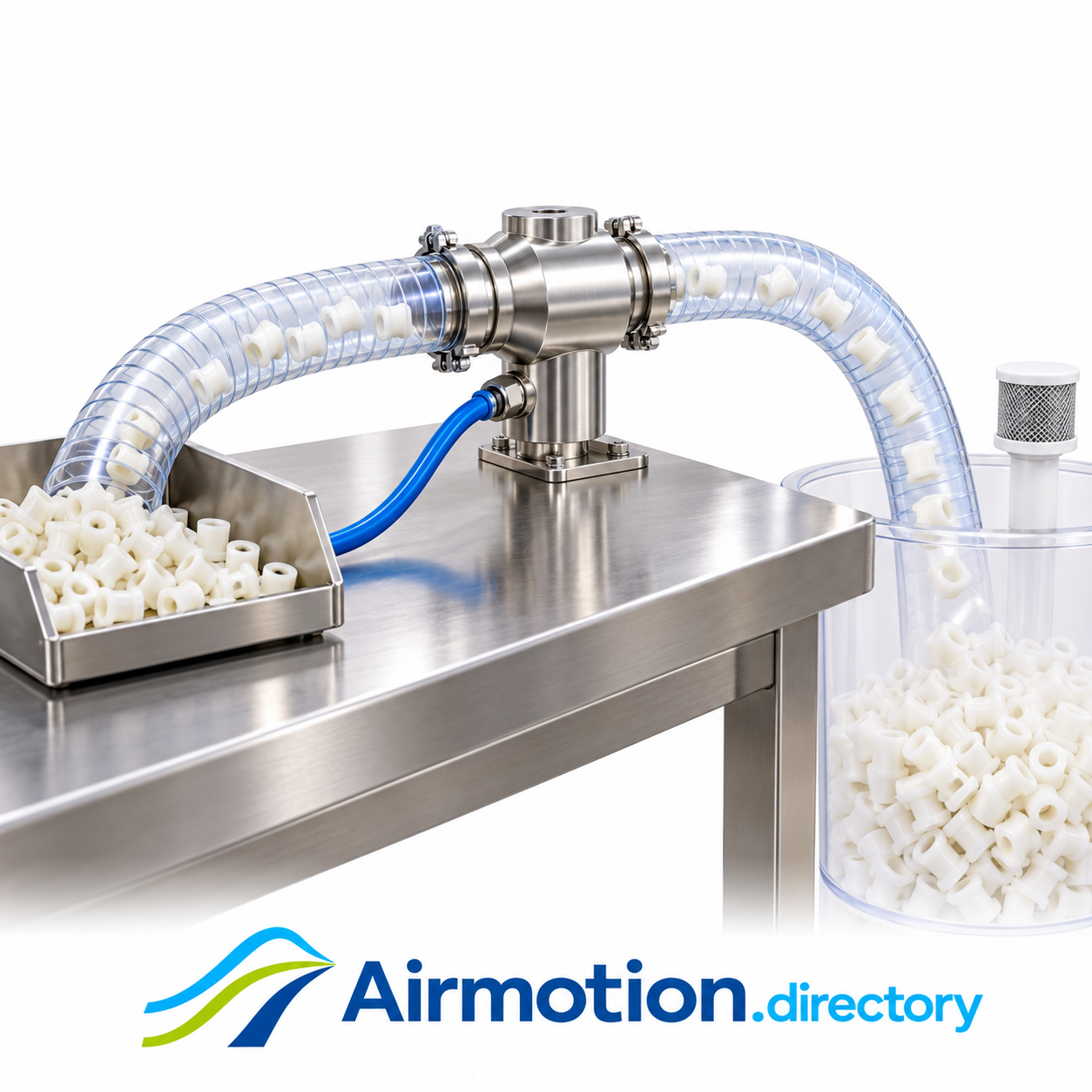
Moving small durable parts
Small parts need to move between a workstation and a receiving container. The passage, bends and receiver must accommodate the parts without unacceptable impact or damage.
These are illustrative applications, not reports of specific customer installations.
Three suppliers to know
Three examples of companies offering inline air-driven conveying products. Product ranges and configurations differ; this is not a ranking.
AIRBEST
China
ACP conveying vacuum generators use a straight-through passage. The range includes different sizes and aluminum-alloy or stainless-steel versions.
Vacuforce
United States
VFMC material conveyors connect to hoses for air-driven transfer. The range includes several passage sizes for different conveying requirements.
BLS
Japan
The BLS Rider creates suction and discharge flow for continuous transport of suitable powders and granules.
What matters when comparing air conveyors?
Define the material and transfer rate. Specify particle dimensions, bulk density and required throughput. Check that the material can pass through the conveyor, hose, bends and receiving connection without unacceptable impact, wear or damage.
Describe the complete route. Include horizontal distance, vertical lift, bends, hose bore and receiving equipment. The receiver must accommodate both the material and the conveying air. A device’s unrestricted airflow figure does not establish the transfer rate through your installation.
Check the operating requirements. Compare air consumption at the working pressure and operating cycle. Establish dust, static, hygiene and material-compatibility requirements with the supplier for the actual installation.
What brought you here?
Using or buying air conveyors?
Exploring one material-transfer task?
Already considering a purchase, supplier recommendation, or quotation?
Selling air conveyors?
Working on a specific customer opportunity?
Explore the Seller’s Second Opinion
Own or lead a pneumatic or compressed-air business and want to examine its online revenue system?
Have an air-conveyor requirement?
Send the material, particle size, required rate, route length, lift, receiving arrangement, air supply and destination country. A simple route sketch can make the inquiry clearer.