
Air wipes and ring air knives
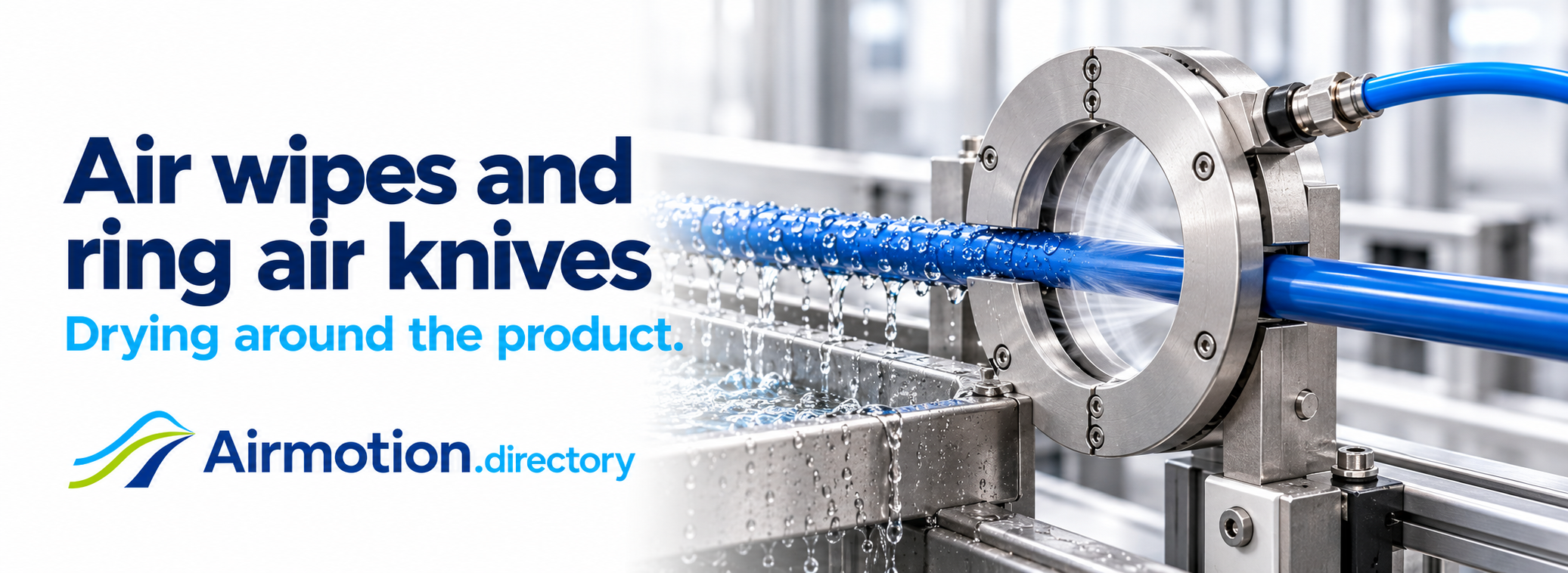
Water around the product. Air around the problem.
A cable can leave a cooling bath wet on every side. An air wipe surrounds the moving product with directed airflow to remove surface water before the next operation.
Compressed air feeds an annular slot or a ring of jets around an opening. The product passes through that opening while the air acts around its circumference. Some designs split open for threading and changeovers. Others use guides or ceramic inserts. Compressed-air wipes and blower-fed drying rings need separate supply and operating-cost comparisons.
Three practical applications
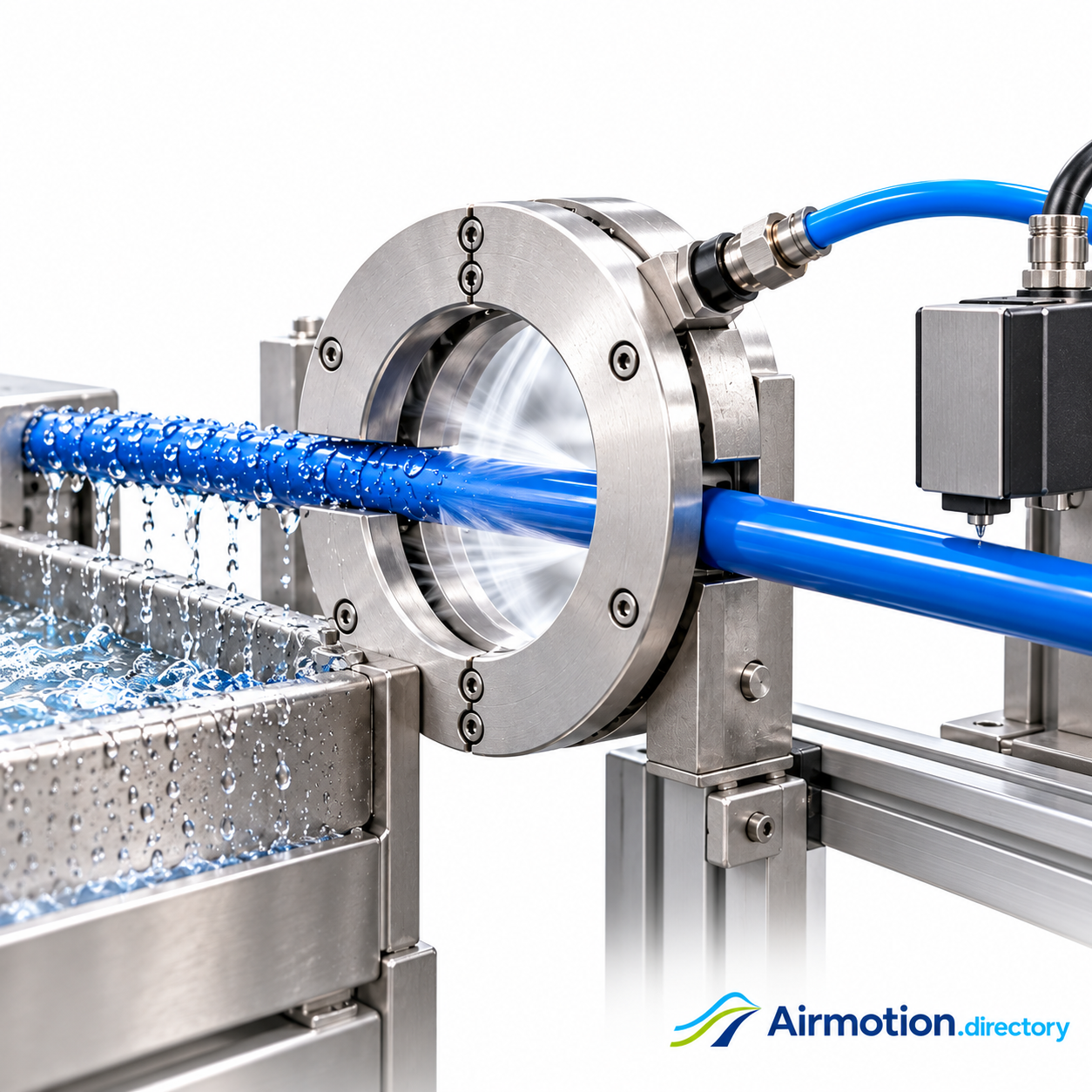
Dry cable before printing
Cable leaves a water-cooling trough before its identification is printed. A correctly sized wipe removes surface water around the cable, helping prepare it for the marking operation.
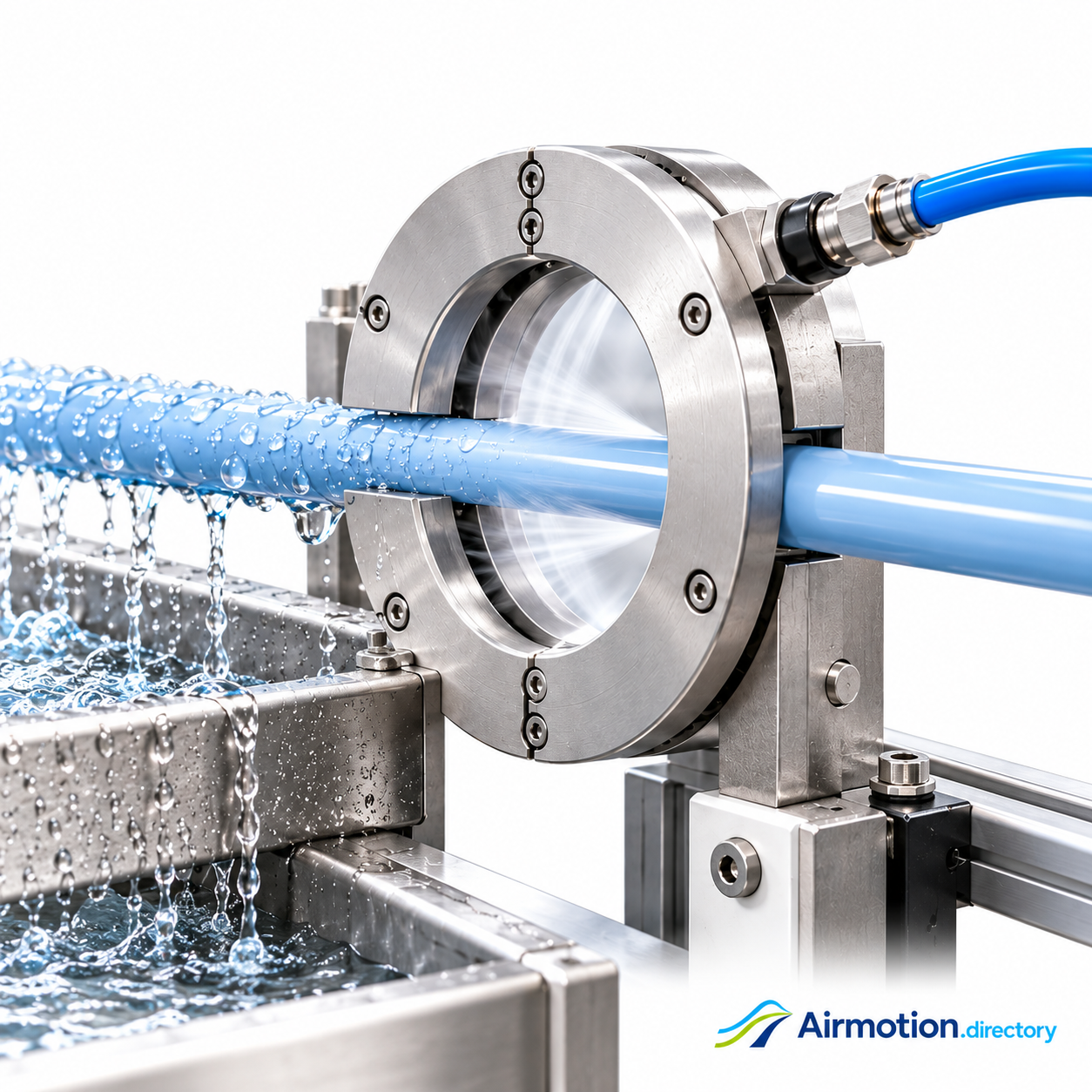
Dry tubing after extrusion
Plastic tubing must leave its cooling stage with less surface water. The opening, clearance and airflow need to suit the tube diameter, line speed and sensitivity of the product.
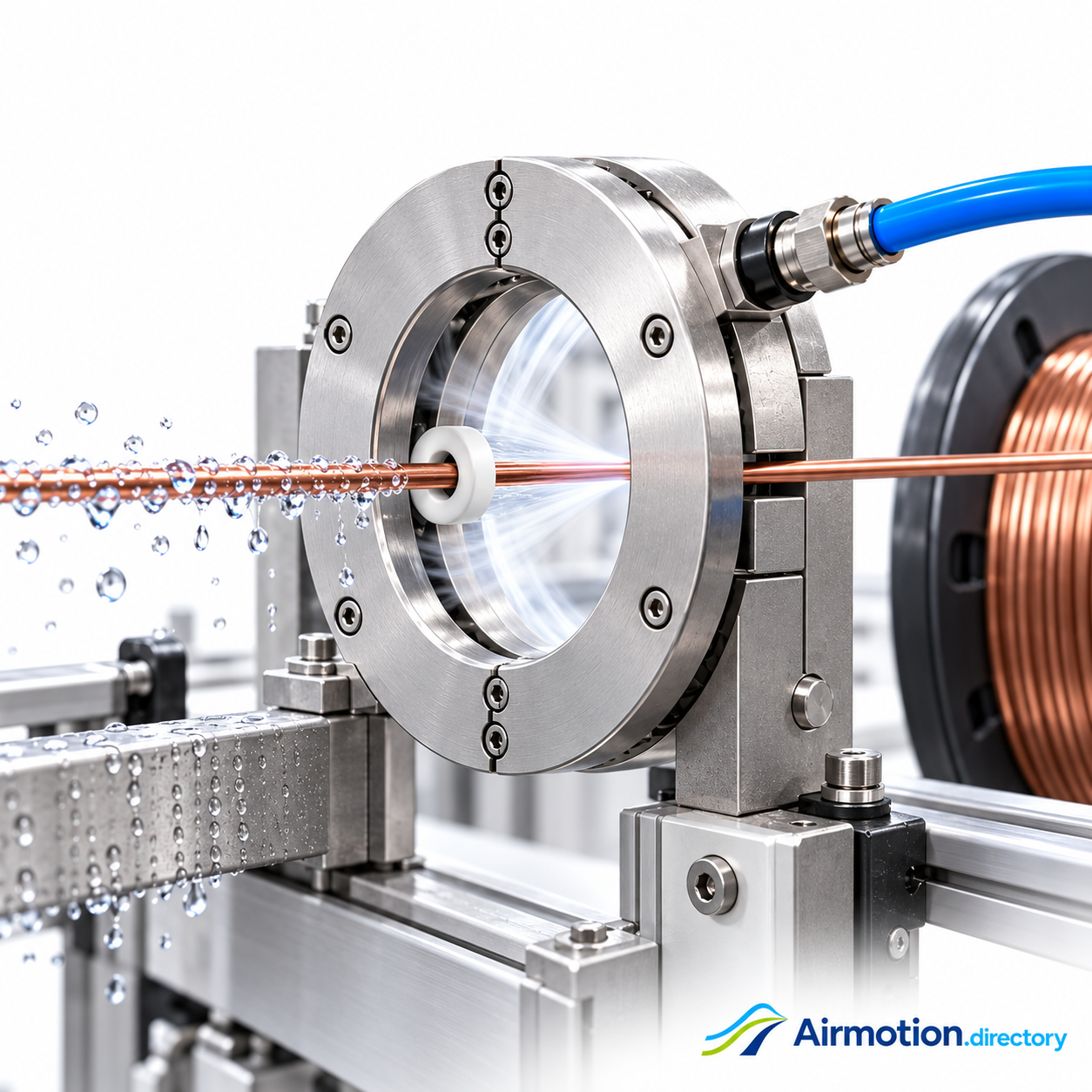
Prepare bare wire for the next operation
Wire carries residual water into inspection or winding. An air wipe can remove surface liquid, with guide design and alignment especially relevant where rubbing could mark the wire.
These are illustrative applications, not reports of specific customer installations.
Three suppliers to know
Three examples of companies offering compressed-air wipes and circular air curtains. Product ranges and configurations differ; this is not a ranking.
Huestis Machine
United States
Air Miser and Mini Wipe products use directed air jets. The range includes ceramic guides and designs for wire, cable and extrusions.
KEIR Manufacturing
United States
SureShot and SplitShot air wipes serve wire and cable production, with ceramic insert options matched to product size.
NOVACOM
France
RAC-2 circular air curtains use compressed air for blowing around profiled products. Aluminum and stainless-steel versions appear in the range.
What matters when comparing air wipes?
Start with the product and the result. Specify the diameter, largest joint or splice, line speed, liquid being removed and acceptable residual moisture. A large opening alone does not establish drying performance.
Check the air requirement. Compare consumption at the working pressure with the supply available at the line. Include the operating cycle when assessing the cost of using the wipe.
Check clearance and changeovers. Opening geometry, guides, split construction, mounting space and alignment all affect installation and access. Establish where the removed liquid will go.
What brought you here?
Using or buying air wipes?
Exploring one application?
Already considering a purchase, supplier recommendation, or quotation?
Selling air wipes?
Working on a specific customer opportunity?
Explore the Seller’s Second Opinion
Own or lead a pneumatic or compressed-air business and want to examine its online revenue system?
Have an air-wipe requirement?
Tell Airmotion Directory the product size, line speed, liquid, available air supply and destination country. Include the supplier’s recommendation if you already have one.