
Air nozzles and jets

The right pattern. At the right distance.
More compressed air is not automatically a better blowoff. The nozzle pattern, force at the target and position determine whether the air performs the required task.
Air nozzles shape compressed air into a concentrated jet or a wider pattern. Air-amplifying designs also entrain surrounding air. Flat patterns can cover a wider area; focused jets suit smaller targets. Terminology varies between suppliers, so compare the actual working pattern and data rather than the product name alone. Blower-fed nozzles need their own supply comparison.
Three practical applications
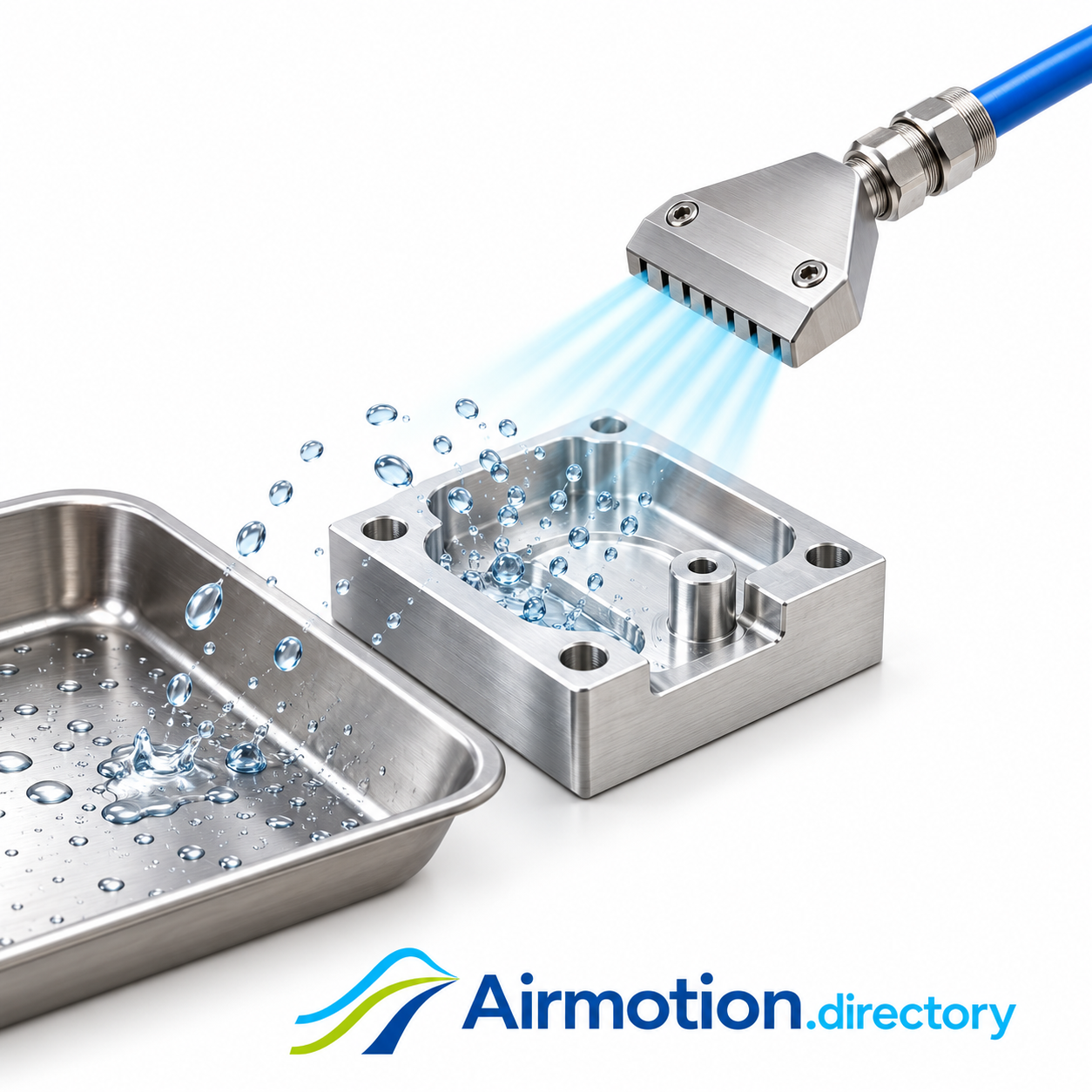
Removing water from a part
A washed component has localized pockets of surface water. A directed nozzle can address those areas without requiring a full-width air knife.
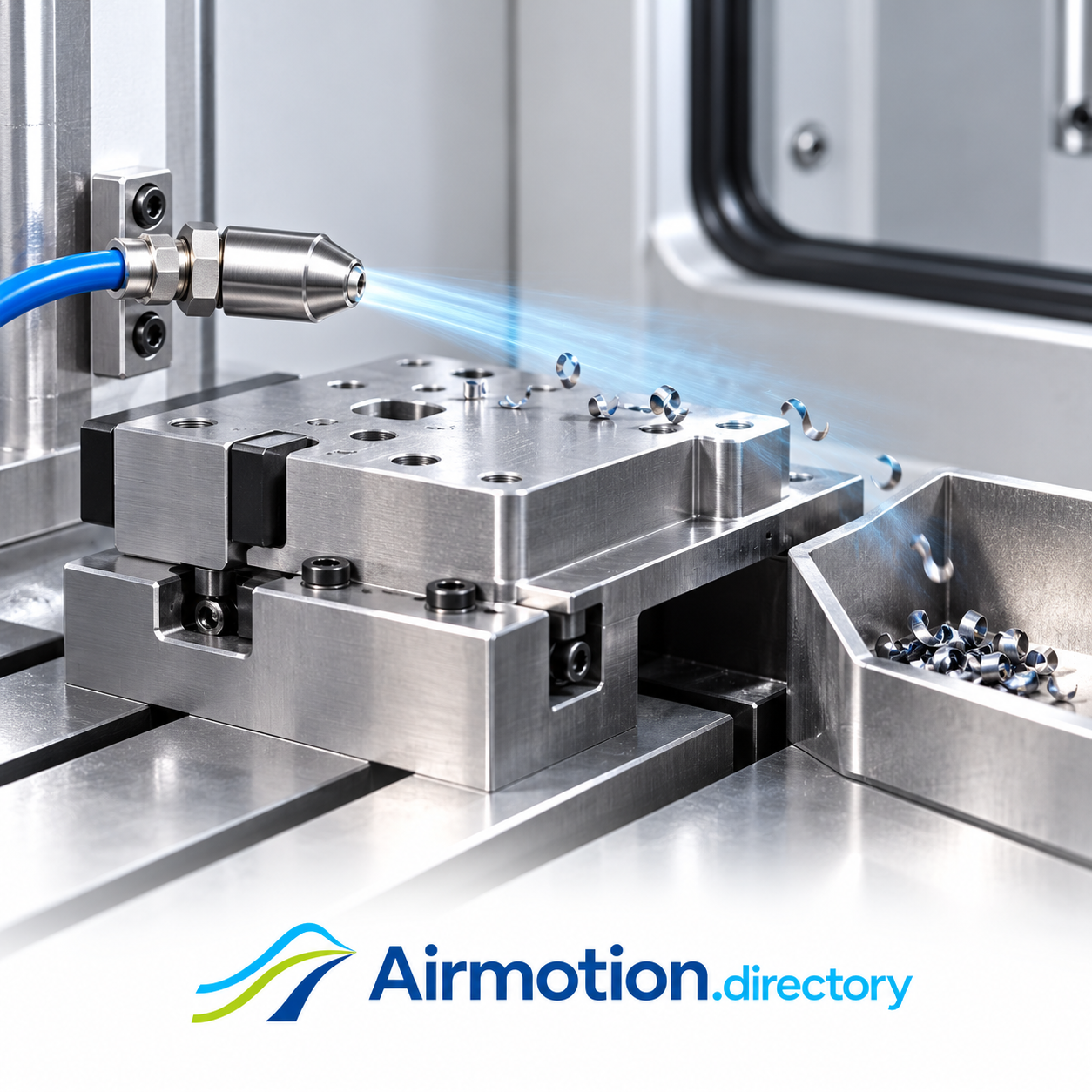
Clearing loose chips before inspection
A fixture contains loose debris that interferes with inspection. Nozzle placement needs to move the debris to a controlled collection area rather than redistribute it across the work cell.
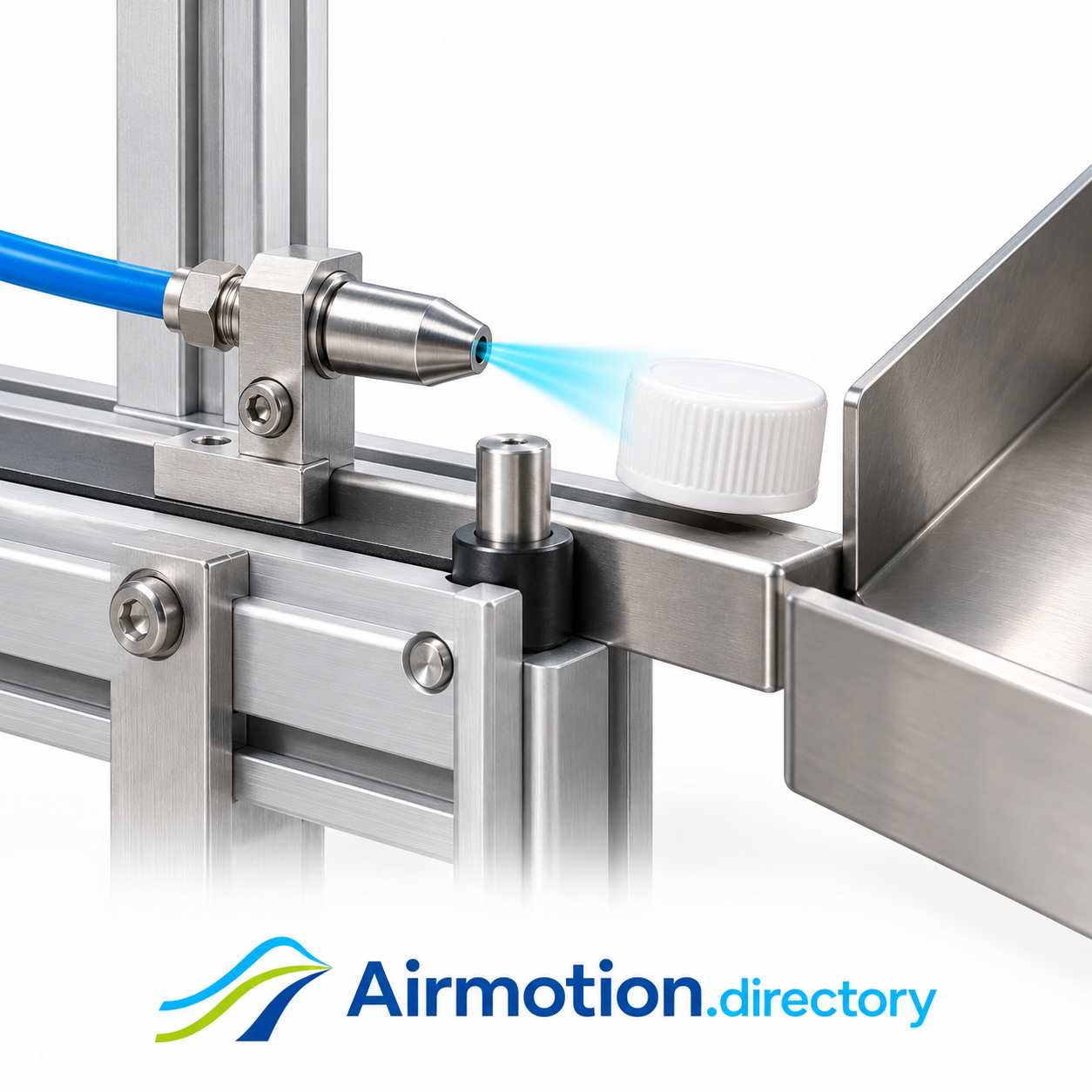
Ejecting a light part
A production step requires a short air pulse to move a lightweight item. Force at the working distance, timing and repeatability matter more than an unrestricted airflow figure.
These are illustrative applications, not reports of specific customer installations.
Three suppliers to know
Three examples of companies offering compressed-air nozzles. Product ranges and configurations differ; this is not a ranking.
Lechler
Germany
The company offers flat-fan and concentrated air-nozzle patterns, with designs and materials for different operating conditions.
Spraying Systems Co.
United States
WindJet compressed-air nozzles include flat-fan and round patterns for drying, cooling and blowoff applications.
H IKEUCHI
Japan
TAIFUJet includes compressor-fed flat air nozzles. Its broader air-nozzle catalog also contains separate blower-fed models.
What matters when comparing air nozzles?
Compare at the target. Assess force, pattern width, consumption and sound data at the same pressure and working distance. An unrestricted airflow figure does not establish how well a nozzle will perform your task.
Check placement and timing. Include target size, mounting space, operating cycle and the direction of removed material. Pulse control may matter as much as nozzle selection where the process needs air only briefly.
Match the operating conditions. Check temperature, contamination and material compatibility. Verify the requirements for the actual installation rather than assuming one nozzle label establishes compliance. Compare blower-fed products separately.
What brought you here?
Using or buying air nozzles?
Exploring one blowoff task?
Already considering a purchase, supplier recommendation, or quotation?
Selling air nozzles?
Working on a specific customer opportunity?
Explore the Seller’s Second Opinion
Own or lead a pneumatic or compressed-air business and want to examine its online revenue system?
Have an air-nozzle requirement?
Send the task, target size, working distance, operating cycle, air supply and destination country. Include a picture or proposal if one is available.