
Air amplifiers
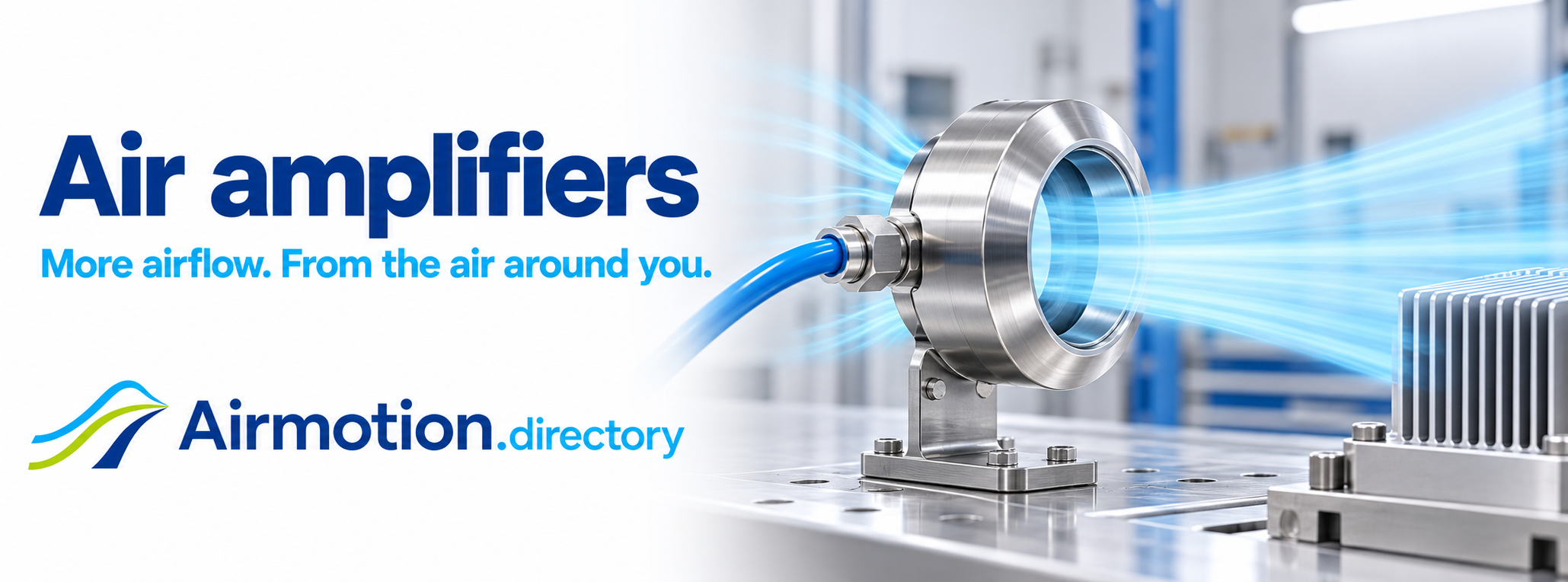
More airflow. What reaches the application?
An airflow amplifier uses compressed air to move a larger volume of surrounding air. It increases airflow through entrainment. It does not boost the plant’s compressed-air pressure.
Compressed air passes through a narrow annular gap, creating a stream that draws in surrounding air. Fixed-gap and adjustable-gap designs are available. The resulting airflow can support blowing, drying, cooling or extraction in a suitable arrangement. These products differ from piston pressure boosters, electric blowers and vacuum generators chosen primarily for high vacuum.
Three practical applications
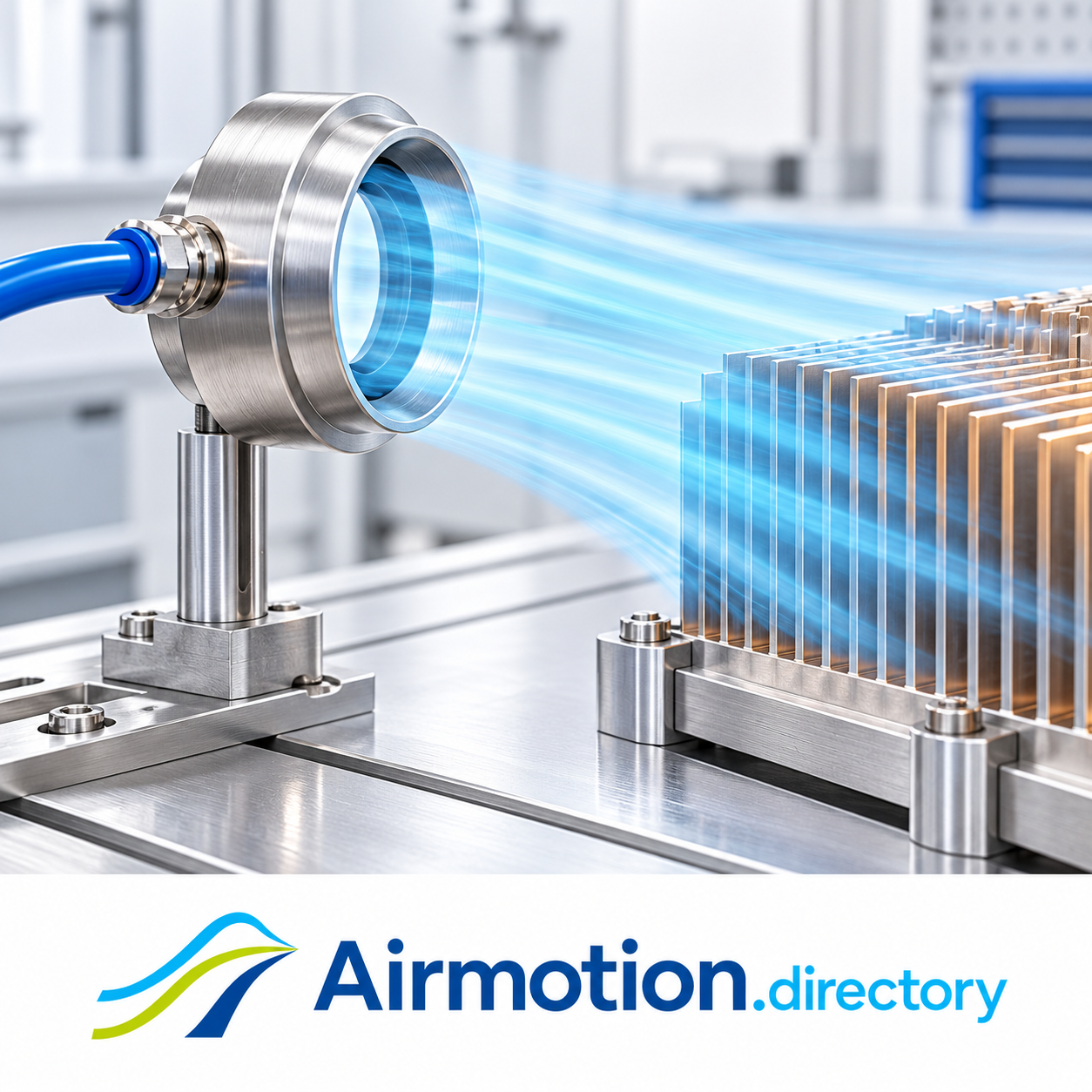
Cooling an exposed part
A process needs airflow over a component rather than refrigerated air. An amplifier moves surrounding air across the target; it does not create vortex-tube cold air.
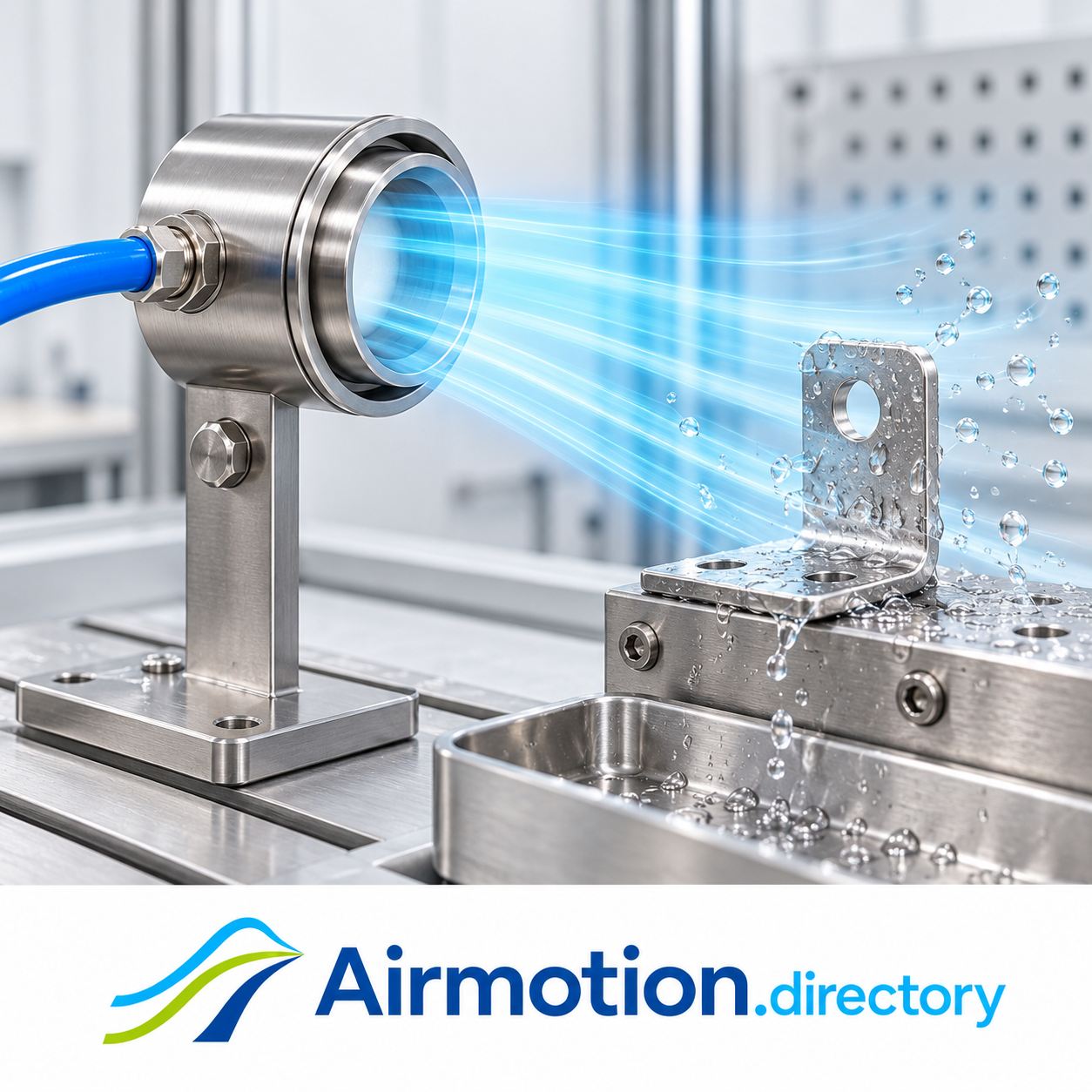
Drying a compact work area
A small product area needs a broad airflow to move surface moisture. Position and coverage must suit the part, with consumption assessed over the operating cycle.
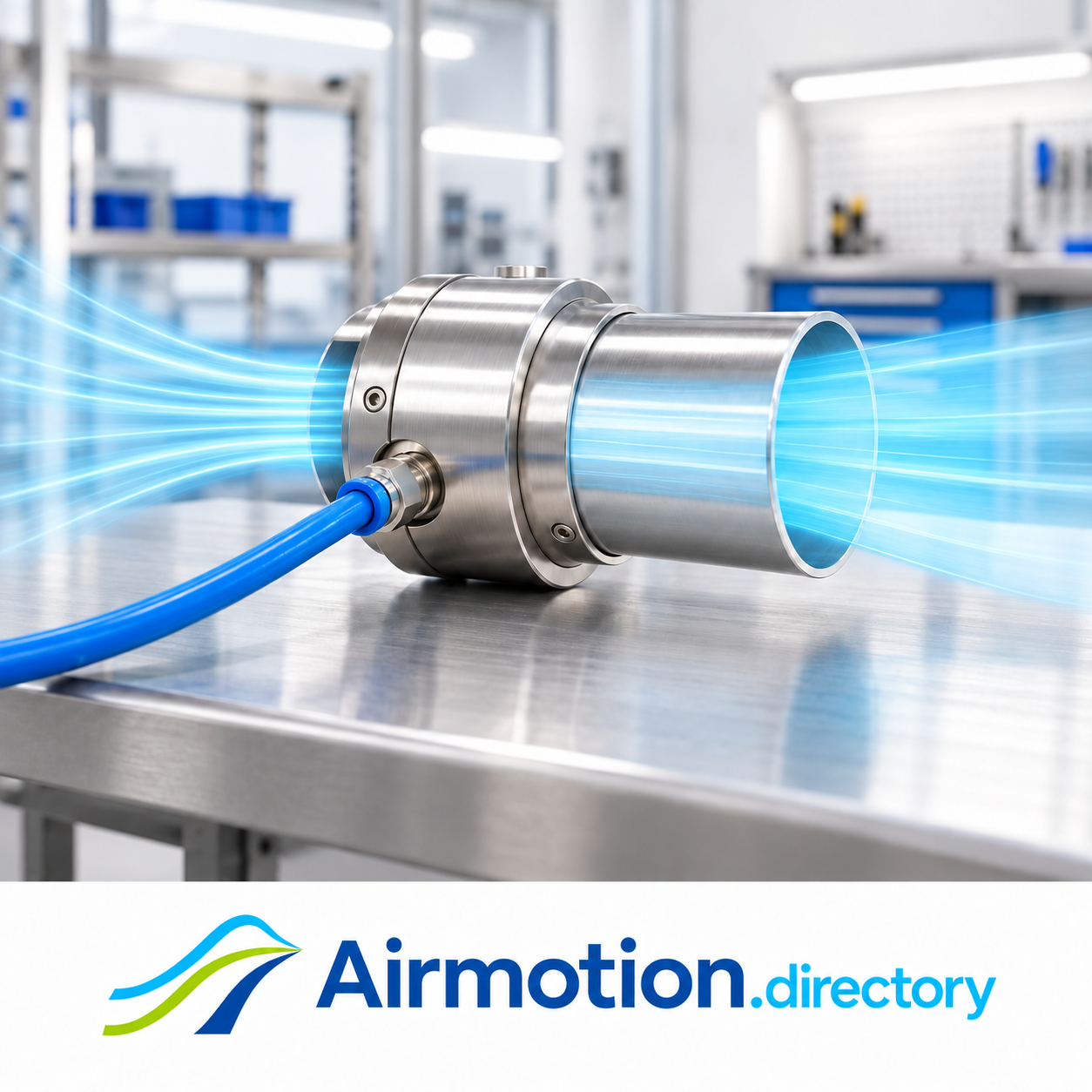
Moving air through a short duct
A suitable ducted application needs induced airflow. Compare the complete arrangement, including duct resistance and discharge, rather than relying on an unrestricted outlet rating.
These are illustrative applications, not reports of specific customer installations.
Three suppliers to know
Three examples of companies offering compressed-air airflow amplifiers. Product ranges and configurations differ; this is not a ranking.
Brauer
United Kingdom
Brauer offers adjustable-gap air amplifiers in several bore sizes, with acetal, aluminum-alloy and stainless-steel options. The gap adjustment varies the outlet airflow.
FARBO
Italy
ADF amplifiers use the Coanda effect to move air for cooling, blowing, drying and other suitable applications.
COVAL
France
COVAL’s M-C Coanda-effect amplifiers entrain surrounding air to provide high suction airflow. The range includes several bore sizes for applications such as air movement and suitable material transfer.
What matters when comparing air amplifiers?
Define the airflow task. Establish the flow needed at the target, the working distance and any duct resistance. An unrestricted outlet rating does not establish performance in a ducted installation.
Compare on the same basis. Check compressed-air consumption, outlet flow, inlet pressure, sound and materials. Clarify whether an amplification ratio is measured at the outlet or farther downstream.
Include the operating cost. Assess consumption over the actual duty cycle. Continuous service also deserves an operating-cost comparison with a suitable electric blower.
What brought you here?
Using or buying air amplifiers?
Exploring one airflow application?
Already considering a purchase, supplier recommendation, or quotation?
Selling air amplifiers?
Working on a specific customer opportunity?
Explore the Seller’s Second Opinion
Own or lead a pneumatic or compressed-air business and want to examine its online revenue system?
Have an airflow-amplifier requirement?
Send the airflow task, target size, working distance or duct layout, operating cycle, air supply and destination country. Include existing performance data or a quotation.