
Vortex tubes
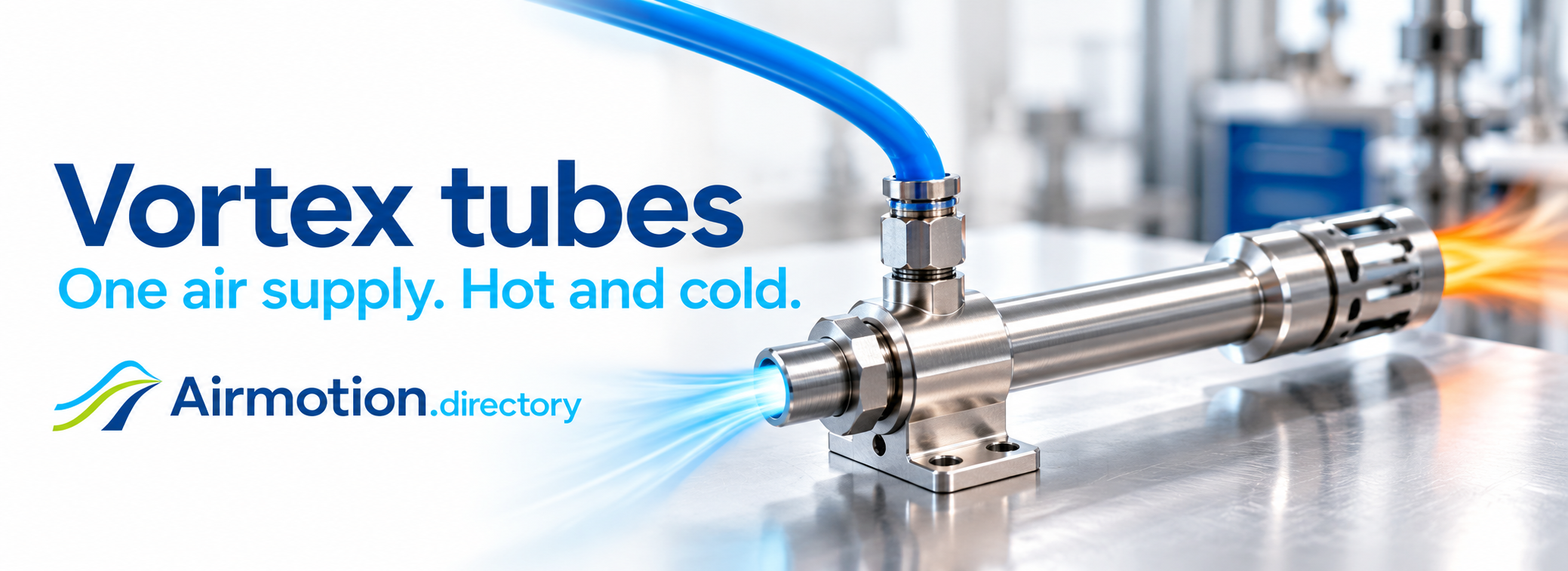
Cold air at the target. Heat at the other end.
A vortex tube produces a cold air stream and a hot air stream from one compressed-air supply. The useful question is how much cooling reaches the part under actual operating conditions.
Compressed air enters a vortex chamber and separates into hot and cold outlet streams without a motor or moving refrigeration mechanism. Supply conditions, internal configuration and adjustment affect cold airflow and temperature. A bare tube needs appropriate mounting, exhaust management and air delivery. A packaged tool cooler adds those practical features. Neither should be confused with an enclosure-cooling system.
Three practical applications
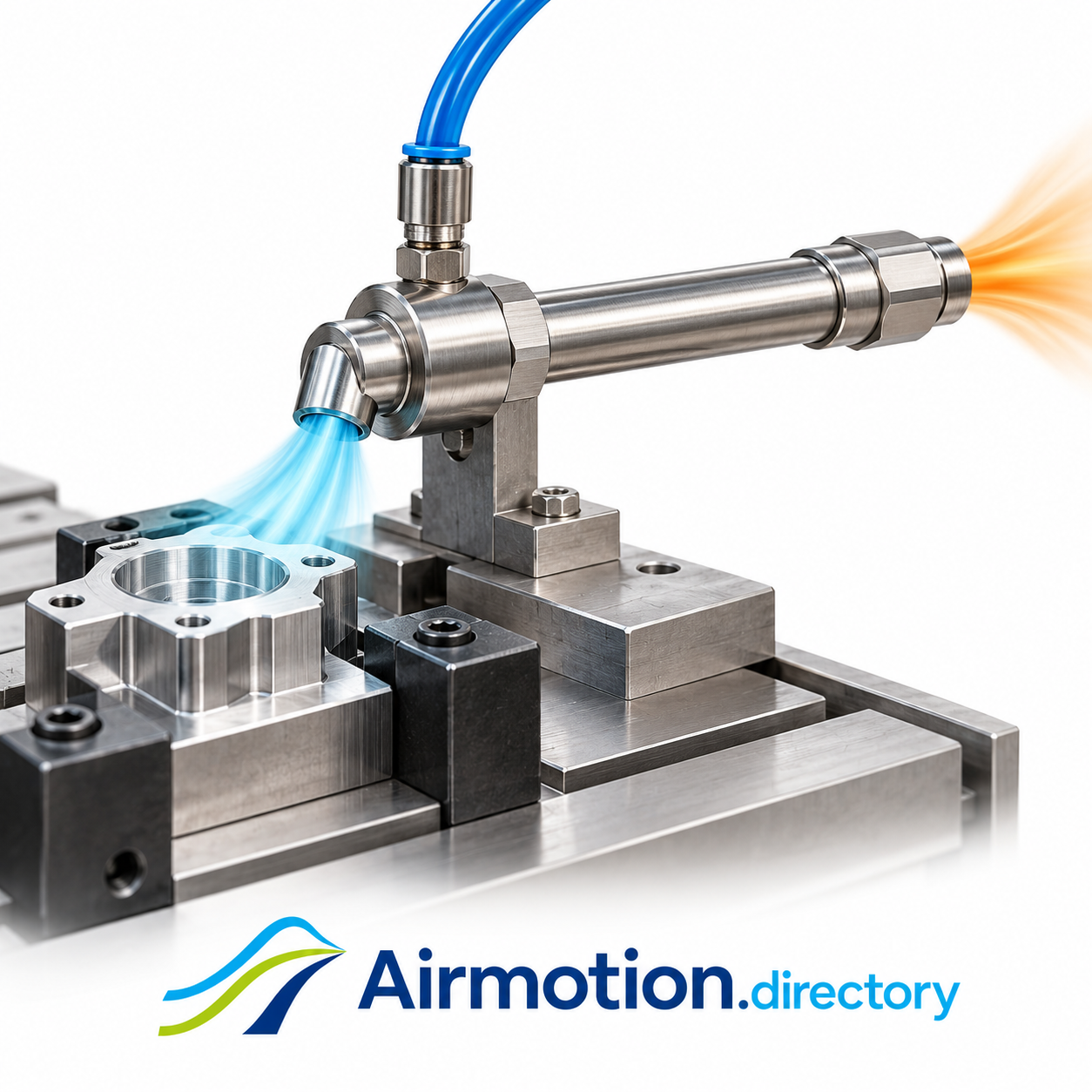
Cooling a small component
A compact part needs localized cooling during a process. A vortex tube can direct cold air to the target where a suitable compressed-air supply is available.

Cooling a sealing area
A packaging process has a small area that must cool between operations. A tube may supply directed cooling air, subject to the heat load, cycle time and accessible target area.
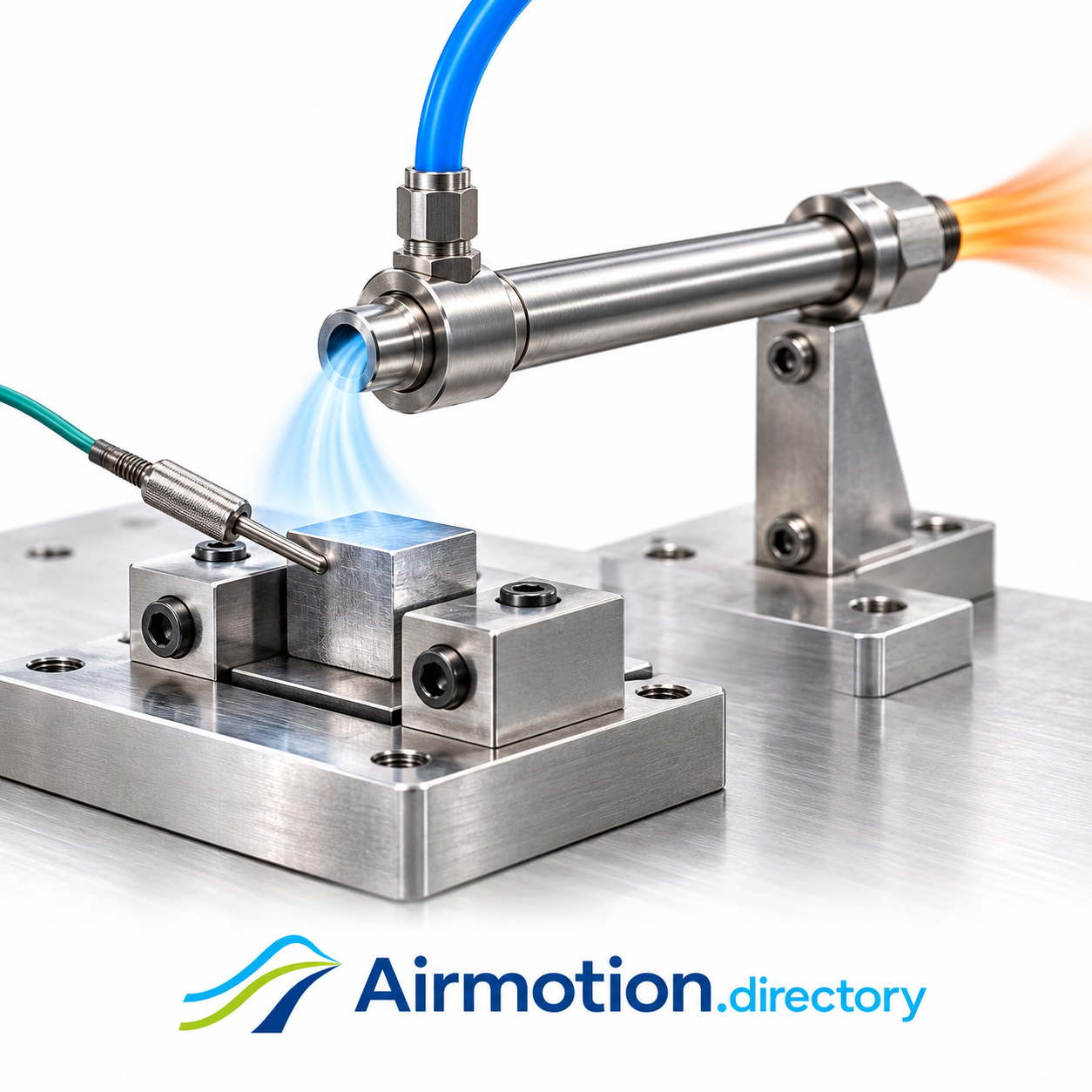
Cooling a test specimen
A test requires a localized cold airflow. The arrangement needs repeatable air conditions, temperature measurement at the specimen and a suitable route for the hot exhaust.
These are illustrative applications, not reports of specific customer installations.
Three suppliers to know
Three examples of companies offering vortex tubes. Product ranges and configurations differ; this is not a ranking.
Axis Solutions / Snowind
India
The VT1 vortex tube is part of the Snowind thermal range. Its vortex tubes are distinct from the VC1 and VC2 enclosure-cooler products.
Arizona Vortex
United States
The company offers stainless-steel vortex tubes in several airflow sizes. Its range serves localized process cooling and testing applications.
SCB Vacuum Tech
China
SCB offers vortex tubes in different sizes and configurations, alongside packaged cold air guns. Its range includes cooling of sensors, instruments and heat-sensitive components.
What matters when comparing vortex tubes?
Compare cooling, not just temperature. Compare cold airflow and cooling capacity at the same inlet pressure and temperature. The lowest outlet temperature alone is insufficient.
Check the supply at the tube. Establish heat load, duty cycle, air treatment and the pressure available while the tube is operating. Compressed air has an operating cost even when the tube uses no electricity at the application.
Plan both outlets. Check mounting, cold-air delivery and the route for hot exhaust. A bare tube, a packaged tool cooler and an enclosure-cooling system need different installation comparisons.
What brought you here?
Using or buying vortex tubes?
Exploring one application?
Already considering a purchase, supplier recommendation, or quotation?
Selling vortex tubes?
Working on a specific customer opportunity?
Explore the Seller’s Second Opinion
Own or lead a pneumatic or compressed-air business and want to examine its online revenue system?
Have a vortex-tube requirement?
Send the component, cooling objective, heat load if known, duty cycle, air supply conditions and destination country. Include an existing proposal when available.