
Vortex enclosure coolers
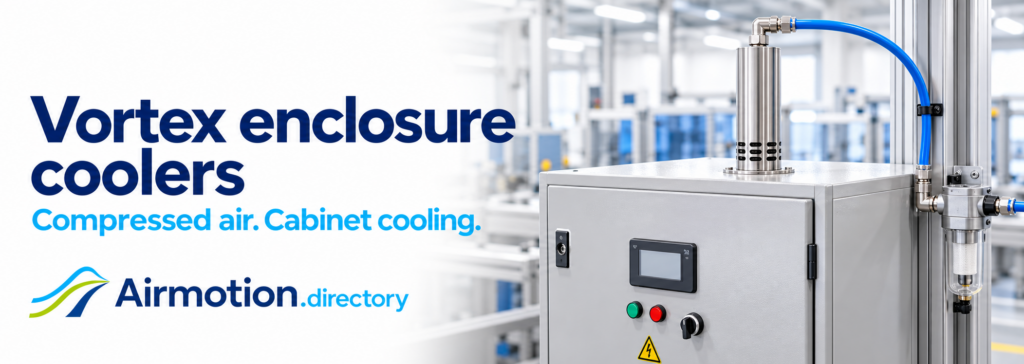
Heat out. Cabinet closed.
Overheating controls can interrupt a working machine. A vortex enclosure cooler uses compressed air to create separate hot and cold streams. The cold stream enters the electrical cabinet to remove heat; the hot stream exhausts outside it.
The vortex tube itself has no moving parts and uses no refrigerant circuit. A complete system may include a filter, internal air distribution, a thermostat, and a solenoid valve. Refrigerant and thermoelectric enclosure coolers use different technologies, so compare their installation and operating costs separately.
Three practical applications
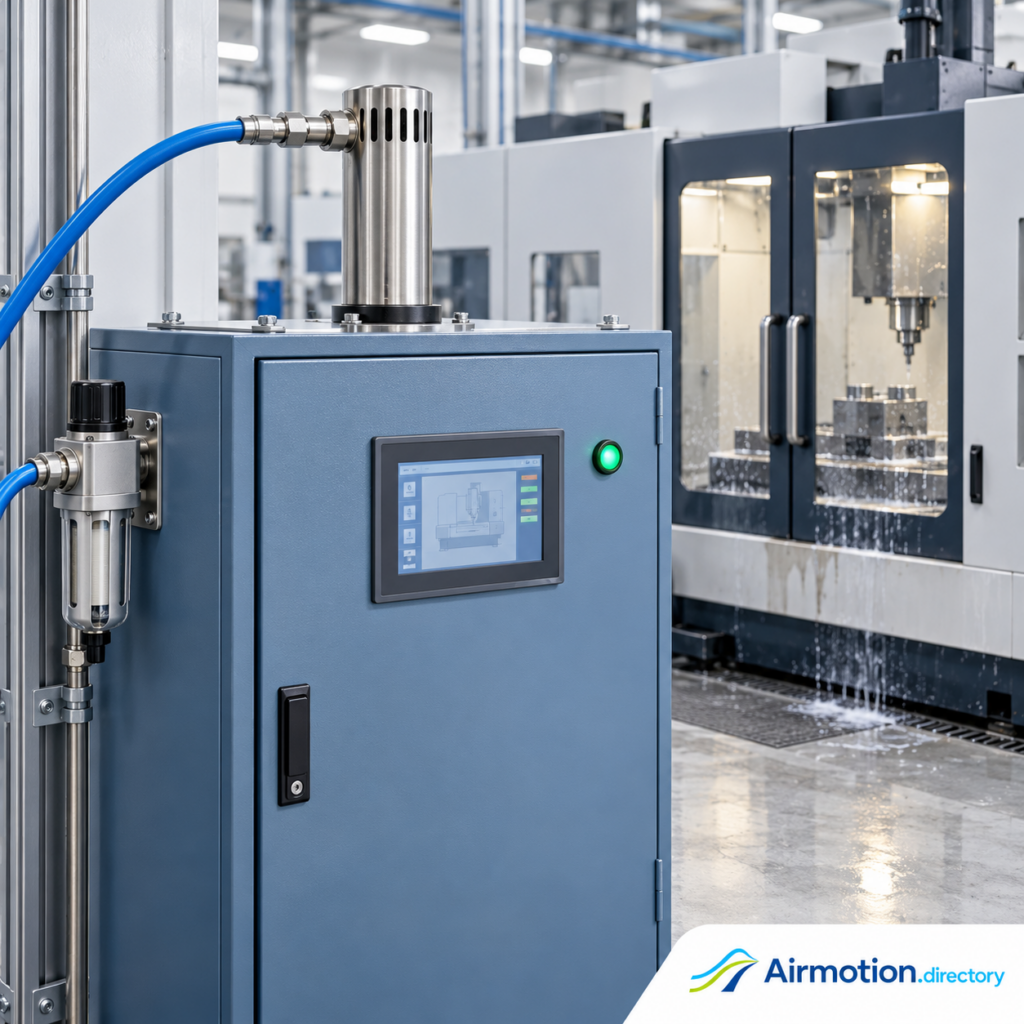
Cool machining-cell controls
Drives and controls generate heat inside a machining-cell cabinet, while coolant mist and dirt can make ambient-air ventilation unattractive. A suitably rated vortex cooling system can supply cold air while the cabinet door stays closed. Air quality, cabinet condition, and internal air distribution still matter.
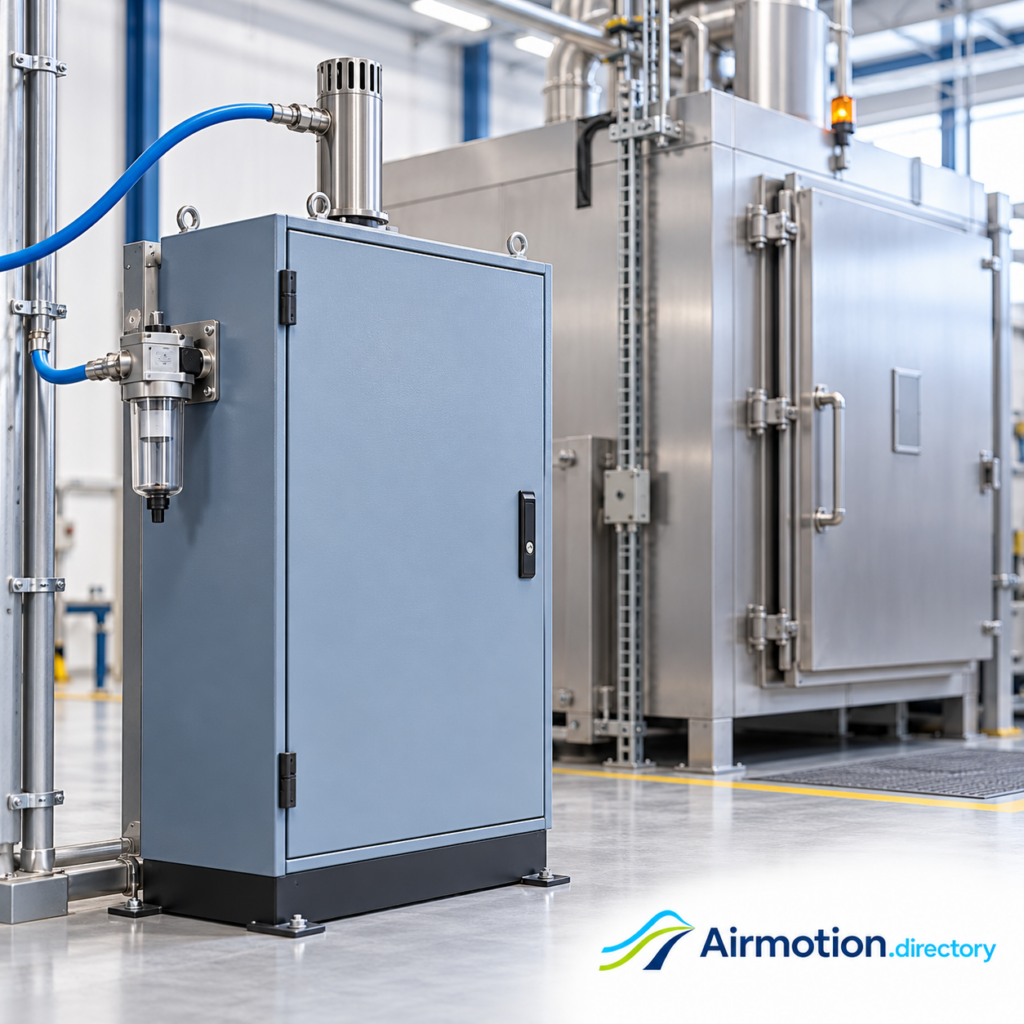
Support controls near hot processes
A cabinet near an oven or another hot process may gain heat from its surroundings as well as from the equipment inside. A vortex cooler can remove enclosure heat when the supply and installation meet its requirements. Check the manufacturer’s ambient-temperature and inlet-air limits before choosing a model.
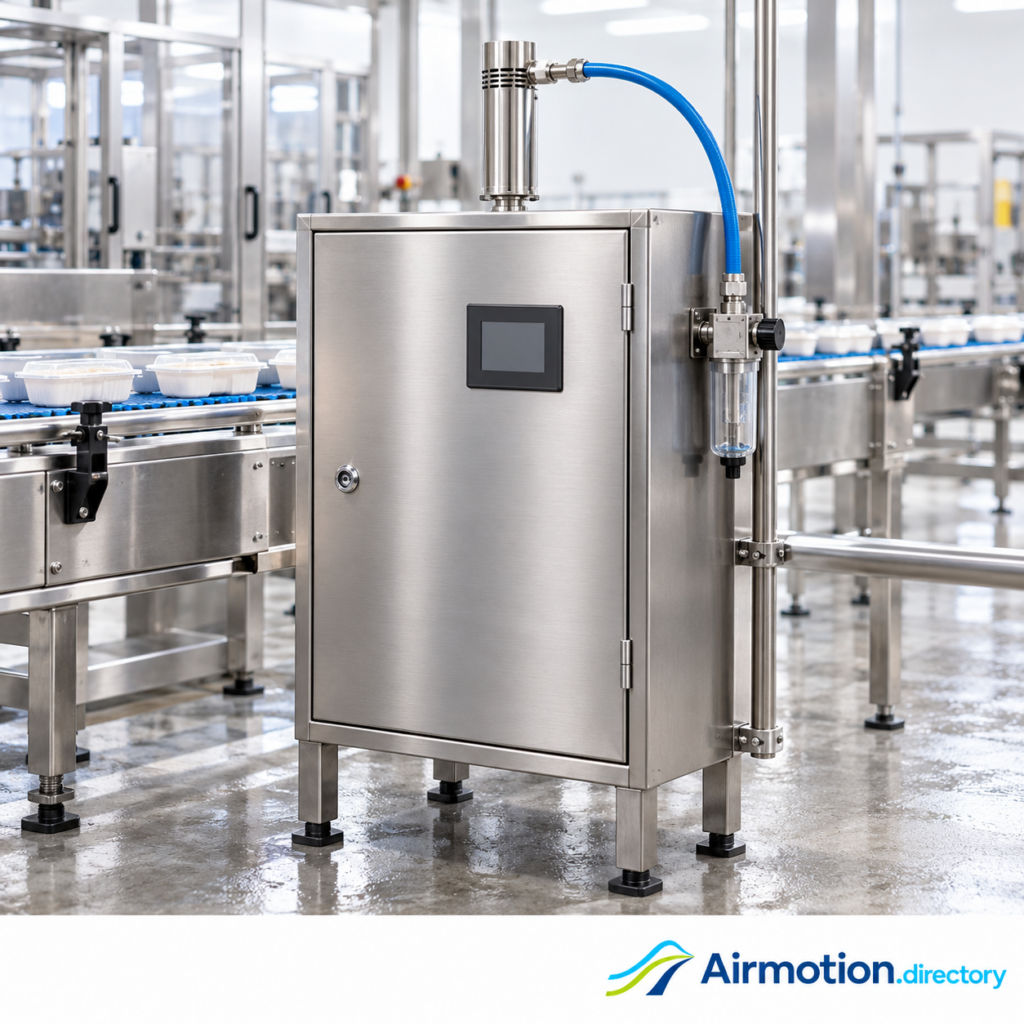
Cool packaging-line washdown panels
A packaging-line control panel may need cooling in an area cleaned with water. Select the cooler and installation for the required enclosure protection, materials, and cleaning conditions. Cooling capacity does not establish washdown suitability; verify the rating of the installed arrangement.
These are illustrative applications, not reports of specific customer installations.
Three manufacturers to know
Three examples of manufacturers offering compressed-air vortex enclosure cooling. Product ranges and configurations differ; this is not a ranking.
EXAIR
United States
Offers Cabinet Cooler systems that use a stainless-steel vortex tube to cool electrical enclosures with compressed air. The range includes NEMA 12, 4, and 4X configurations, plus continuous-operation and thermostatically controlled options. Select the system for the required enclosure rating and heat load.
Meech
United Kingdom
Offers the A70000 Cabinet Cooler family, using a vortex tube with interchangeable generators to vary air consumption and cooling output. Its published standard model is IP66 rated, with stainless-steel material options. Thermostat-and-solenoid systems are also available.
Seyang Mechatronics
South Korea
Offers the Vortex CNC Cooler range for electrical control panels and cabinets. Its published configurations include ducting kits, filter-regulator packages, and thermostat-and-solenoid controls. Compare the selected model’s cooling capacity and compressed-air requirement with the enclosure heat load.
What matters when comparing enclosure coolers?
Start with the heat load. Establish internal heat generation, ambient conditions, enclosure size, and the required internal temperature. Compare cooling capacity at the manufacturer’s stated air pressure and temperature. The coldest outlet-air claim is not a cabinet-sizing method.
Check the compressed-air requirement. Confirm pressure and flow at the cooler, filtration, and drying requirements. Include air consumption and expected running hours when comparing operating costs. Thermostatic control can limit unnecessary air use when cooling demand varies.
Check the complete installation. Match enclosure protection, mounting, materials, exhaust clearance, noise, and internal air distribution to the site. Follow the manufacturer’s condensation guidance. Hazardous locations require the correct certified system; a standard cooler is not a substitute for a specified purge or pressurization system.
What brought you here?
Using or buying enclosure coolers?
Exploring one application?
Already considering a purchase, supplier recommendation, or quotation?
Selling enclosure coolers?
Working on a specific customer opportunity?
Explore the Seller’s Second Opinion
Own or lead a pneumatic or compressed-air business and want to examine its online revenue system?
Have an enclosure-cooling requirement?
Tell Airmotion Directory about the cabinet, the heat or temperature problem, the operating environment, and the available compressed-air supply. Include whether this is a new application or a replacement.